
Your support helps us to tell the story
From reproductive rights to climate change to Big Tech, The Independent is on the ground when the story is developing. Whether it’s investigating the financials of Elon Musk’s pro-Trump PAC or producing our latest documentary, ‘The A Word’, which shines a light on the American women fighting for reproductive rights, we know how important it is to parse out the facts from the messaging.
At such a critical moment in US history, we need reporters on the ground. Your donation allows us to keep sending journalists to speak to both sides of the story.
The Independent is trusted by Americans across the entire political spectrum. And unlike many other quality news outlets, we choose not to lock Americans out of our reporting and analysis with paywalls. We believe quality journalism should be available to everyone, paid for by those who can afford it.
Your support makes all the difference.Read more
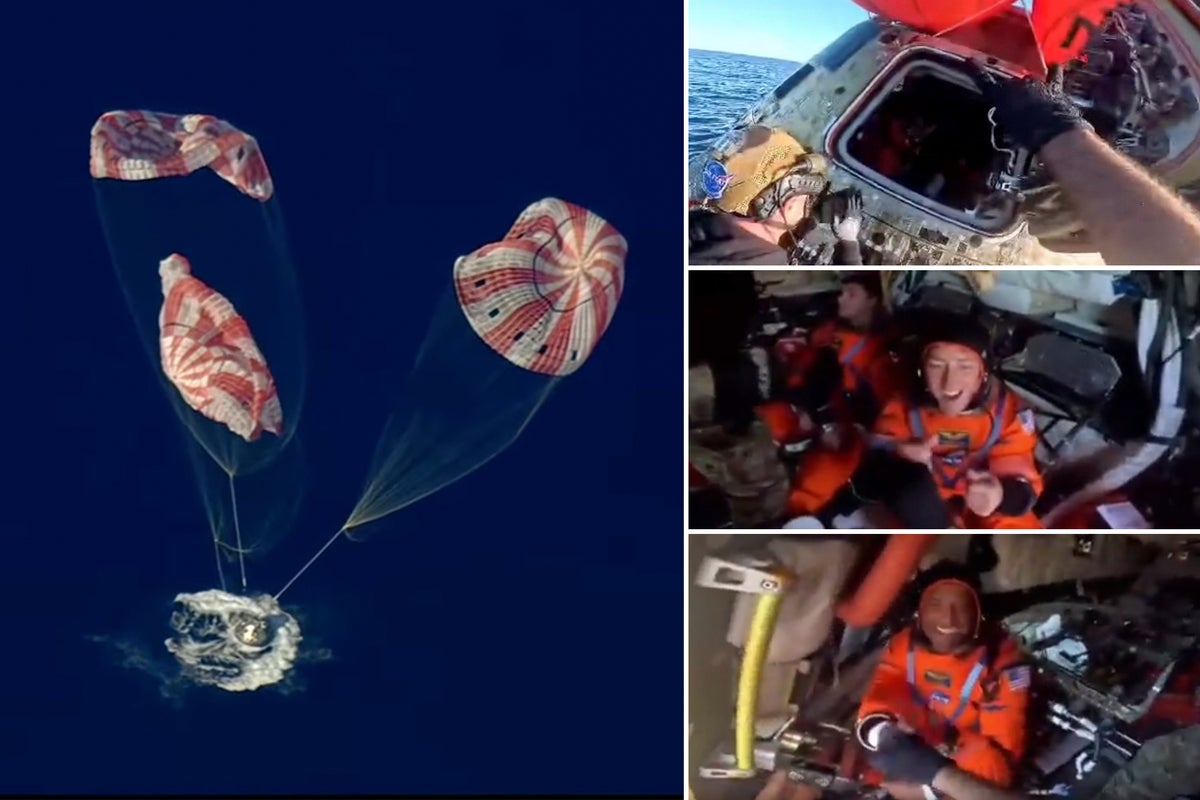
A new video from NASA shows the jubilant moment U.S. Navy divers first opened the hatch of the Artemis II Orion capsule after it splashed down to Earth following its historic mission to the moon.
The Artemis II mission sent four astronauts on a lunar flyby for the first time in over 50 years, gathering data so the agency can prepare for future missions to the moon’s surface and to Mars and breaking the record for the farthest distance humans have ever traveled from Earth.
While everything went extremely well, the moments that led up to the crew’s splashdown in the Pacific Ocean were nail-biting – especially as NASA’s mission control lost contact with the astronauts and later on during the hour that they were bobbing around in the ocean near San Diego, California, on Friday afternoon.
“Got ‘em! Yes!” one Navy diver wearing the body camera yells as the spacecraft’s hatch pops open.
More cheers and applause break out as the door is opened and divers head inside the small space, including from NASA mission specialist Christina Koch – the first woman to go to the moon.
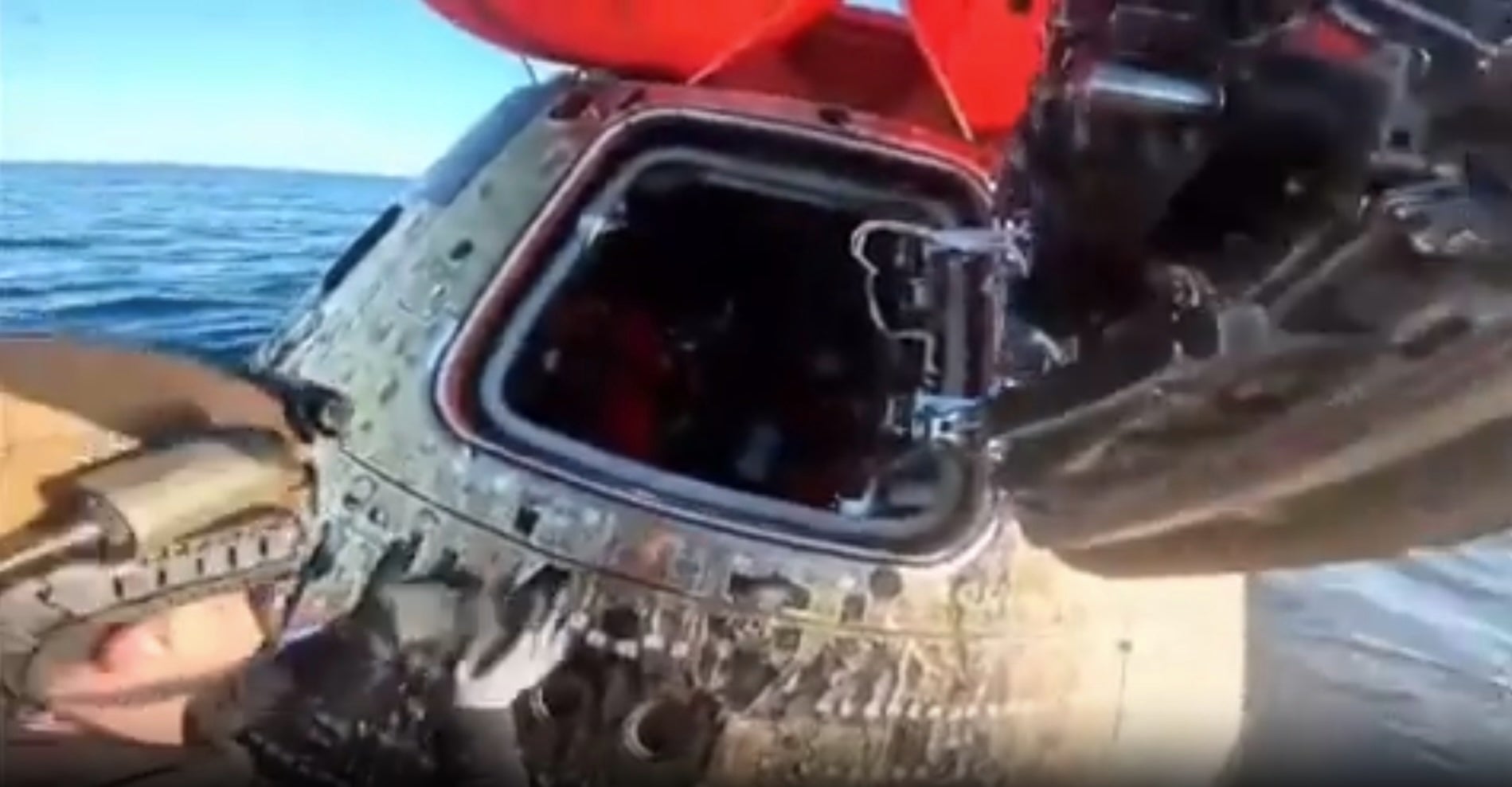 A new NASA video captures the moment U.S. Navy divers opened the Orion crew capsule last Friday off the Southern California coastline. The Artemis II crew are the first to go to the moon in more than 50 years, setting up for future missions to its surface (NASA)
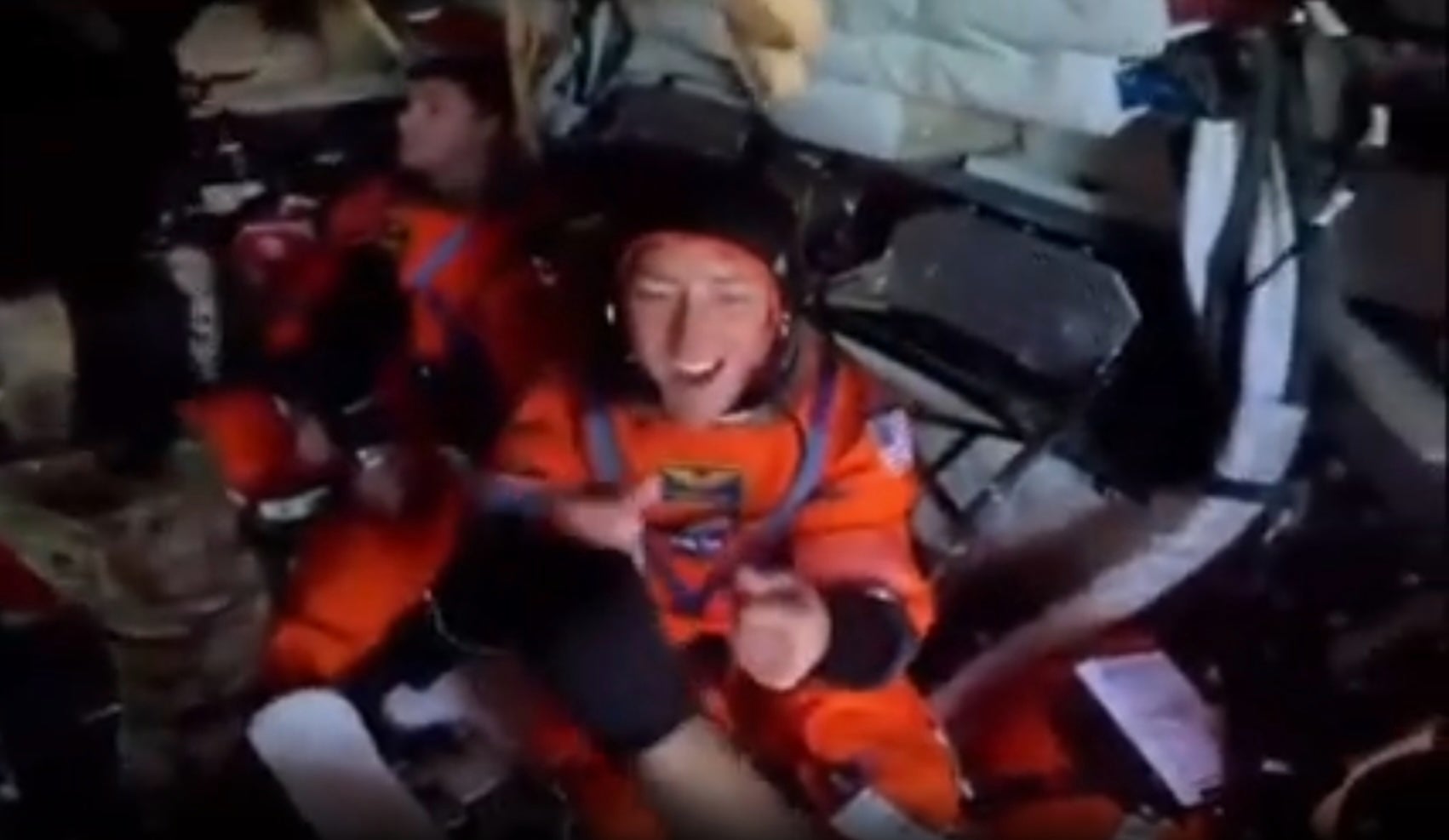 Christina Koch, a NASA mission specialist, double fist dumps U.S. Navy divers on Friday before the Artemis II crew is extracted from the Orion capsule (NASA)
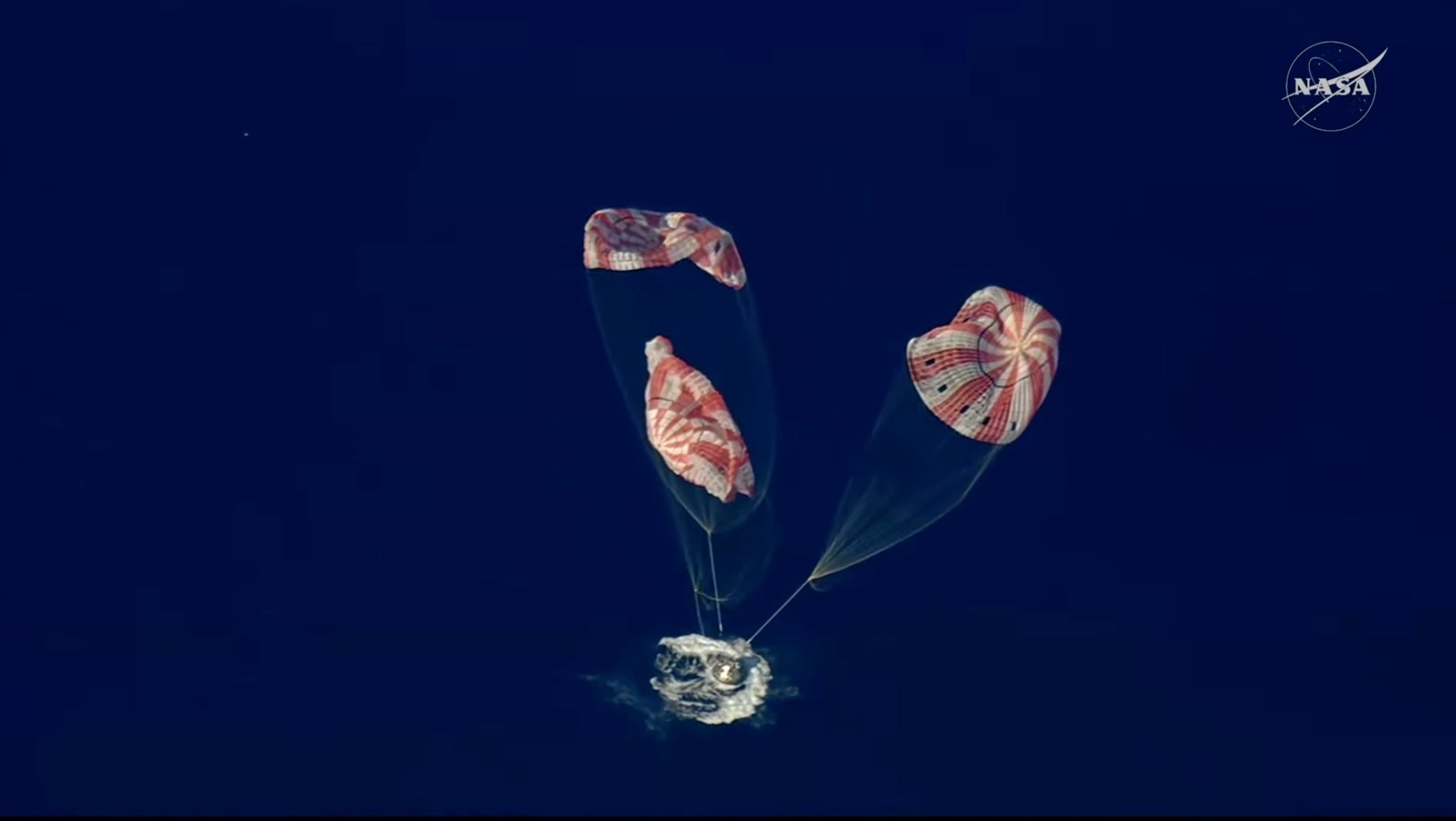 The Orion spacecraft splashes down in the Pacific Ocean on Friday at 8:07 p.m. EDT (NASA)
“Christina, welcome home!” the man wearing the camera says as he double fist bumps her after pilot Victor Glover.
“Thank you!” she exclaims loudly.
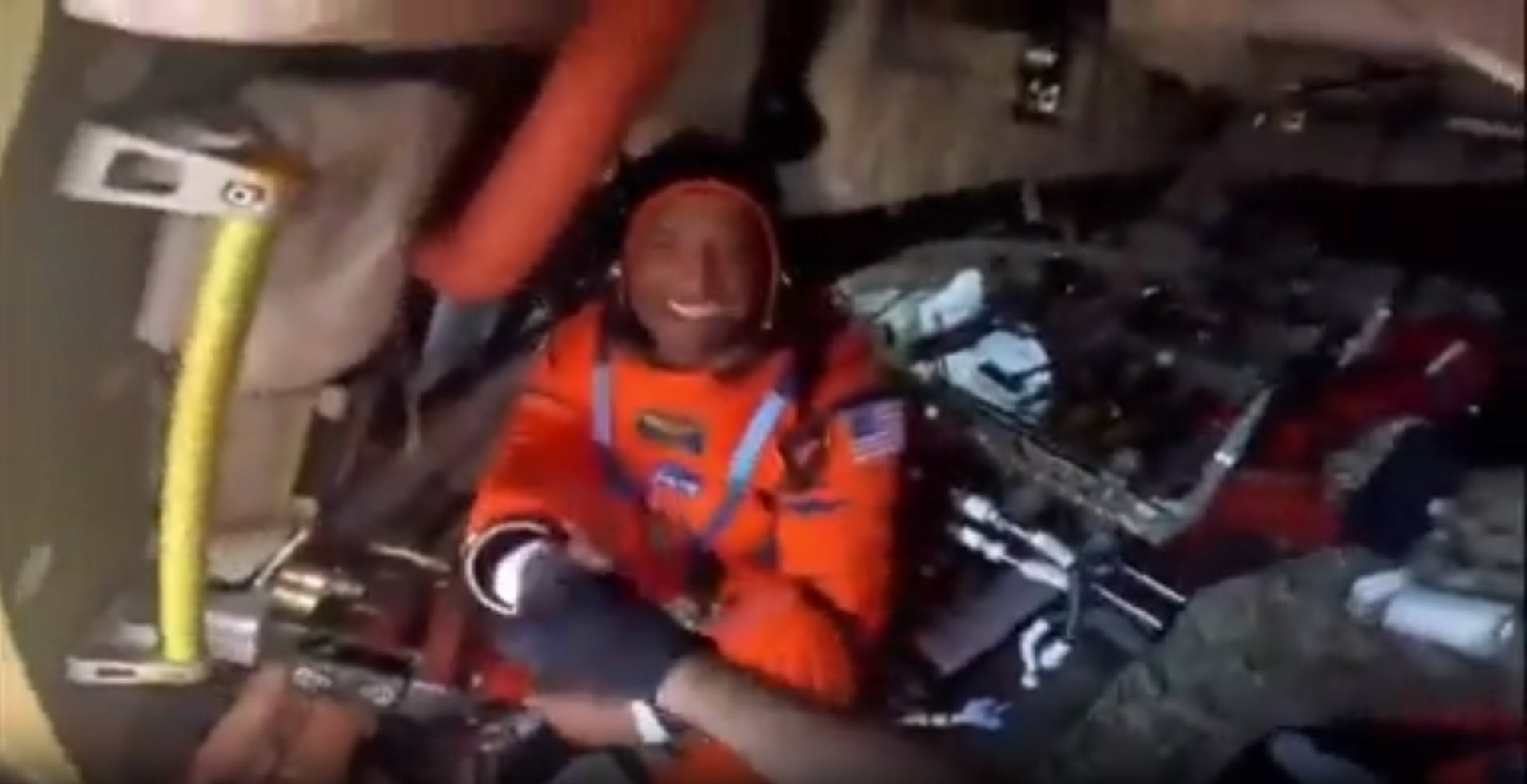 NASA pilot Victor Glover fist bumps U.S. Navy divers on Friday (NASA)
Koch and Glover were on Orion for 10 days with NASA commander Reid Wiseman and Canadian Space Agency mission specialist Jeremy Hansen.
After the astronauts were checked out and extracted, they were put on rafts and then flown by helicopter to an awaiting ship, the USS John P. Murtha.
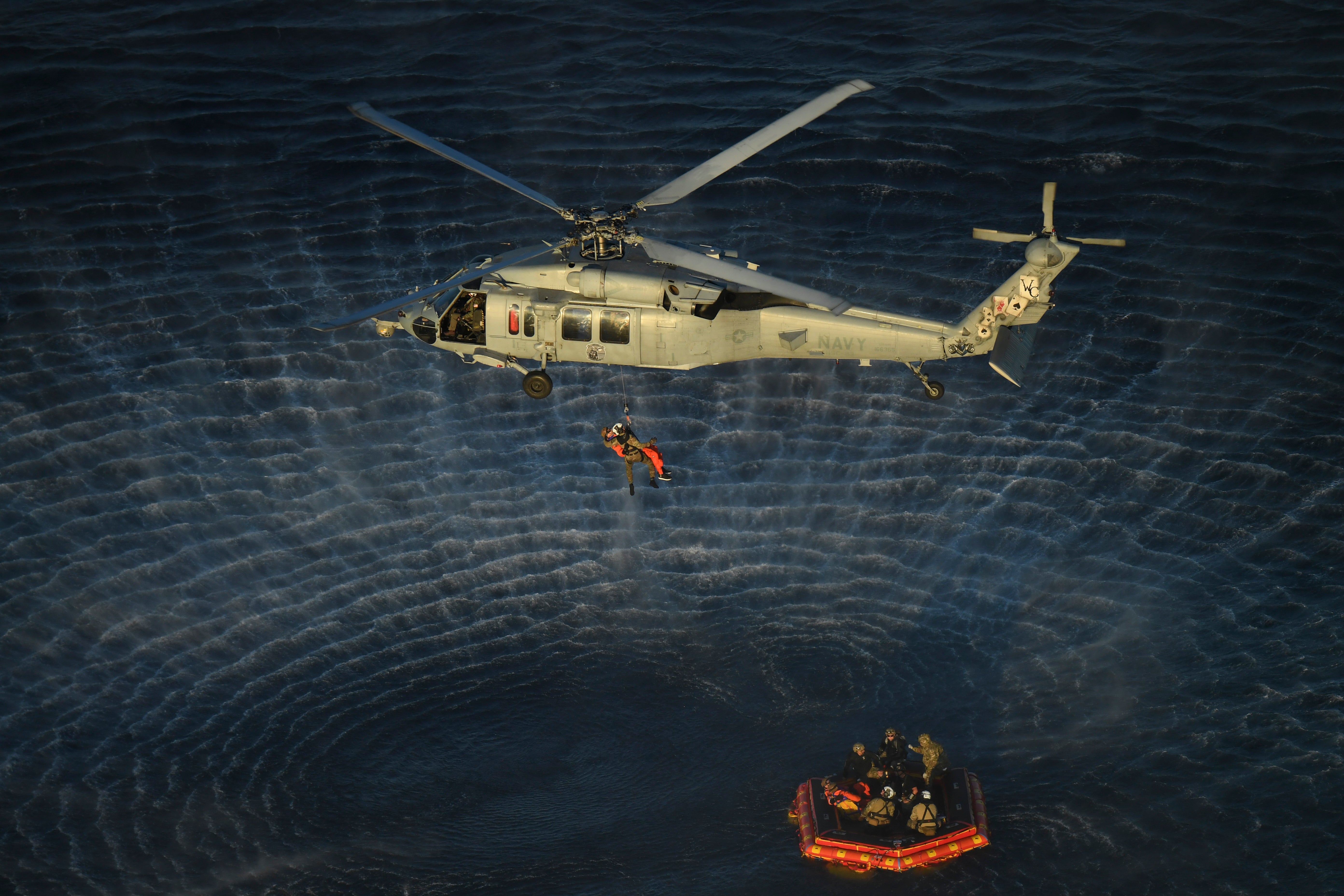 NASA Artemis II crew members are hoisted into a U.S. Navy MH-60 helicopter on Friday in the waters off of San Diego (NASA via Getty Images)
After a day of rest and reuniting with loved ones, the astronauts told reporters that their experience “was not easy.”
“We are bonded forever,” Wiseman told his fellow crew mates, “and no one down here is ever going to know what the four of us just went through. And it was the most special thing that has ever happened in my life.”
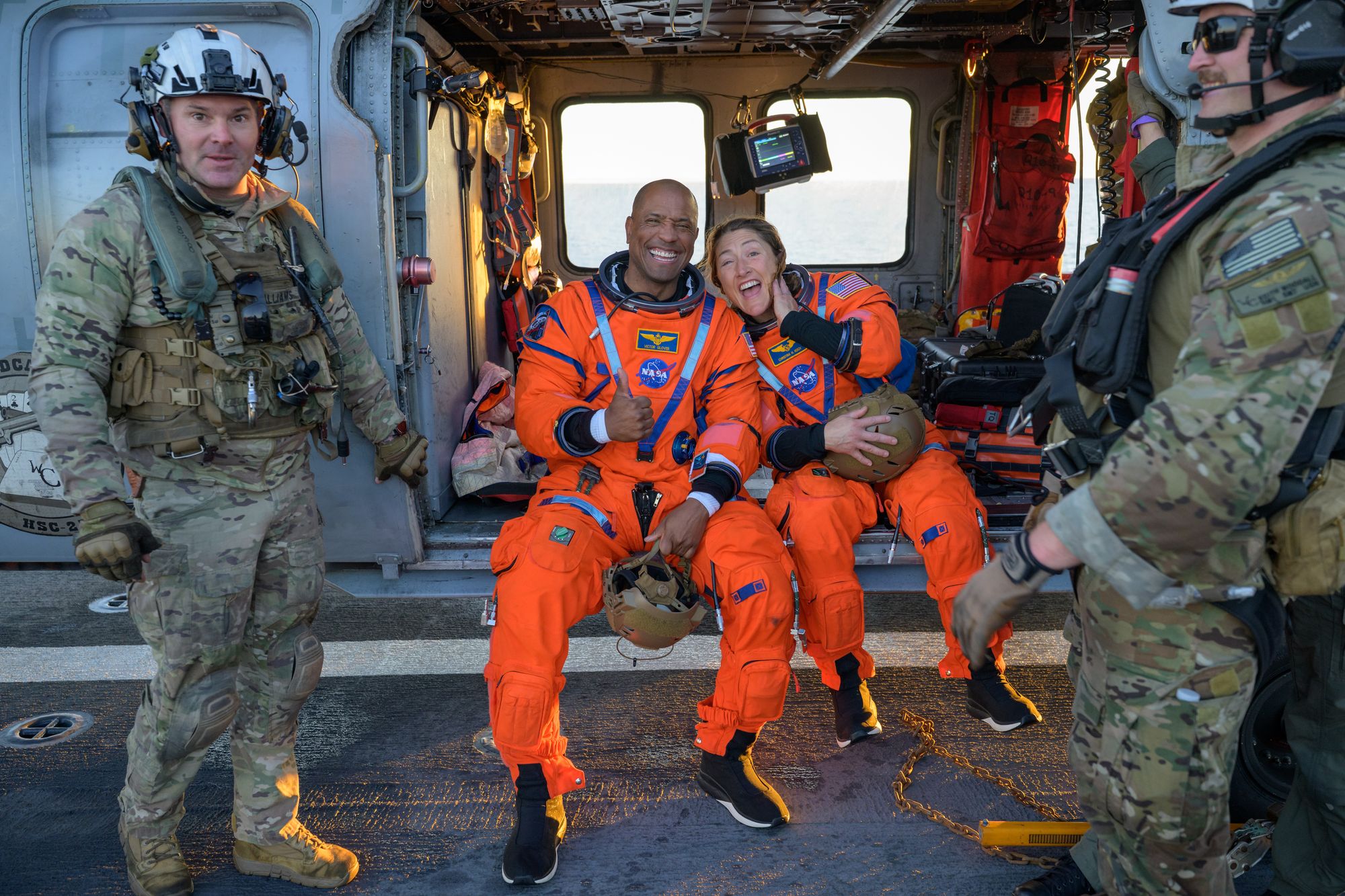 Glover and Koch pose for a photo together on the flight deck of USS John P. Murtha last Friday following their historic mission around the moon. The crew splashed down near San Diego (NASA via Getty Images)
“It’s a special thing to be a human and it’s a special thing to be on planet Earth,” he added.
Koch said she couldn’t sleep after returning home.
“Earth was just the lifeboat hanging [undisturbed] in the universe,” she recalled of the view looking back at the blue marble humans call home.
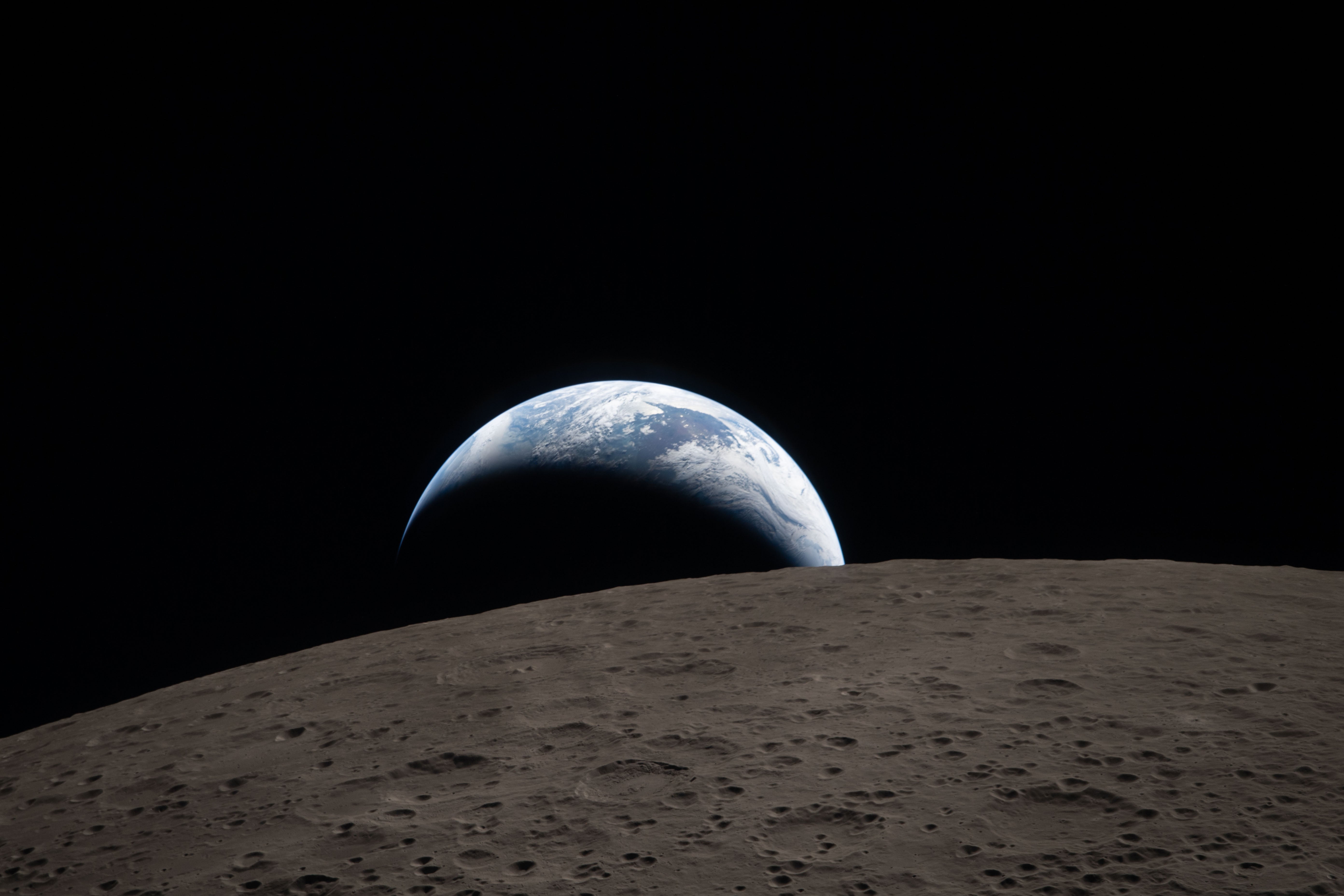 This image shows the Earth rising above the moon. It was taken by the Artemis II astronauts on April 6 (NASA)
The astronauts are expected to further discuss their mission in another news conference on Thursday afternoon at NASA’s Johnson Space Center in Houston, Texas.
Next, the Artemis II astronauts will help prepare future Artemis missions, applying the systems and flight data they gathered during their trip.
The next phase of Artemis is slated for 2027, when astronauts will launch in Orion to test rendezvous and docking capabilities between Orion and commercial spacecraft needed to land astronauts on the moon.
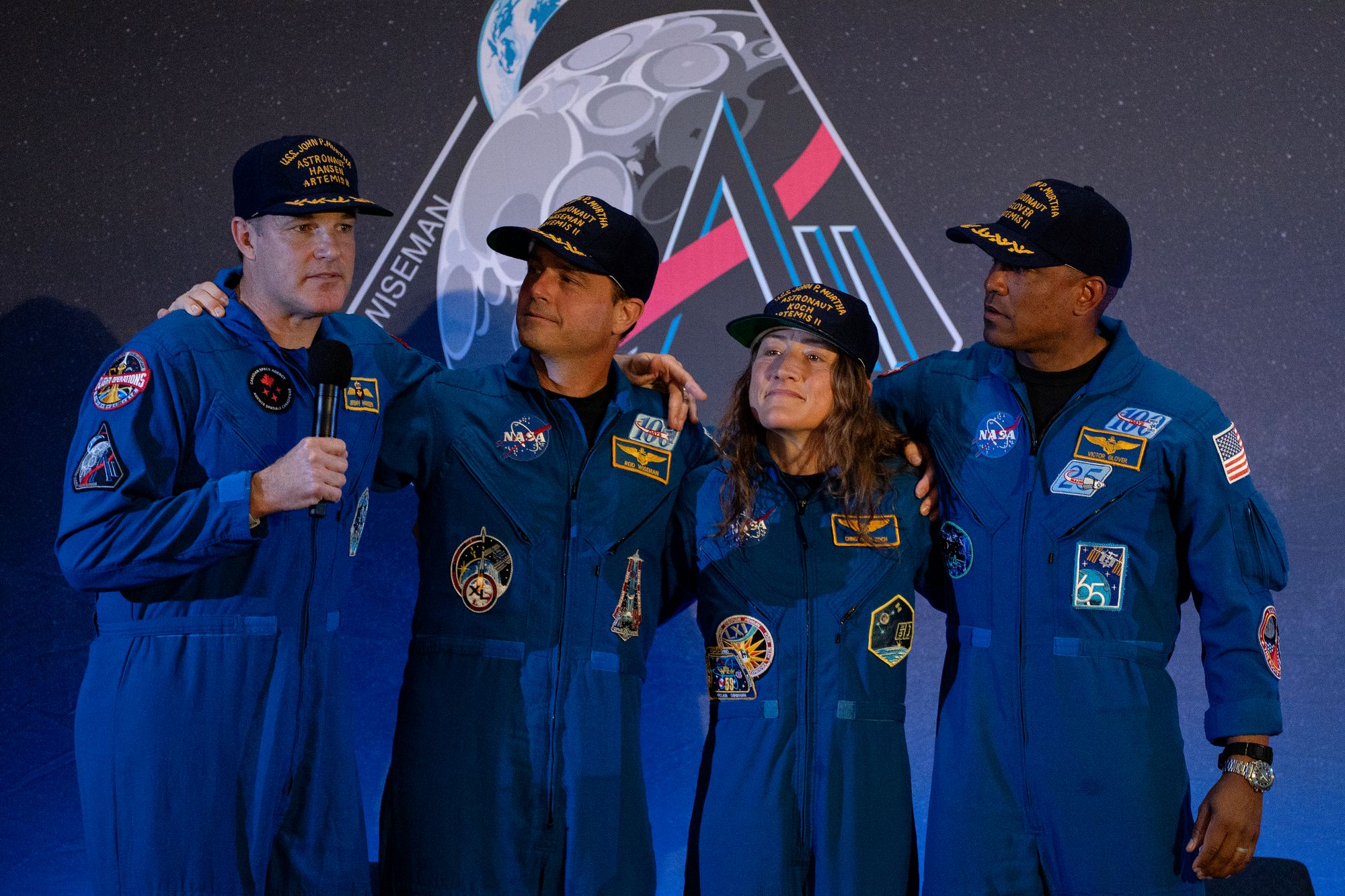 Artemis II astronaut Jeremy Hansen, left, speaks at a news conference with fellow crew members (left to right) Reid Wiseman, Christina Koch and Victor Glover on Saturday at Ellington Field Joint Reserve Base in Houston, Texas. The astronauts will field questions about their mission again on Thursday (Getty Images)
Koch posted on social media Monday that their work had already begun, including videos of her in a full spacesuit walking and hammering the rocks on a fake moon.
“We didn’t walk on the Moon until we got back to Earth. To understand how to optimize lunar surface spacewalks on future Artemis missions, we do simulated runs as soon as we are back,” she explained. “Spoiler alert: It felt great.”