
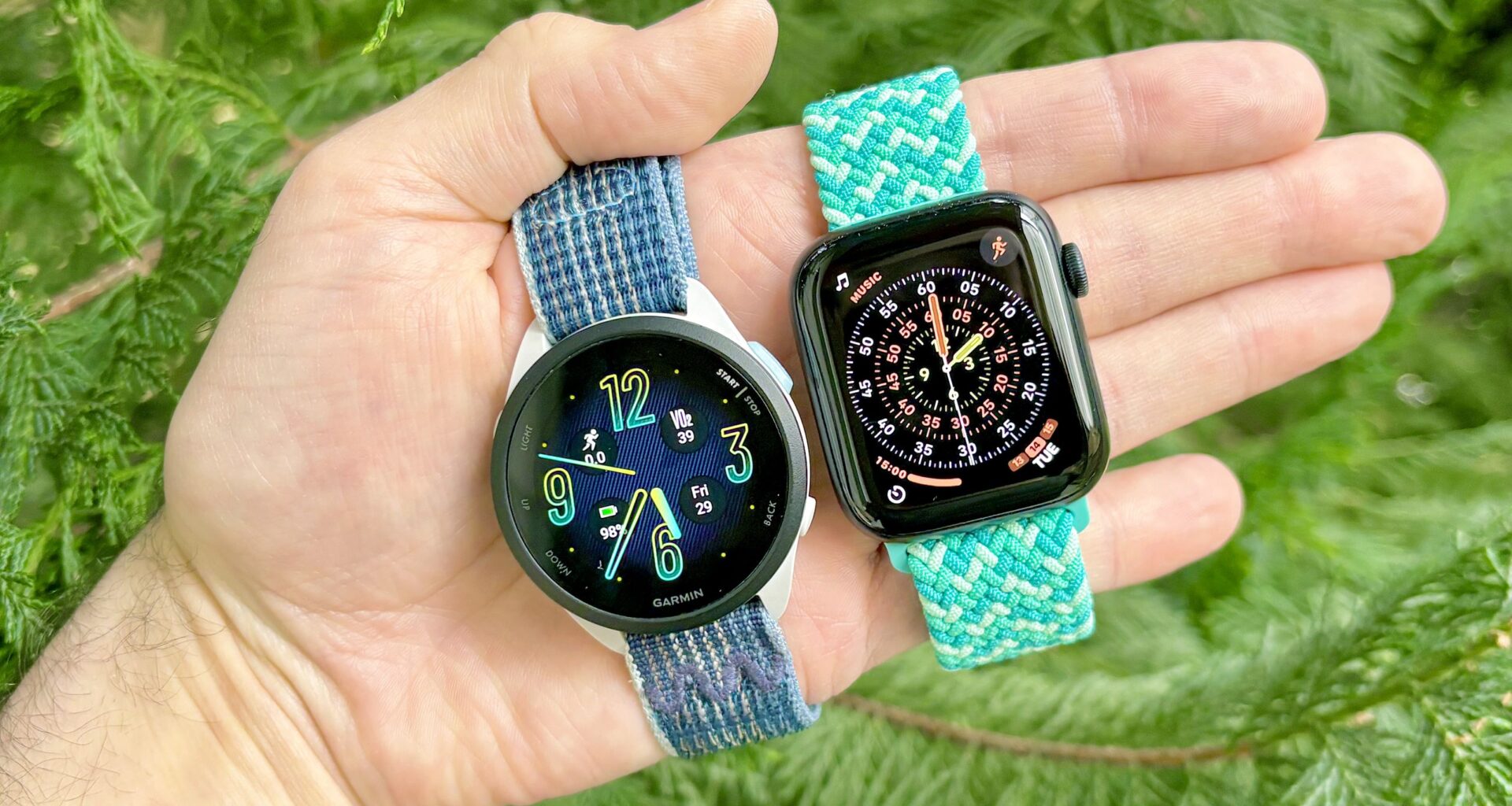
Circle or square? Garmin or Apple Watch? I review smartwatches for a living, and I frequently get asked about the differences between these two smartwatch powerhouses. So, let’s break it down.
Compared across six categories, here’s how the popular, entry-level Garmin Forerunner 165 compares to the beloved, also entry-level Apple Watch SE 3. Short on time? Skip to my verdict at the end for the TLDR.
Specs comparedSwipe to scroll horizontallyHeader Cell – Column 0
Apple Watch SE 3
Garmin Forerunner 165
Starting price
$249
$249
Dimensions
44mm: 44 x 38 x 10.7 mm / 40mm: 40 x 34 x 10.7 mm
43 x 43 x 11.6 mm
Weight
40mm: 26 g / 44mm: 33 g
39 g
Display type & max brightness
OLED, 1,000 nits
AMOLED, 1,000 nits
Display size
40mm: 1.57-inches / 44mm: 1.78-inches
1.2-inch
Battery life
18 hours
11 days
Water resistance
50 meters
50 meters
Cellular support
Optional
No
Compatibility
iOS
Android, iOS
1. Price
Both smartwatches start at $249. When it comes to the SE 3, that price reflects the smaller 40mm model without cellular; the 44mm non-cellular SE 3 is $279. Add $50 to the cost of either for 5G connectivity capabilities.
Article continues below
You may like
The Garmin Forerunner 165 additionally comes in a ‘Music’ edition with extra onboard storage to save tunes for offline listening for $299.
Winner: draw
2. Design and durability
(Image credit: Dan Bracaglia/Tom’s Guide)
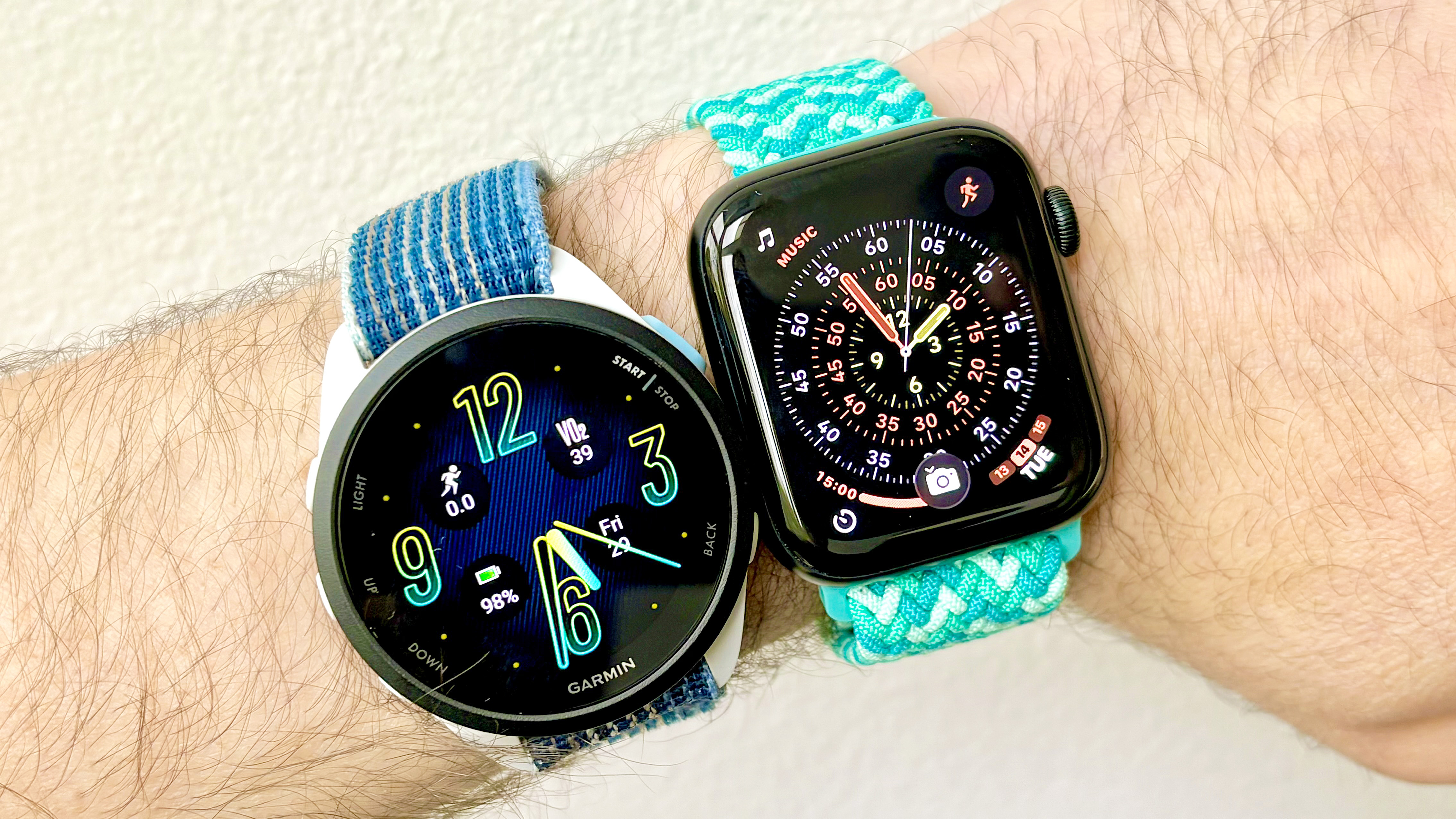
Both watches boast 50 meters of water resistance, enough for short, surface-level swims. Durability is also pretty similar, though the Garmin has a slightly raised bezel that protects the screen, while the Apple Watch does not.
Speaking of screens, the Forerunner 165 sports a 1.2-inch AMOLED panel with a max screen brightness of roughly 1,000 nits. The Apple Watch SE 3, meanwhile, sports either a 1.57-inch or 1.78-inch LTPO OLED screen, depending on which size you choose. It also maxes out at 1,000 nits.
The Forerunner 165 weighs a little more than the SE 3, but both wear quite comfortably on my 6.5-inch wrist. The Garmin offers more physical buttons on the side of the case, five in total, compared to two on the Apple Watch. Both devices are also touch-sensitive and quite responsive in use.
Winner: draw
3. Fitness tracking and training
(Image credit: Dan Bracaglia/Tom’s Guide)
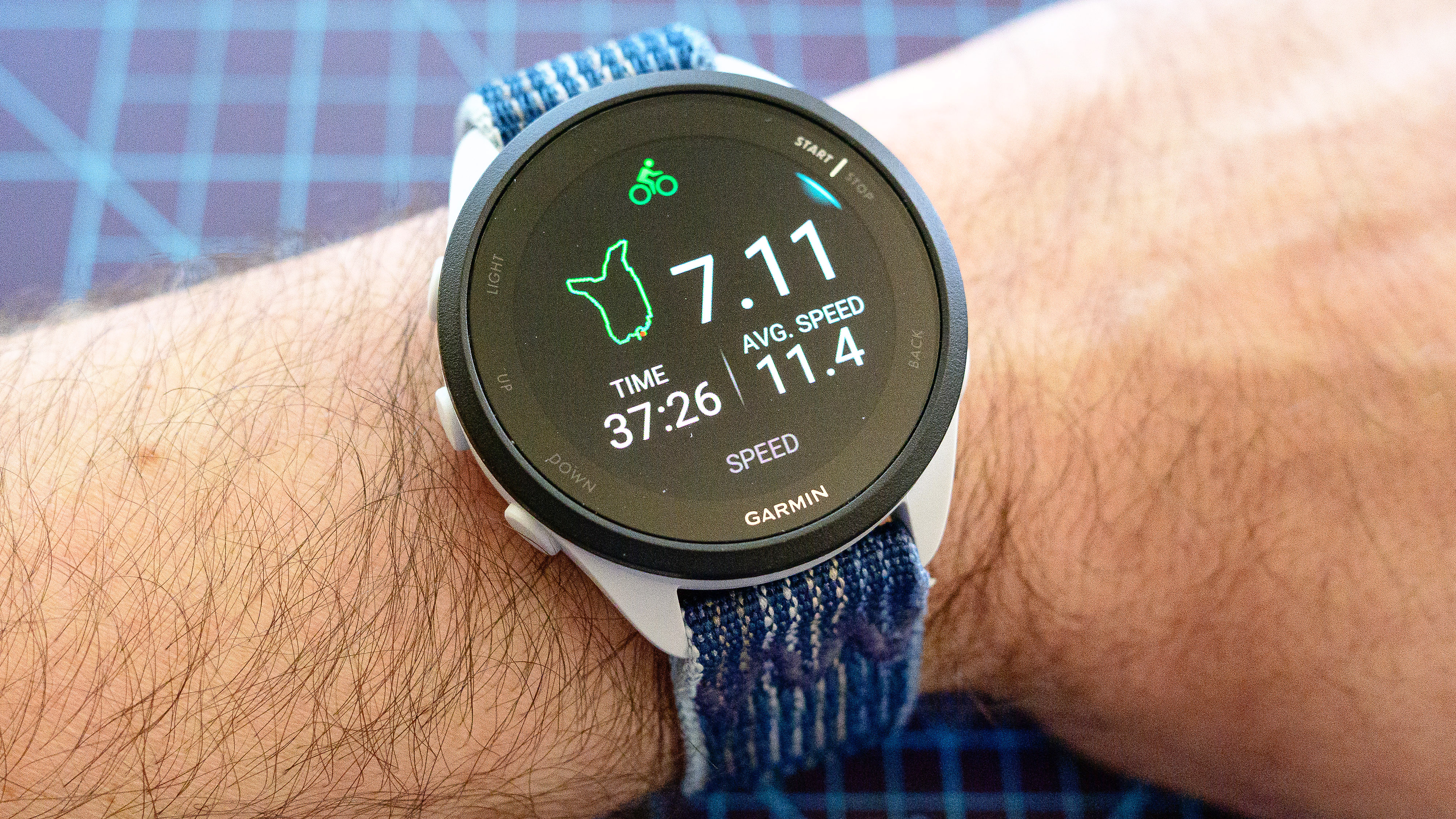
While the Apple Watch SE 3 offers a decent amount of fitness-tracking and training tools, they aren’t as vast as what you get from the Forerunner 165, especially if you are a runner.
What to read next
Apple’s Workout Buddy feature, for example, is designed to provide custom-tailored plans for folks prepping for a race or event. We found it useful from a motivational standpoint, but far less impressive than Garmin Coach, which similarly helps you prep for a running event, just way more effectively.
Overall, whether you’re a runner or not, Garmin’s training tools are a lot more extensive than Apple’s. For example, the Foreunner 165 provides adaptive training tips, completion time predictions (for runners), recovery time recommendations, daily workout suggestions, insights into heart rate variability (HRV), ‘training effect’ insights or how your workouts are impacting your overall performance, fitness age predictions, and more.
I also prefer the level of detail you get from Garmin’s nightly sleep tracking compared to Apple’s. Garmin’s Morning Reports tell you more than sleep time and how long you spent in each of the sleep cycles. It additionally provides a training outlook based on your quality of rest and recent workouts, along with your HRV status.
(Image credit: Tom’s Guide)
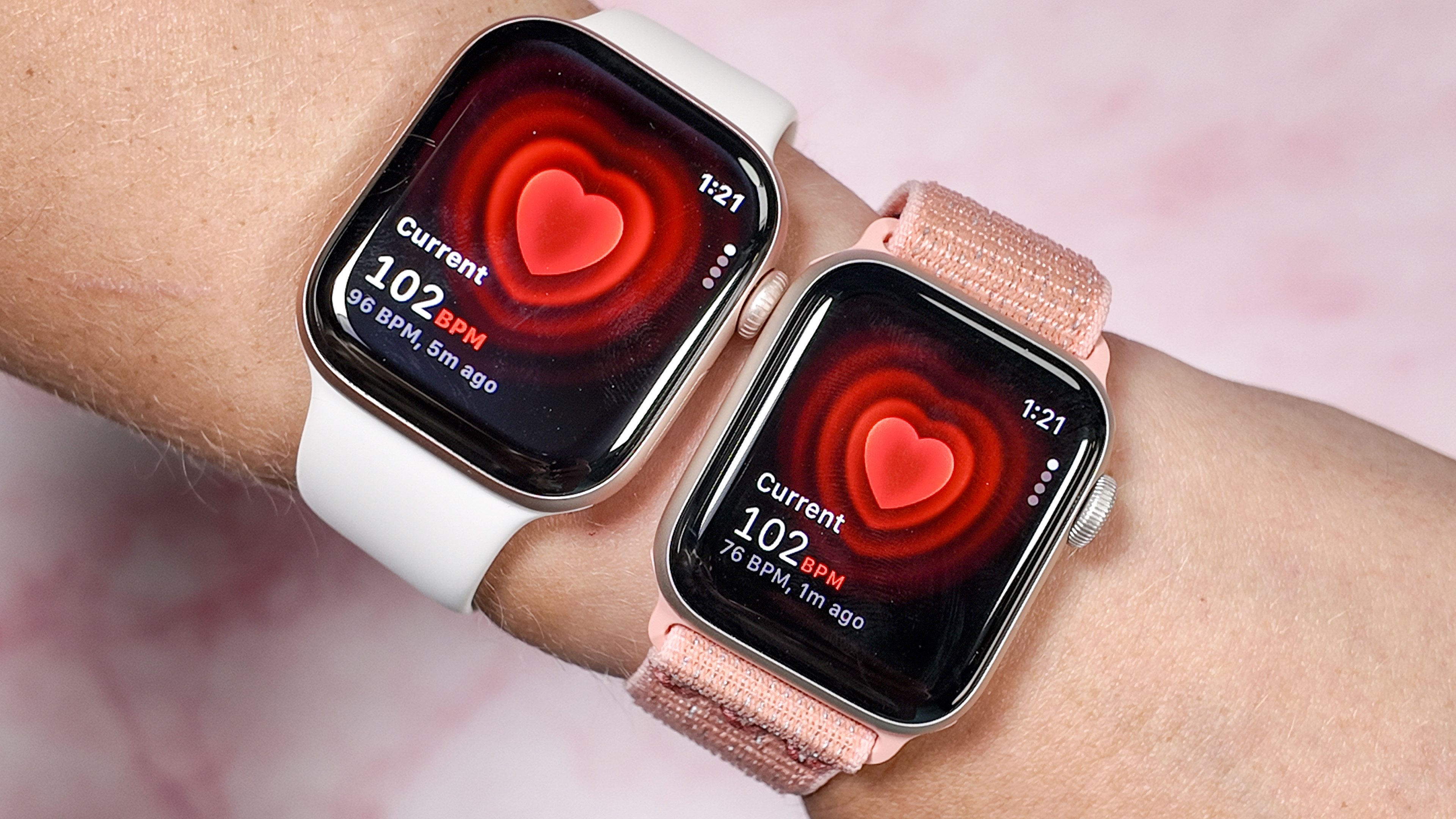
When it comes to tracking accuracy, both watches have onboard GPS and altimeters for location and elevation data, without a paired smartphone. In my testing, the Apple Watch SE 3 and Garmin Forerunner 165 have each proven reliable fitness trackers, though the former occasionally spits out inflated elevation data after outdoor workouts, like runs, walks, and hikes. You can also expect highly accurate heart rate data from each.
Both watches track a wide range of workout types from indoor, gym-based exercises to more extreme outdoor activities like mountain climbing and snowboarding.
Ultimately, for casual athletes wishing to keep tabs on their physical fitness, the Apple Watch SE 3 should serve you fine. However, if fitness and training are your primary focus, the Garmin Forerunner 165 is going to be a better choice.
Winner: Garmin Forerunner 165
4. Smarts and connectivity
(Image credit: Dan Bracaglia/Tom’s Guide)
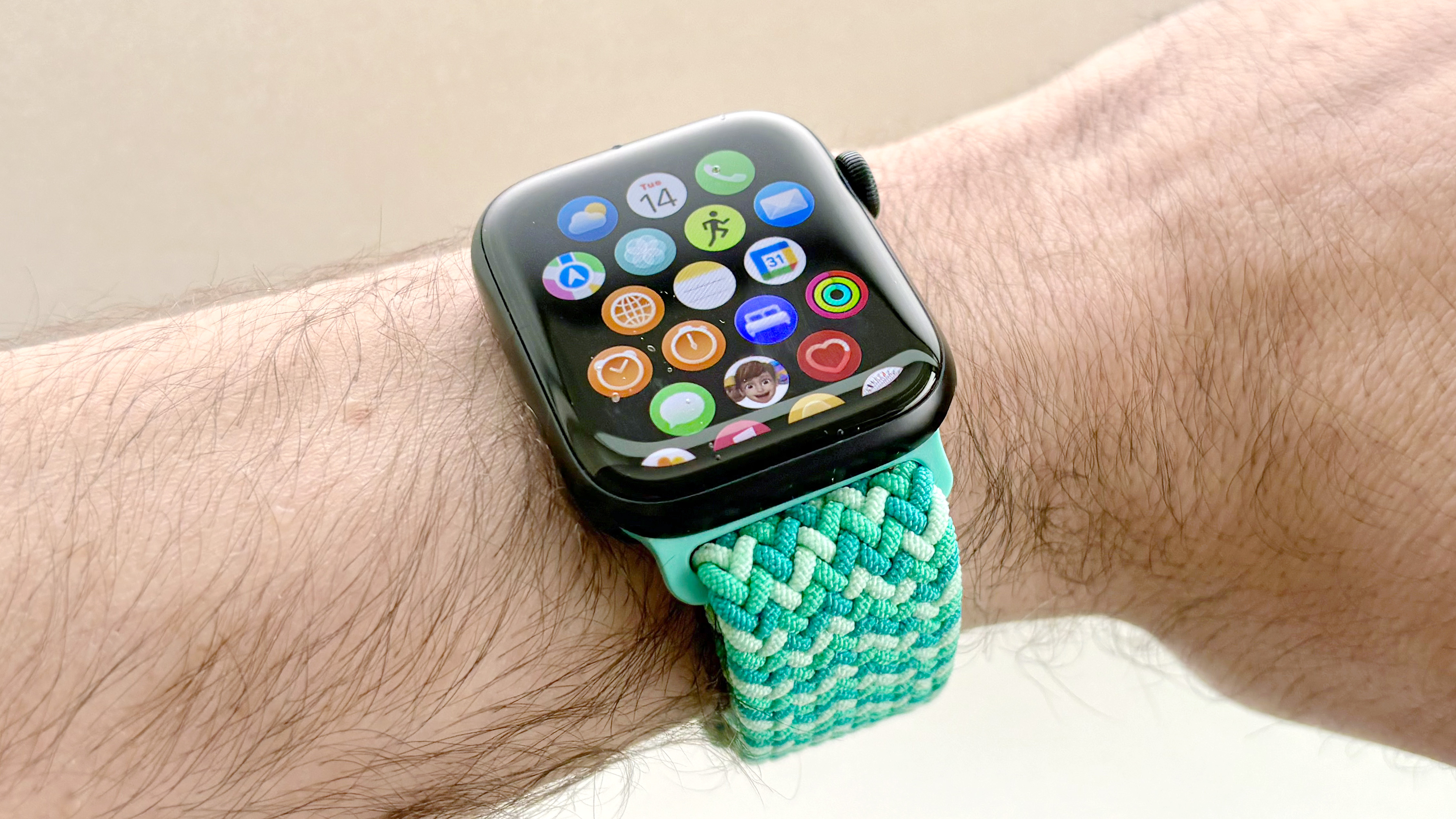
While the Forerunner 165 has the SE 3 beat with physical fitness tools, the Apple Watch smokes the Garmin at smart features and connectivity.
For example, the Forerunner 165’s list of smart features is rather short: NFC for mobile payments, onboard music storage (Forerunner 165 Music only), access to a small selection of apps via the Garmin Connect I.Q. store (watch faces, too), and… not much more.
While you can view mirror notifications, including texts, from your smartphone on the Forerunner 165, you can’t reply to them. It also doesn’t have a microphone or speaker for taking calls.
On the flip side, the Apple Watch SE 3 is absolutely brimming with smarts, including access to the world’s largest smartwatch app store, where you’ll find a dizzying array of third-party options. There are also loads of useful smart apps built in, from the Notes app and Voice Memo app, to Apple Maps for navigation and Walkie-Talkie mode for quick communication.
The SE 3 also sports an onboard microphone and speaker for taking calls from the wrist. And if you opt for the 5G-capable model, you can even take and receive calls sans smartphone.
Winner: Apple Watch SE 3
5. Safety features
(Image credit: Dan Bracaglia/Tom’s Guide)
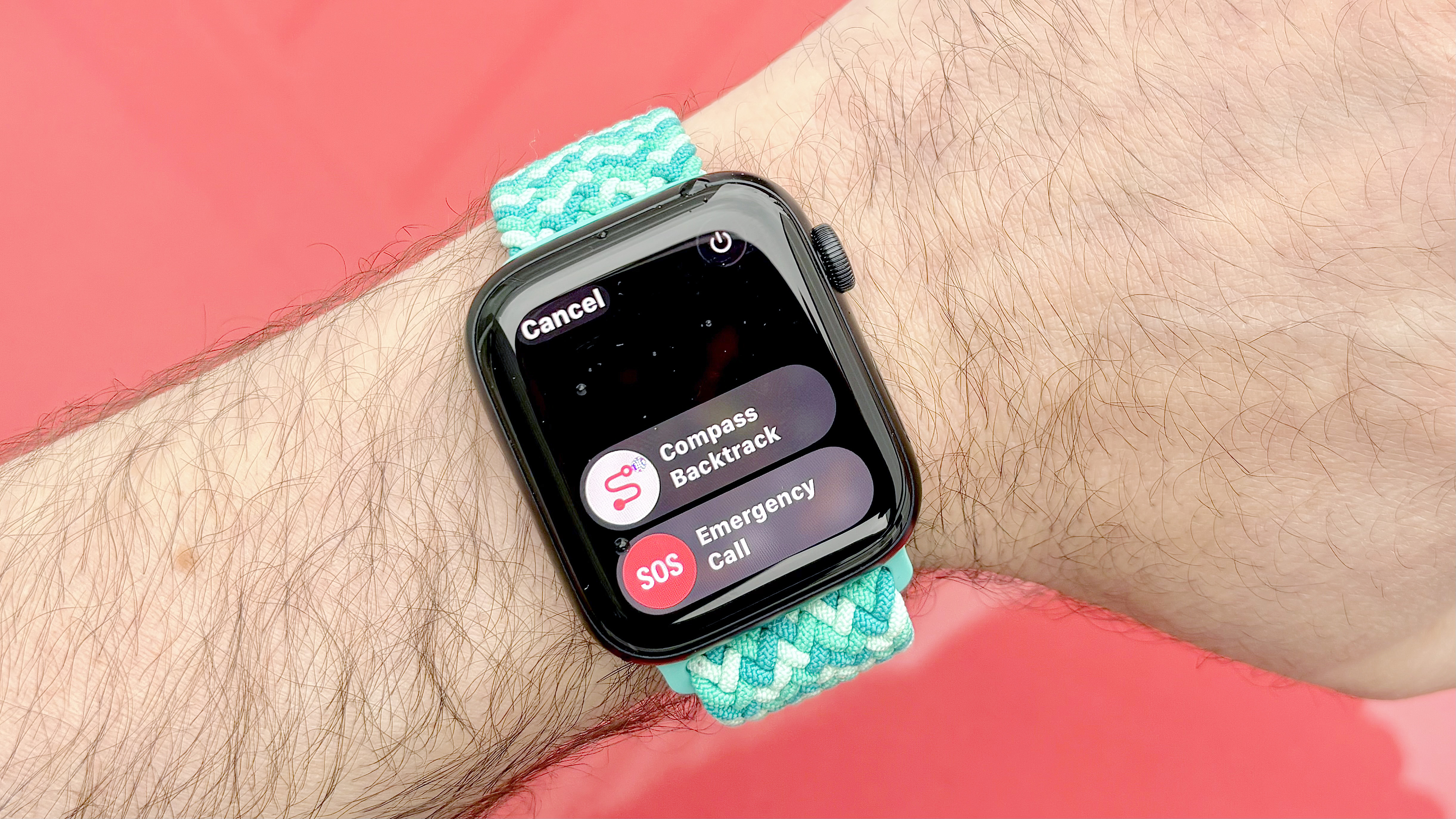
Apple and Garmin both take safety seriously. The Forerunner 165, for example, has Garmin’s LiveTrack tool, which lets friends and loved ones track your location from afar while you’re, say, running a marathon or taking on an epic hike. It also has Incident Detection, which can alert rescuers and/or loved ones to your location if a fall or crash is detected.
The SE 3 similarly has a crash/fall detection feature, as well as Apple’s Check In safety feature, which, like LiveTrack, keeps loved ones informed of your location. One safety tool that’s unique to the SE 3 is emergency SOS, which lets users contact 911 by holding the side button.
Ultimately, while this one is pretty close, the Apple Watch SE 3 offers slightly more ways to stay safe than the Garmin Forerunner 165.
Winner: Apple Watch SE 3
6. Battery life
(Image credit: Tom’s Guide)
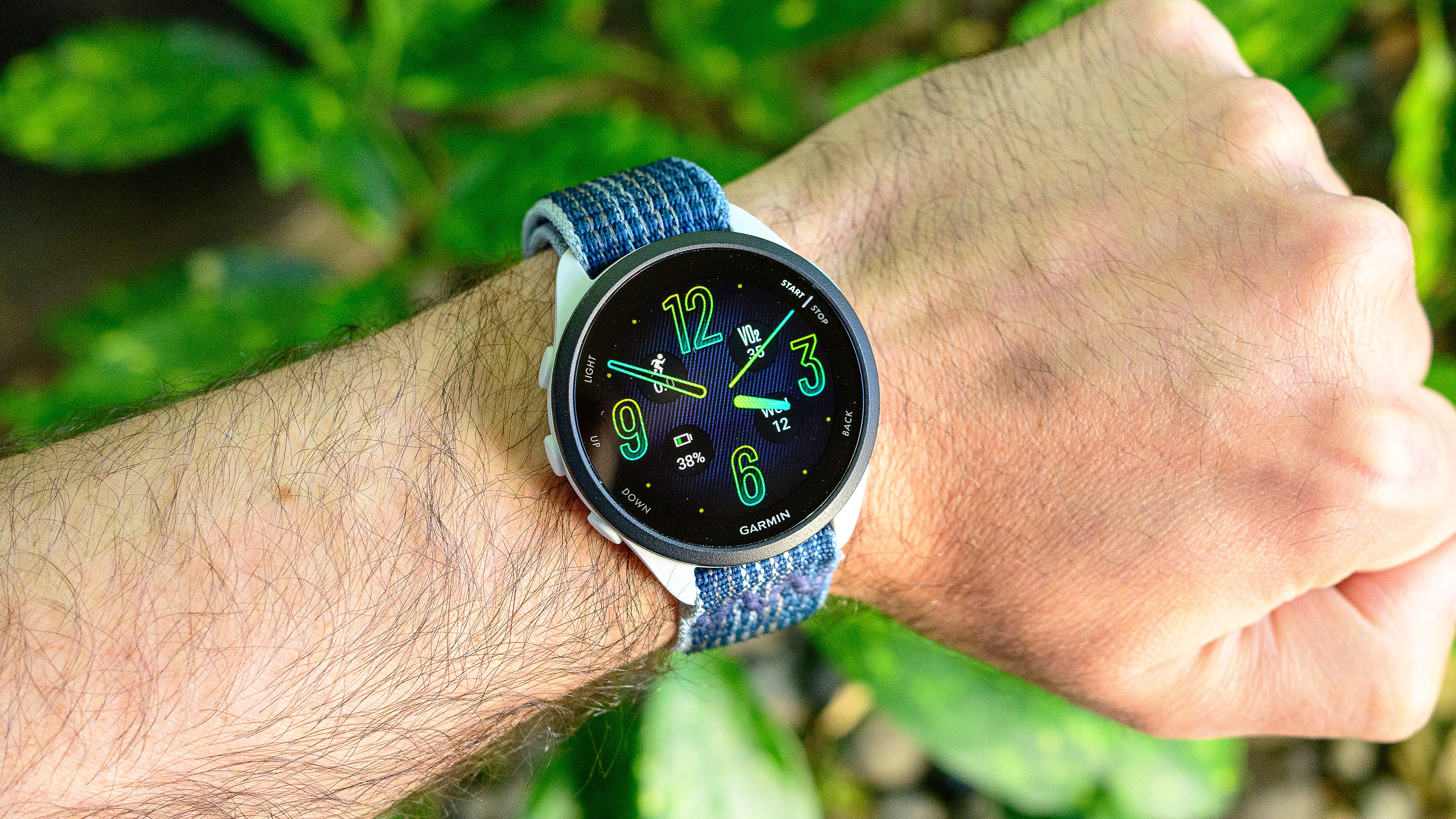
When it comes to battery life, there’s really no comparison. Even with low-power mode switched on, the Apple Watch SE 3 is only good for roughly 32 hours (18 hours in standard mode). With GPS tracking enabled, you can expect about 7 hours of use.
On the other hand, the Garmin Forerunner 165 lasts for up to 11 days per charge or 20 days in battery saver mode. When tracking a workout with GPS, battery life is good for between 17 and 19 hours.
Winner: Garmin Forerunner 165
Verdict
(Image credit: Dan Bracaglia/Tom’s Guide)
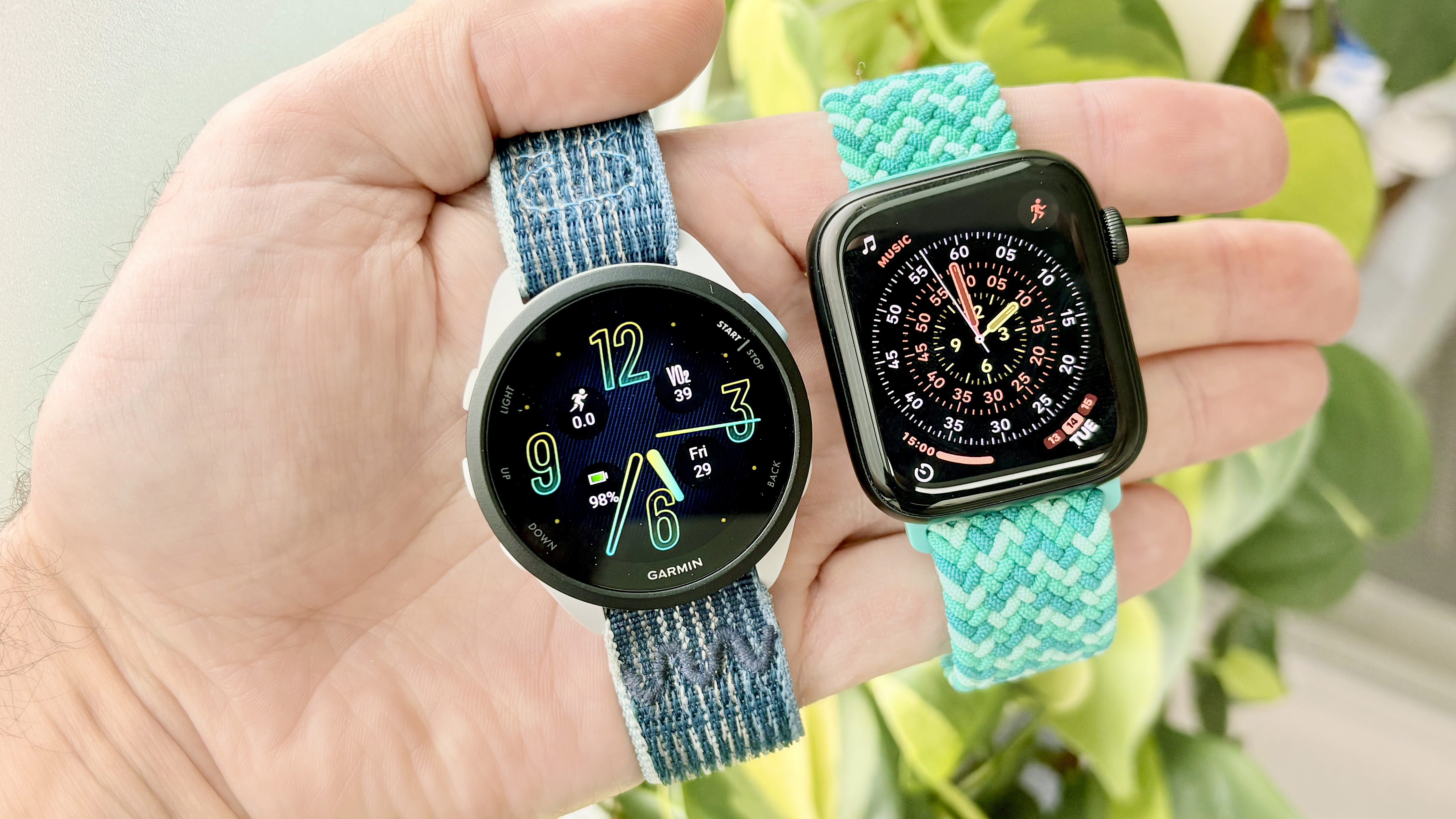
Which is the better smartwatch, the Apple Watch SE 3 or the Garmin Forerunner 165? If you’re a runner or primarily looking to track your fitness journey, the Garmin is a better choice than the Apple Watch, thanks to its comprehensive set of training and recovery tools. It’s also the superior option for battery life.
Alternatively, if you’re after a well-rounded smartwatch that can track your workout, plays nicely with a seemingly endless number of third-party apps, keeps you connected to loved ones, and works seamlessly with your smartphone, the Apple Watch SE 3 will likely be a better choice than the Garmin Forerunner 165.
What do you think, which smartwatch do you prefer, the Garmin Forerunner 165 or the Apple Watch SE 3? Let me know your favorite and why in the comments below.
Overall winner: draw

Follow Tom’s Guide on Google News and add us as a preferred source to get our up-to-date news, analysis, and reviews in your feeds.
More from Tom’s Guide