
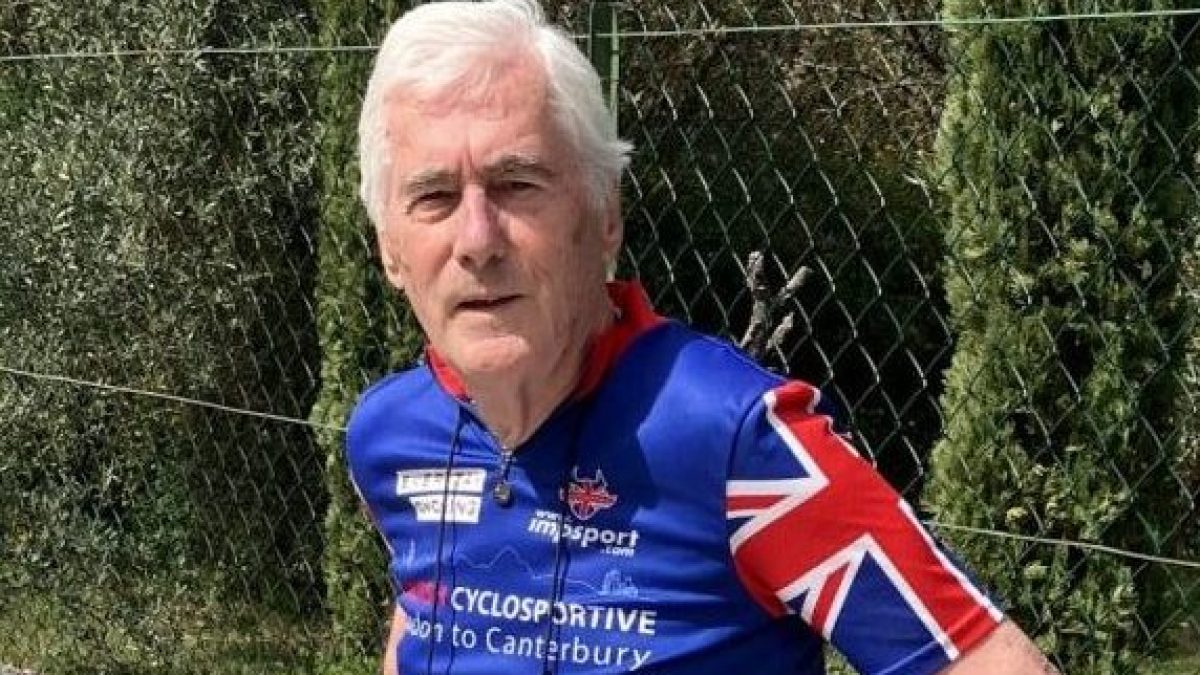
I’ve been a cycling nut since my teenage years. I’ve done lots of big bike rides all over the world with my pal Jerry – France, California, Vietnam and Laos, to name a few – but Italy has long been my favourite country to visit. So after I was diagnosed with a particularly aggressive form of prostate cancer three years ago, at the age of the 77, I thought, bugger it – I’m going to cycle around the coastline of Italy.
The diagnosis was a complete shock. It came after several painful years during which my wife, Jenny, had undergone treatment for bowel cancer. Doctors had said her prospects weren’t good, but remarkably she defied the odds and made a full recovery.
My cancer was in the early stages and needed to be dealt with quickly. Over the course of about nine months, I received hormone injections plus laser treatment, which zaps away the cancerous cells.
New FeatureIn ShortQuick Stories. Same trusted journalism.
Luckily, the treatment was successful, and I’m now in remission, but it left me feeling weak. Even though I knew I was getting older, I’m not one to accept old age very gracefully, and I wanted to prove that I can still do the challenging activities I’d always done.
When I told Jenny about my plan, she said I was nuts. I asked one or two friends to join and they said, “Don’t think so!” So – apart from one week when a pal joined me down in the heel of Italy and took the train to meet me at the end of each day – I was on my own.
I reckoned it would take about seven weeks to complete the 3,500km journey, cycling clockwise from the Slovenian border. To avoid being away for such a long stretch, I decided I would do it in four legs. It would be my version of the Giro d’Italia, the famous multi-stage bike race. And rather than seeking sponsors for the ride, I decided to write up my story and self-publish it, with proceeds from the eBook and paperback going to the Institute of Cancer Research.
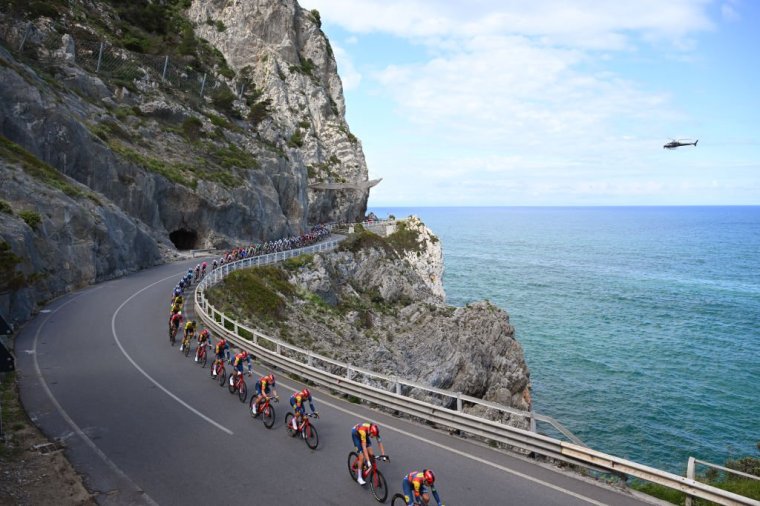 The Giro d’Italia peloton riding along the Mediterranean coast at Andora, Liguria in 2024 (Photo: Tim de Waele/Getty)
In autumn 2023, I flew from my home in Kent to Venice and took the train to my starting point, Trieste, where I hired the first of four bikes. I set off, following the mostly flat coastal route as closely as possible, although there were a few spots where cycling wasn’t possible, and I had to take a train or boat.
I hardly ever booked a hotel in advance. Typically, I’d ring at lunchtime (having been to Italy more than 50 times, my Italian is fairly decent) when I had some idea of where I was going to end up. I stayed in three-star hotels or B&Bs, paying on average about £65 a night.
I discovered some fantastic hidden-gem locations along the way and sampled the incredible local cuisine. On the first leg, Comacchio and its canals was like a mini-Venice. It’s not huge but it’s charming, with really good food. The local specialty is eels, which I wasn’t a fan of until I tried them there, served with anchovies and sardines.
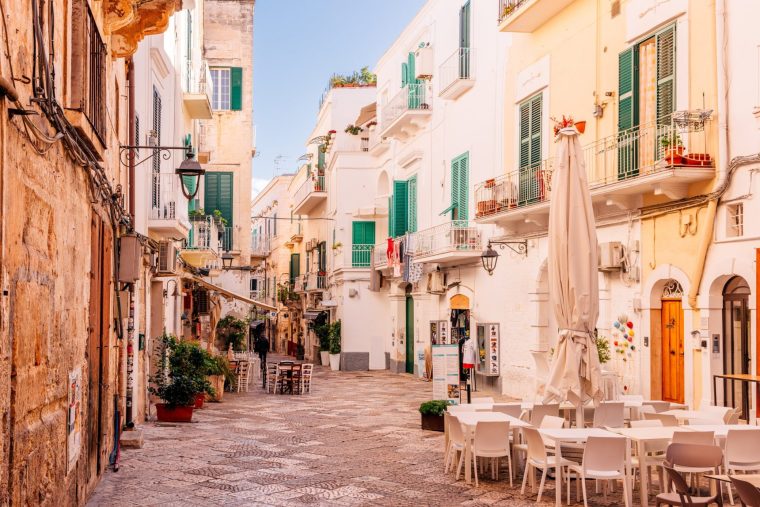 Monopoli in Puglia is a place of pretty streets and great wine (Photo: Alexander Spatari/Getty)
On the second leg, the following spring, my favourite place was Monopoli in Puglia, which is full of quaint little alleyways and famous for rosé wine – I had several glasses of really good rosé. Down in the “toe” of Italy was a surprising town called Reggio Calabria, which I discovered had been visited by some famous figures throughout the years, including DH Lawrence and the Flemish painter Bruegel. I had a boozy sgroppino dessert – bergamot sorbet served in a glass full of vodka.
Another tasty treat I had was on the southwest coast, in a little town called Pizzo, which is famous for artisanal ice cream. There must have been about 12 gelatarias dotted around the picturesque main piazza. I tried an unusual variety, comprising a shell of lemon sorbet on the outside with a scoop of soft ice cream in the middle.
I’m a bit of a history buff, so the seaside town of Ostia – the ancient port of Rome – was fascinating. A bit like Pompeii but without the crowds, it’s home to some stunningly preserved ruins.
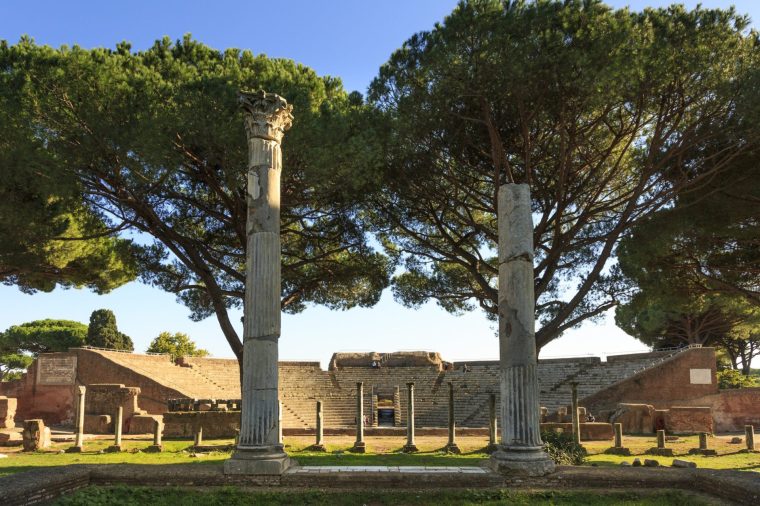 The Roman ruins at Ostia include an ancient amphitheatre (Photo: Jon Lovette/Getty/Stone RF/Jumping Rocks Inc)
Locals were wonderfully friendly and helpful wherever I went – for instance, a man cycled about 8km out of his way just to show me the route to Reggio station – but there were some challenging times too, like on the penultimate leg, when I crashed in a tunnel on the coastal road between Naples and Rome.
The tunnel was barely lit, and my bike lights weren’t very strong, so when a car came up behind me and I veered too far to the right, I smashed into the rocky wall. I was covered in grime and blood, but I made it to my next destination, the historic Villa of Tiberius near Sperlonga, where the museum staff kindly gave me supplies so I could clean up.
The most harrowing day of my journey came during the final stage, when blood in my urine left me terrified my cancer had returned. Jenny called my specialists, and they said it was probably just a legacy of the treatment and I could keep going. They did, however, advise me to get some antibiotics in case of an infection; this involved a trip to a local medical centre, where I accidentally walked into the morgue. I couldn’t get out quickly enough.
People said I was crazy to attempt a 3,500km bike ride, so I was thrilled to prove I could do it. I finished the last leg in April 2025, and now I’m planning my next ride: around the coast of Sicily. I’ll be turning 80 in July. To anyone else thinking of taking on a similar challenge, I say go for it. Age really is just a number. If you’ve got your health, you can be as young as you like.
As told to Katie Wright. My Giro: A Journey of Recovery and Discovery by Martin Newman is available now (£5.99).