
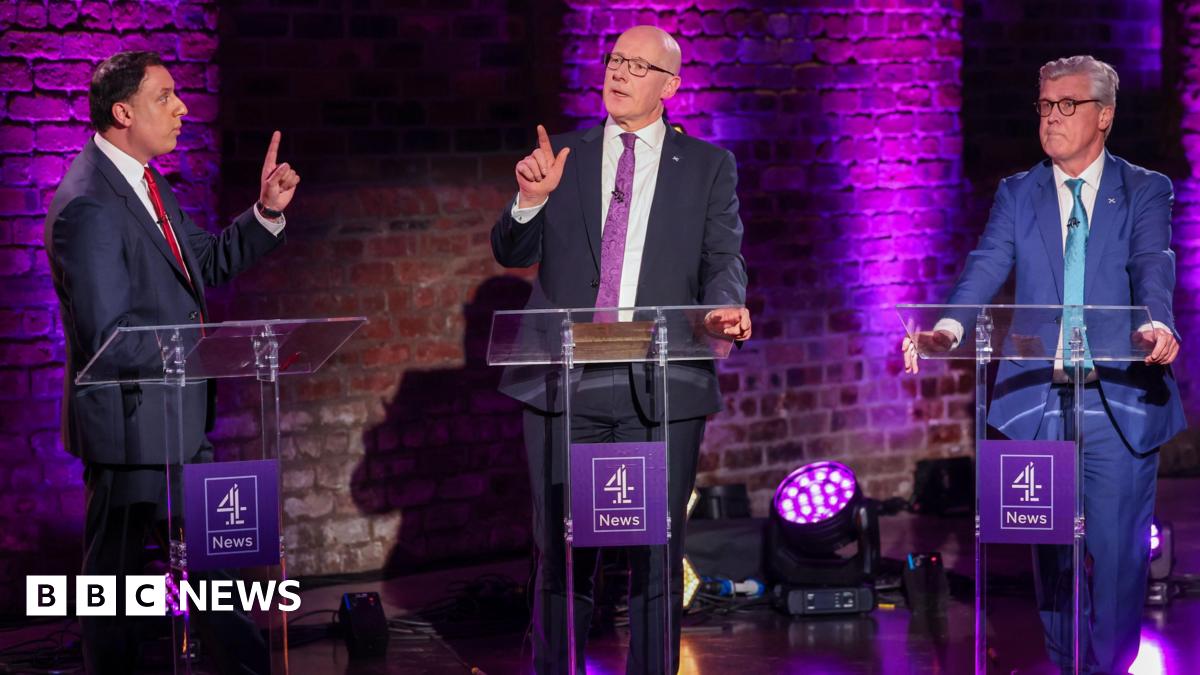
What could happen in a parliament of minorities?published at 13:44 BST
13:44 BST
 Kirsten Campbell
BBC Scotland political correspondent
In every session of the Scottish Parliament so far the leader of
the largest party has become first minister and formed a government.
But in a parliament of minorities that needn’t necessarily be the
case.
MSPs have to vote for the first minister, and the victorious
candidate needs to secure more votes than all the other candidates combined to
be elected.
If there are just two candidates then a simple majority is enough.
So it’s possible that you could come second in terms of seat
numbers, but have more support from other parties than the leader who came
first.
If that is what Labour is thinking then it’s entirely plausible
that Anas Sarwar would encourage Malcolm Offord to back him for FM rather than
allow John Swinney’s SNP a record 5th term in power.
Depending on the numbers an abstention might be enough.
It doesn’t need to mean a formal deal like a coalition or a
partnership government is in the offing.
As always it will depend on what the electorate decides.
And it’s worth bearing in mind that while it’s risky governing as
a minority because you need to strike deals with other parties to get
legislation through and critically to ensure budget votes and motions of no
confidence are won, the opposition parties also need to agree to disagree with the
government in order to stop it getting its own way.
When there are a multitude
of different parties with different views getting agreement on anything can be
a challenge.