
Your support helps us to tell the story
From reproductive rights to climate change to Big Tech, The Independent is on the ground when the story is developing. Whether it’s investigating the financials of Elon Musk’s pro-Trump PAC or producing our latest documentary, ‘The A Word’, which shines a light on the American women fighting for reproductive rights, we know how important it is to parse out the facts from the messaging.
At such a critical moment in US history, we need reporters on the ground. Your donation allows us to keep sending journalists to speak to both sides of the story.
The Independent is trusted by Americans across the entire political spectrum. And unlike many other quality news outlets, we choose not to lock Americans out of our reporting and analysis with paywalls. We believe quality journalism should be available to everyone, paid for by those who can afford it.
Your support makes all the difference.Read more
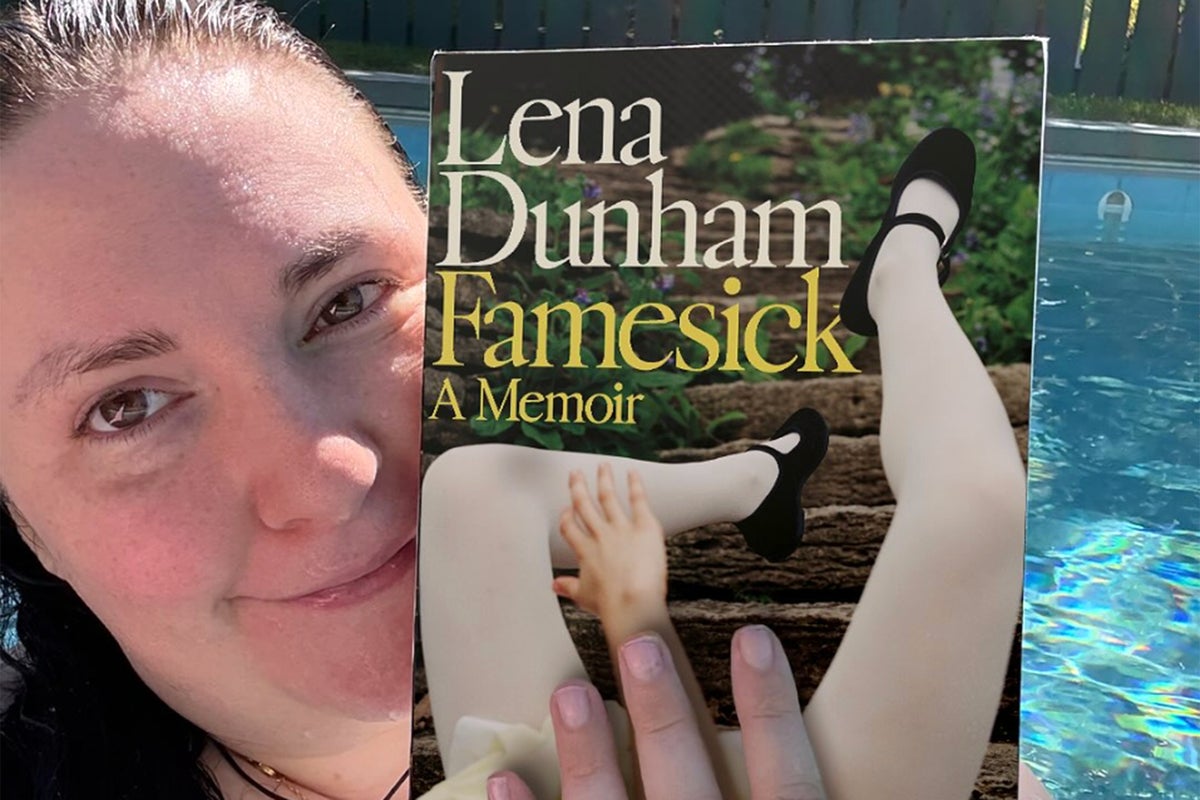
When Lena Dunham announced her new memoir Famesick, one might have assumed that its title was in reference to the nauseating, feverish experience of celebrity. An ailment that can feel parasitic in nature but really is more akin to Munchausen’s because, well, as Dunham admits early on, don’t these stars bring it on themselves?
The book, published this week, is indeed about that. But it’s also about literal sickness – a med-moir that recounts how Dunham’s rise as the creator and star of HBO’s Girls dovetailed with an onset of ailments including but not limited to: endometriosis; ovarian cysts; migraines; acute colitis; shingles, disordered eating, depression; and a connective tissue disorder called Ehlers-Danlos Syndrome. Medications flow freely across its pages, an open drip of Percocet, Klonopin, Lexapro, Demerol, Oxycontin, and Adderall. There are doctor visits, and a hysterectomy that is followed by some wince-inducing post-op sex.
Her life is one of “scraping and biopsies and cysts” superimposed awkwardly onto a backdrop of awards shows and magazine shoots. The gap between those worlds closes when her name becomes an affliction of its own – the public turning on Dunham as Dunham’s body turns on itself, leading to such odd moments as when, mid-medical procedure, “a nurse from Staten Island wonders aloud why I was so often nude on television”.
At 40, Dunham is as funny and besotted an observer of life as ever. She writes of one acquaintance: “He’d been on Gossip Girl, which at the time was as impressive as saying you’d had a supporting role in an Orson Welles movie.” On her strained relationship with her mother, she says: “I had been in a period of conflict with my mother that felt, to me, like a biblical battle between good and evil but was really just about the fact that I never, ever cleaned up after myself.”
Good humour is an antidote in Famesick, where the good times roll but the bad times somersault. Dunham paints a wistful portrait of her life pre-Girls in a section that covers her early attempts at guerilla filmmaking, a first encounter with the Safdie brothers, and when her mother, never the type to tape her drawings to the fridge, unexpectedly did a whip-round to raise funds for Dunham’s debut film Tiny Furniture. “Those first experiences of creative life are unparalleled, because you don’t know enough to worry,” she concludes.
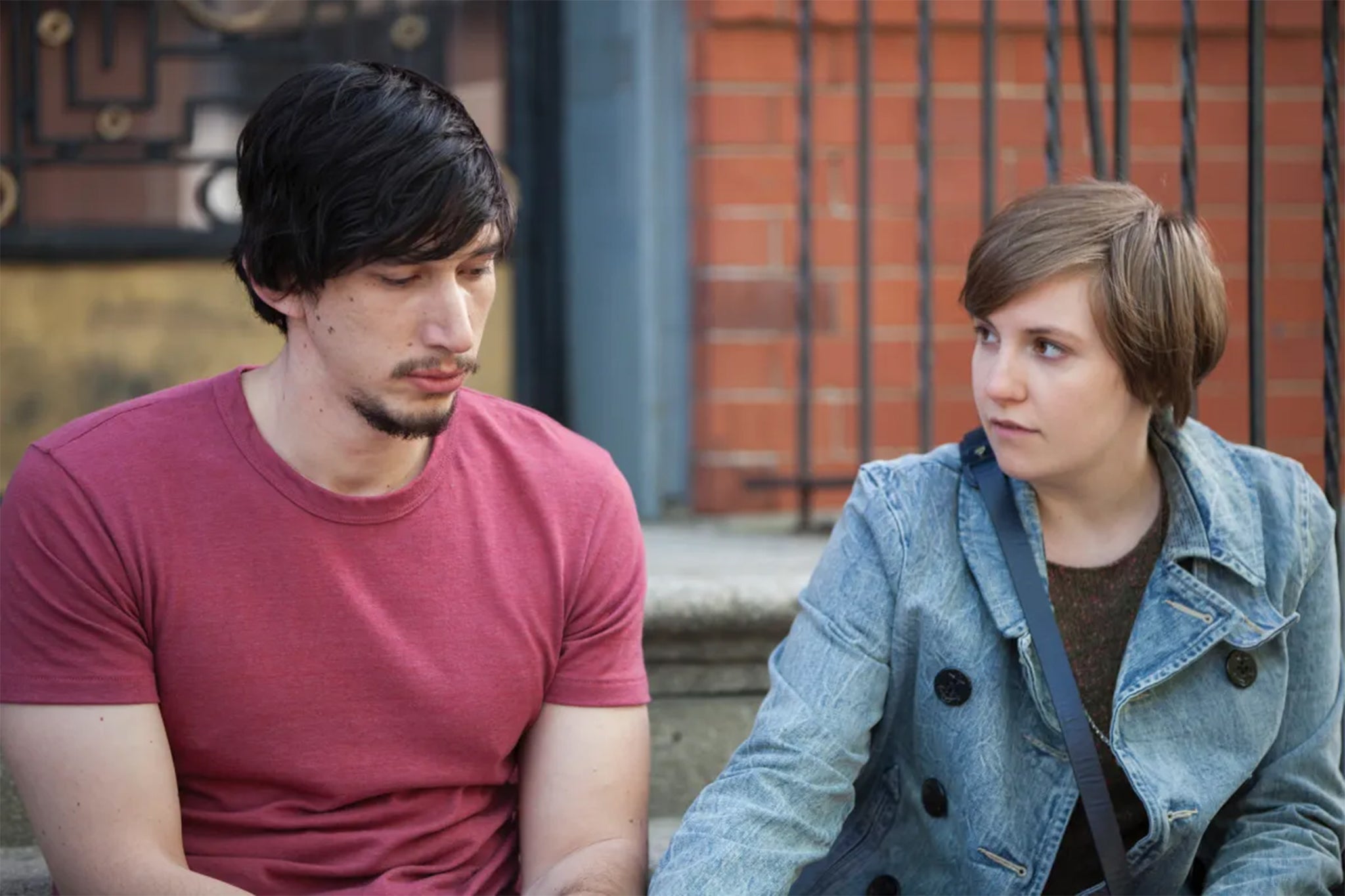 Dunham claims her co-star Adam Driver could be ‘verbally aggressive’ and ‘physically imposing’ towards her (HBO)
The subsequent chapters make good on that warning, as life gives Dunham plenty of reason to worry – including a relationship with an older man named Lip, with whom the sex grows more violent, more ominous. But there is joy too, in the exhilarating thrust of fame as Girls began raking in rave reviews and Dunham became someone to know. Is there any better feeling than grinning up at your ex-boyfriend from the front cover of New York Magazine? “I couldn’t help but thrill,” she writes.
As ever, there is nostalgia to be mined. When falling in love with the musician Jack Antonoff, Dunham says they bonded over SNL sketches and theatre kid gags. “That’s where we really came together, in our collective memory of the culture, touchpoints that felt uniquely ours,” she writes. In much the same way, Dunham peppers similar touchstones throughout: MySpace; Barbara Walters; the simple fact of wearing a crushed velvet minidress in the 2010s.
Famesick feels largely unfiltered, revelling as it does in bodily functions and fluids, which is uncharacteristic for a celebrity memoir, but unsurprising for Dunham, who has spent the better part of two decades treating Twitter like her own private journal – all the while putting on screen and on paper things that would make others blush in private. One person likely blushing (or ringing his lawyers) after reading Famesick is Adam Driver, Dunham’s Girls co-star, whom she claims was “verbally aggressive” and “physically imposing” towards her. She recalls forgetting her lines during rehearsal one night: “All that came out was a stammer – until finally, Adam screamed, ‘F***ING SAY SOMETHING’ and hurled a chair at the wall next to me.”
You’ve won. You’re only 28, and you’ve been called a racist, a fat whore, an ignorant rich girl, and a child molester. What else is left? Nothing. You’ve won
Lena Dunham on her father’s reaction to the blowback from her 2014 memoir ‘Not That Kind of Girl’
The moment has been singled out by publications – and rightfully so, Driver’s alleged behaviour is wrong in every way – but one gets the sense that Dunham recalls it here not to publicly shame her former co-star but to try to understand her response to it. Her response being, to do nothing at all. She invokes other situations, like how she remained at the beck and call of a man for months after he punched her squarely in the chest during sex. “After all, when I was a kid, when the doctor hit my knee with that little hammer, they often had trouble getting a response,” she writes. “Slow reflexes. Which is why, when Adam threw the chair, I didn’t have any further questions. I didn’t tell anyone. But I said my lines correctly after that.”
The same is true of her recollection of the movie producer Scott Rudin, who allegedly tormented Dunham in her twenties, sending her an average of 70 emails a day in which he threatened to sue over an unfinished project – bear in mind, she never signed a contract. “Within minutes, I had received a torrent of emails I can still quote from memory but won’t, because I don’t want you to be as traumatised as I was,” she writes. Still, the memory feels less like score-settling, and more a means of personal introspection – a way of understanding what came next, an incident that gave birth to that one agonising scene in Girls where Hannah jams a Q-tip so deep into her ear canal that it pierces the drum and releases a gush of blood.
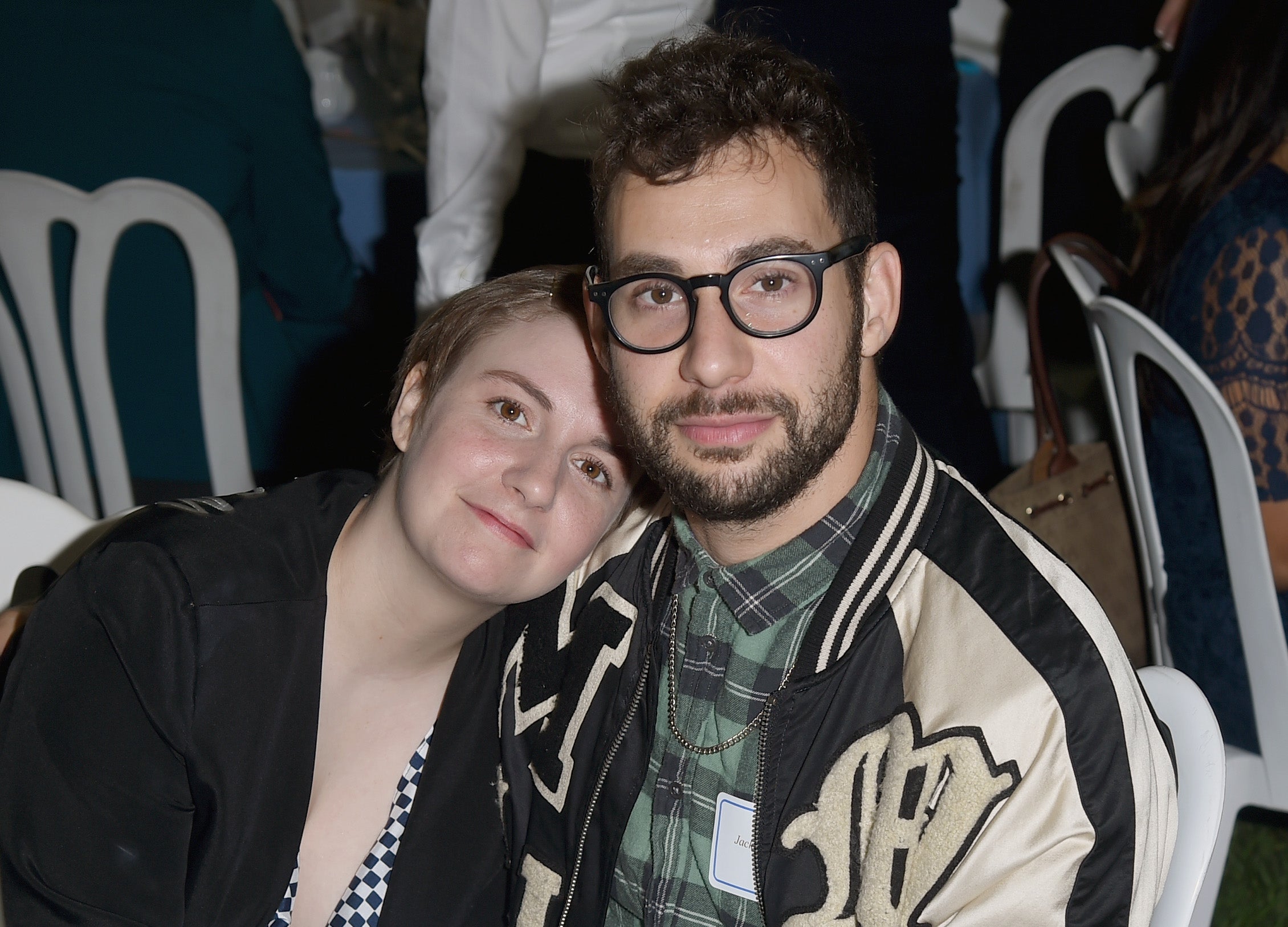 She paints her ex-boyfriend, the musician Jack Antonoff, as a sweet, if absent, presence in her life (Getty)
Memoirs can often feel like a commercial consolidation of material that has been drip-fed over years via other channels, but these stories are new, these depths previously unplumbed. And anecdotes like the Scott Rudin one give Famesick a whiff of that great, nearly-extinct artform: the celebrity tell-all. Real names, real places. The horror filmmaker Ti West is scolded as an early crush who crashed at her parents’ house all the while “sleeping with every girl in American Apparel leggings but me”. Antonoff is painted as a sweet, if absent, presence who is responsible for one of the most romantic sentences I’ve read in a long time: “I love when you get what you want.” Dunham outs herself as cheating on him.
A serial apologiser for various offences (in 2016, she wrote an essay titled “My Apology Addiction”), Dunham is characteristically contrite here. Especially over her previous defence of Girls writer Murray Miller when he was accused of rape, for which she offers remorse, but not without a hint of defensiveness – chalking her actions up to having been “high for so many days” after her hysterectomy.
 A med-moir of sorts, ‘Famesick’ recounts how Dunham’s rise as the creator and star of ‘Girls’ dovetailed with an onset of ailments (HarperCollins)
She goes some way in retracting a past apology she had issued after the release of her previous memoir, 2014’s Not That Kind of Girl, in which a story about examining her sibling’s naked body when they were both very young saw her accused of child molestation. “Don’t you get it?” Dunham recalls her father’s reaction. “You’ve won. You’re only 28, and you’ve been called a racist, a fat whore, an ignorant rich girl, and a child molester. What else is left? Nothing. You’ve won.” What Dunham is sorry for is how the scandal – and her fame – impacted her brother Cyrus. The way in which his “whole life had been defined by the gelatinous way in which I took up space”.
It’s a testament to Dunham that the chapters about Girls are by no means the most interesting. No doubt there is a thrill in reading her original elevator pitch for HBO, or how closely her descriptions of actor Jemima Kirke as “part Lolita, part Keith Richards, with a healthy dose of indie sleaze and a haughty sense of manners about very specific things like being late” align with Jessa, the character she ended up playing on the show. But Dunham has always had more to say beyond that show – and in her case, it is only becoming more clear that the truth is stranger than fiction.
‘Famesick’ is published by 4th Estate