
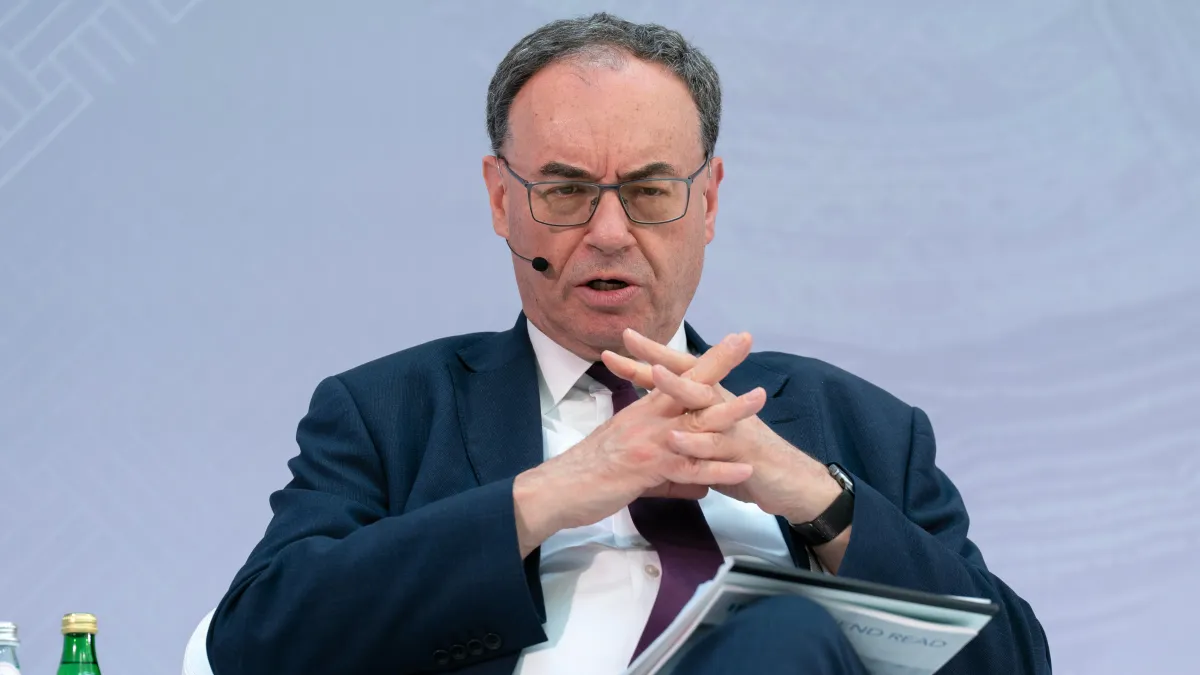
Andrew Bailey has warned that the global economy is facing a “very big energy shock” that will lead to a rise in inflation, but said policymakers would not rush into raising interest rates in response.
The Bank of England governor told the BBC that there were “difficult judgments to be made” about the UK economy as the war in Iran raises the prospect of higher energy prices.
Bailey’s comments come as members of the monetary policy committee (MPC) weigh up whether to take action on interest rates at their next meeting on April 30.
Speaking at the International Monetary Fund (IMF) spring meeting in Washington DC, he said: “There are really difficult judgments to be made. We’re not going to rush to judgments on those things, because there are a lot of uncertainties around this, not just how it’s going to play out, but also how it’s going to pass through into the UK economy.”
The MPC will meet to examine the likely impact of the Iran war after the IMF warned that the UK economy would be one of the hardest hit by the conflict.
In its latest economic outlook, the IMF said a surge in energy prices since the start of the conflict would lift inflation to double the Bank of England’s target, in part because the UK relies heavily on gas imports.
UK economic growth this year is predicted to be 0.8 per cent, 0.5 percentage points lower than the fund’s January prediction of 1.3 per cent and the largest downgrade for any G7 nation.
Bank of England policymakers were criticised by economists and MPs for being too slow to respond to signs of rising inflation after the coronavirus pandemic.
In September 2021, with inflation at 3.2 per cent and expected to reach 4 per cent, Bailey played down expectations of an interest rate rise, saying there were “substantial uncertainties” in the economy. The Bank kept interest rates at 0.1 per cent for most of that year as it tried to support the recovery from lockdown.
Before the current conflict, markets had been expecting the Bank of England to lower interest rates this year from 3.75 per cent, helping borrowers. But lenders have responded to the crisis by increasing mortgage rates and pulling an estimated 1,500 products from the market.
The central bank’s financial policy committee has now estimated that an additional 1.3 million households face higher mortgage costs as a result of the war, stating the conflict will “weigh on growth, increase inflation and tighten financial conditions”.
Megan Greene, an MPC rate-setter, said in an interview with Bloomberg this week that markets were “about right” to pull back on expectations for UK interest rate rises, after increasing bets on higher borrowing costs in March.