
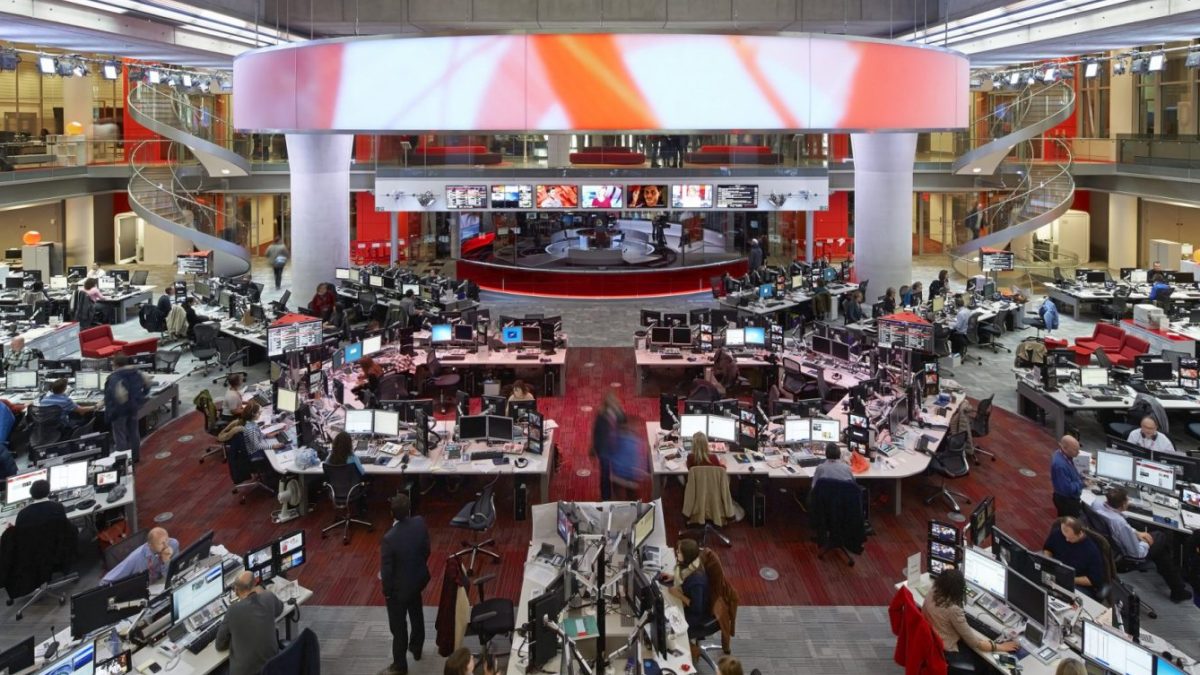
Channels could close and news bulletins may be cut back under a drastic BBC downsizing move called an “end of life” moment for the licence fee.
Staffers warned that a “hollowed out” BBC would be unable to deliver for audiences under the “savage” cuts announced this week, which would see one in 10 employees – up to 2,000 people – lose their jobs.
The closure of whole channels in order to make savings of £500m over the next two years was not ruled out by interim director-general, ho.
New FeatureIn ShortQuick Stories. Same trusted journalism.
The £66m a-year youth channel BBC Three, the broadcaster’s most expensive channel per user hour, would be in the firing line, insiders said.
Rolling news and local radio also face further cuts, senior figures said, as the BBC moves spending from “linear” channels to making shows for iPlayer and YouTube, the first choice for younger viewers who question the need to pay the £180-a-year licence fee.
The cuts, relayed on a 3pm all-staff call on Wednesday, sent shockwaves through the organisation of 21,500 employees.
‘How did bosses let it come to this?’
“The mood was anger. How did the bosses let it come to this? We knew cuts were coming but no one thought they would be on this scale,” said one staffer.
“These are savage job losses on top of rolling cuts. You would be left with a hollowed-out BBC unable to deliver programmes of ambition and scale.”
 The BBC admits non-payment of the TV licence is rising faster than predicted (Photo: Peter Dazeley/Getty)
Talfan Davies told the Radio 4 Media Show that the BBC’s financial position had deteriorated over the past six months due to inflationary pressures and the rate of households cancelling their TV licence.
“We’re losing between 400,000 and 450,000 households a year,” he disclosed, ahead of new figures to be published in the BBC’s Annual Report this summer.
‘End of life’ for current licence fee
One staffer on the call described the BBC’s message as: “Our funding model has reached end of life. The admission was seismic.”
A senior news figure said: “Goodness knows what they are up to – these redundancy rounds result in good people going and just reduce talent. They need to close stuff.”
The person suggested that the flagship “expensive” nightly TV news bulletins could be cut back, the rolling BBC News channel could move online-only and the closure of Radio 2 should be considered.
Matt Walsh, head of the school of journalism, media and culture at Cardiff University, wrote on LinkedIn: “I recently met with a former BBC board member who thought Radio 2 should close; another former executive thought all BBC TV channels other than BBC One should be axed. Radical thoughts are being had, and probably have to be had, to achieve the scale of saving being proposed.”
However one BBC insider said there was no case for closing Radio 2, the UK’s most-listened to station with an audience of 12.7 million: “It is nearly half the cost of Radio 4 – £49m compared with £86m – and delivers by far the best value per listener of any station.”
‘Difficult decisions’ ahead
In an email to staff, interim chief executive of BBC News and current affairs Jonathan Munro said: “I want to be clear – I expect that the scale of this change will mean that all areas of BBC News are affected in one way or another.”
One employee said: “Everyone is frustrated that we have to wait to find out exactly who will be affected – it feels like we are in limbo.”
The staff member added: “It feels like it’s being rushed in before the new DG starts, but it leaves us all fearing for our jobs.”
Asked by the Media Show if an entire channel, like BBC Three, could close, Talfan Davies said there would be “big, difficult choices” to make. Department heads will draw up plans to meet the savings target over the summer, he said.
Some areas will be protected, such as a new £1m YouTube documentary channel, which the BBC says is aimed at a young, “male-skewing” audience.
“You have to think about where audience behaviour is moving, to online, to social media,” said Talfan Davies, who hands over to former Google chief Matt Brittin on 18 May.
AI technology, already being used to reformat news content written by BBC journalists, is expected to play a major role in reducing costs.
Glastonbury cull?
Talfan Davies’s promise to reduce expenditure on staff attendance at conferences, awards and events prompted speculation that the BBC will no longer send up to 500 staff and freelancers to cover the Glastonbury festival.
“What were all those people doing when the Bob Vylan fiasco happened,” asked one staffer.
Giovanni Ulleri, an award-winning investigative filmmaker who began his career at Radio 4, said the cuts “feels like the end of something bigger – a version of the BBC where people could build whole careers across genres and departments, shaping ideas that defined broadcasting itself”.
“This isn’t about nostalgia, it’s about what Britain loses when that kind of institution disappears,” Ulleri wrote on LinkedIn.
However other BBC figures said the outcome would not be as apocalyptic as some staff members fear. “They always find a way to absorb cuts without viewers noticing too much. They can still spend the News budget a lot more efficiently,” one BBC veteran said.
“The real audience for this announcement is Downing Street. It’s sending a distress signal that the licence fee has to change or the BBC can’t survive.”
Talfan Davies said it was “not a sustainable funding model” to have 95 per cent of UK adults using BBC services every month but only 80 per cent of households, and falling, paying.
“In the end, if we’re going to move to a sustainable base for our funding, we’re going to need to talk to government about a better model to move forward with,” he said. “We want a model that reflects our universal consumption.”
The cuts already made by the BBC
Some departments have already introduced cuts under a rolling programme, which has delivered savings of £700m over four years.
BBC Sport will not send commentators and pundits to the expanded 48-team mens’ World Cup in the US, Canada and Mexico this summer until the quarter-final stage, with matches until then covered from Salford. ITV has said it will have a permanent studio base in New York across the five-week tournament.
The BBC Studios Events team, often hailed as producing the “crown jewels” of British broadcasting for its coverage of national and royal events, will see five out of six permanent staff members removed.
The BBC’s 6 Music Festival in Manchester last month was a “stripped-back” event held across smaller venues amid speculation that the digital music channel is facing budgetary pressures.
Previous cuts drives saw Newsnight reinvented as a talk-based show, losing its investigative reporting team and the News channel’s HARDtalk interview strand axed.
The BBC declined to comment on where the latest cuts might fall.
It referred to Talfan Davies’s note to staff, which said: “Right now, each division is working through their plans to address the bigger challenge next year – looking at how they can reduce areas of duplication, what activity they might be able to stop, while prioritising content and services that have the biggest impact on audiences.”