

Artificial intelligence-enabled robot companions, personal behaviour monitors and pain management apps could soon be used more widely within the Australian aged care and retirement sector, industry stakeholders say.
Australia is on the verge of an AI boom in the sector that could improve the quality of life of older Australians and combat loneliness, according to some experts.
But others, including the office of Australia’s eSafety Commissioner Julie Inman Grant, have voiced concerns about the ethics of unregulated use of AI and the potential for the technology to cause negative behavioural changes for some people.
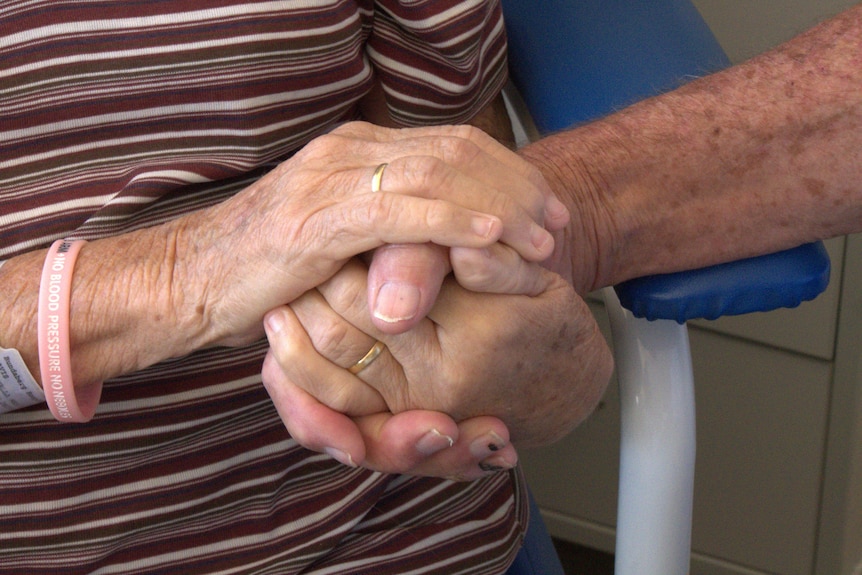
More than 1.35 million Australians are believed to access some level of aged care. (ABC News: Johanna Marie)
While some South-East Asian nations and the United States have embraced the technology in aged care, the experimental use of AI-based devices in Australia is in its infancy.
The federal government is still exploring how it can be used safely and effectively to improve care for older people.
AI part of aged care tech plan
In July 2024, former aged care minister Anika Wells launched Australia’s first Aged Care and Digital Strategy.
The strategy aims at “embracing innovation” to safely improve the sector and includes an AI framework.
“The focus is on preserving choice and leveraging technology to make in-person and face-to-face services more accessible and efficient,” a government statement released by Ms Wells’ office at the time said.
Existing AI research, guidelines and safety controls were being assessed by the Department of Health and Aged Care, according to the five-year plan.
The plan also included the creation of a pilot program for up to 20 health sector professionals to test “the potential of AI in providing better information”, the strategy document said.
About 1.35 million Australians accessed some level of aged care across the country, according to 2024 figures issued by the Australian Institute of Health and Welfare.
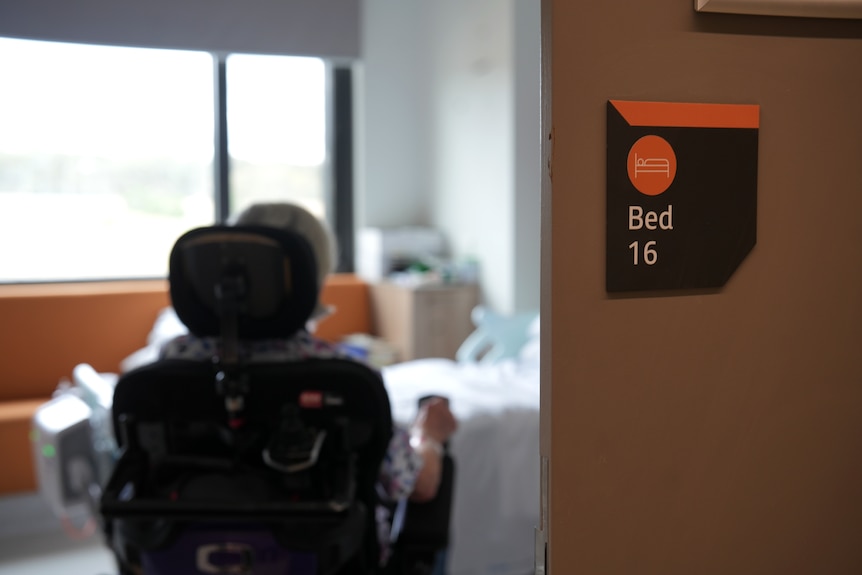
AI is used in Australian aged care settings to streamline frontline workflows and increase the frequency of carers interacting with older people. (ABC News: Lily Nothling)
The Department of Health, Disability and Ageing says AI is already being used in health care settings to improve diagnoses, treatment and the operation of services for people.
Liana Donleavy from the Aged Care Research and Industry Innovation Australia (ARIIA) non-profit says that translates into “workforce efficiency” that sees frontline staff “returning to care” for older people.
Ms Donleavy said typical uses of AI included digital scribes for note-taking and documentation, multilingual communication supports and tools to help with clinical assessments of patients.
Backlash over aged care algorithm
“They’re trying to support the workforce to remove the burden of particular activities,” she said.
“Removing those tasks then enables the workforce to spend more time with the residents and their clients.”
A fact sheet released by ARIIA in 2023 also said AI was being paired with CCTV cameras or personal wearable devices to detect when an older person may fall, experience higher-than-usual levels of pain, or experience unusual changes in their behaviour and daily routine.
Ms Donleavy said some larger aged care providers have chosen to develop their own in-house AI platforms, while other companies have sought to partner with technology companies.
The AI robots helping fight loneliness
Tom Symondson, the chief executive of the sector’s national peak body for aged care, Ageing Australia, said some providers were using AI-enabled robots to help older people who felt lonely.
The robots supplement health care provided by human nurses and doctors, and can help boost a person’s social engagement, he said.
“We spend all of our time and money [on] keeping people physically well … We don’t spend nearly enough time or money on [their] wellbeing,” he said.
“A lot of people end up needing residential care because they’re malnourished and depressed because living on their own is not what works for them — it’s not what works for most of us.
“If you can reduce that somehow, you have huge benefits … a life requires vibrancy and engagement and interaction, and so anything that can help with that is beneficial.”
Countries in South-East Asia and the United States have embraced the use of AI-enabled robotics. (Reuters: Tingshu Wang)
Mr Symondson said AI robots could help fill gaps in a person’s care left by busy human carers.
“You don’t want this kind of technology taking away from the human carer,” he said.
“But, if all of your carers are doing other tasks, there isn’t as much time to spend on social benefits.
“Some of the things that robots can do is they can walk down the corridor and can just check in on people while the human staff are busy, maybe helping someone with medication or feeding somebody or taking them to the shower.”
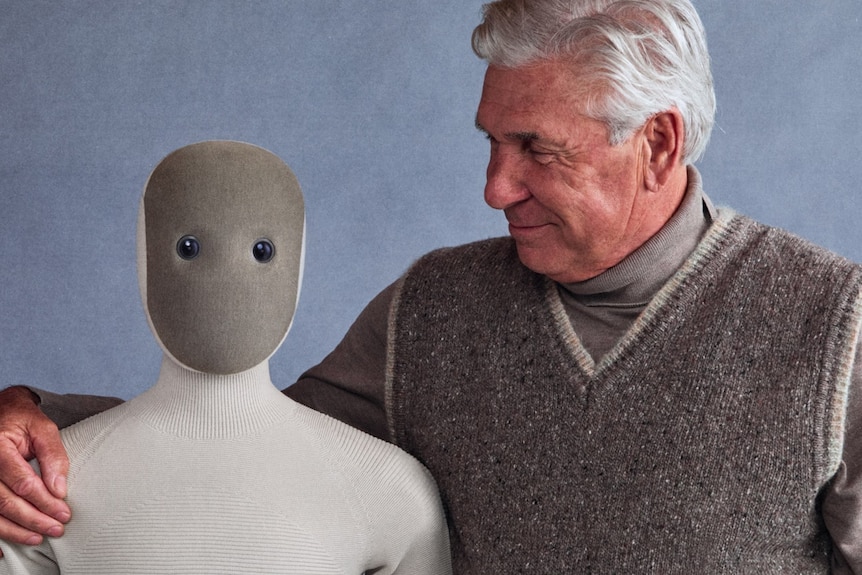
The Neo robot, developed in California and launched in November 2025, is designed to handle chores for everyday users. (Supplied: 1X)
He said he was aware of some Australian aged care providers using two types of in-home robot companions, known as Abi and Daisy.
Abi was created by the Australian tech start-up Andromeda in 2022 to “provide personalised companionship to residents in their rooms more often”, the company said.

Abi, Andromeda’s in-home AI-enabled robot companion, has been deployed into dozens of Australian aged care facilities. (Supplied: Andromeda)
It is fluent in 90 languages, can recognise a person’s face, remember past conversations and participate in activities such as singing, dancing or daily prayers.
Daisy is a “humanoid wellness facilitator” created by the Singaporean Dex-Lab in partnership with the Australian Nursing Home Foundation, which operates five aged care homes in Sydney.
The robot was designed specifically to help older Australians living with dementia, and can lead group exercise routines, play music and speak in languages such as Mandarin and Cantonese.
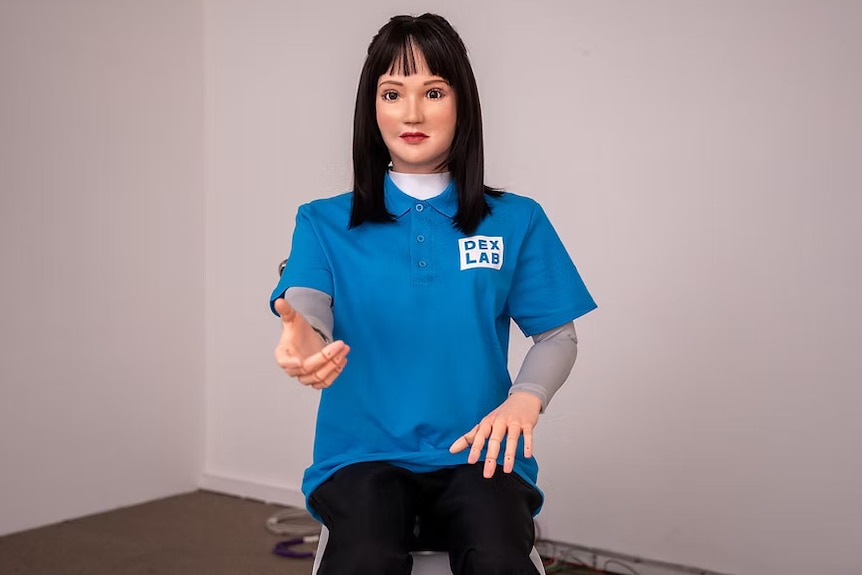
Dex-Lab’s AI robot, Daisy, has been in use across five different aged care facilities in Sydney. (Supplied: Dex-Lab)
Mr Symondson believes Australia could follow the lead of other nations with widespread adoption of AI devices in aged care facilities “in a flash”.
“That’s what happened in Asian countries, in places like Japan,” he said.
“They’ve gone, ‘We’ve got a workforce crisis, we don’t have enough people, so we have to do something different — we’ll invest in this.'”
At least 39 per cent of Australians aged over 65 reported feeling lonely, according to a 2023 State of the Nation report compiled by Ending Loneliness Together — the national organisation working to combat social isolation.
Of that cohort, 16 per cent said they experienced that emotion often or always.
The report surveyed more than 4,000 Australians aged between 18 and 92.
Pei-Chun Ko, a sociologist from Monash University, said there was little existing research that proved whether AI could have a positive and lasting impact on reducing a person’s loneliness.
Dr Ko said older Australians who were already feeling lonely may find it difficult to incorporate newer technologies such as AI into their everyday lives.
“The interest is there … It’s an emerging topic in this field,” she said.
“This is a mixed bag because loneliness is really about the quality of meaningful relationships.
“We need to understand that these technological adaptations are connected to the user’s experience.”
Unregulated AI sparks regulation debate
Australia’s eSafety office has flagged concerns about AI systems such as companionship chatbots, robots and apps simulating human-like relationships.
“If these technologies are used in a caring capacity over time, there could also be legitimate concerns about social engineering and acting in Australian adults’ best interests,” a statement provided to the ABC said.
“We are also concerned about risks relating to harmful or inappropriate content, manipulation, or over-reliance on these systems for emotional support.
“These risks reinforce the need for providers to take a Safety by Design approach, embedding strong safeguards, transparency measures and user protections into their products from the outset, rather than responding to harms after they occur.”
The eSafety office acknowledged AI could help older Australians improve their digital skills with newer technologies and make it easier for them to access vital services such as telehealth or banking.
The Australian Signals Directorate, a federal government cybersecurity and intelligence agency, defines social engineering as attempts “by malicious actors to direct individuals or staff into performing specific actions”.
The agency says advancements in AI technology have made it easier for actors who “have weaponised empathy, urgency and trust to trick individuals or staff into circumventing regular processes to achieve their goal”.
Loading…
Michelle Lim, the chair of Ending Loneliness Together, warned of the risks of using AI developed by technology companies with no experience in an aged care setting.
“We don’t know who is behind the algorithms and who is behind the technology of these AI companions — and I’m pretty sure they’re not health or community workers,” she said.
“If there’s something wrong or someone’s in trouble, how do you flag that?
“AI companies tell you what you want to hear; they don’t disagree with you, they don’t challenge you.
“The use of these companions will affect the way we think, the way we behave, it might even make some of our more unusual beliefs more concrete.”
Dr Lim has called for greater regulation.
“When you deal with emotions, and particularly if someone’s depressed, the risk goes up,” she said.
“The technology, the frameworks which AI is based on — they’re not developed by psychologists, they’re not developed by healthcare workers or doctors, they’re developed by engineers.”
Why millions are boycotting AI as debate rages over its ethical use
Dr Ko agreed and said the need to provide AI platforms with personal information or data that is then stored by a technology company, rather than health professionals, increases the risk for older Australians.
“There are some case studies that provide quite negative outcomes, meaning that if the AI robots are without any regulations or control or monitored by health professionals, the consequences might be very bad,” she said.
Ms Donleavy said aged care providers that work with ARIIA were prioritising the safety of frontline staff and their clients when adopting AI.
“There’s no point in providers implementing something that the end users aren’t going to want to use or like,” she said.
“There definitely needs to be best practice guidelines and frameworks around the use of it … [but] if there are too many rules and regulations, I am not sure whether it would become too difficult for people to implement.
“If there is something that is low-risk that can be implemented, that’s actually going to support the way the workforce works, that improves quality of care for older people because it means the staff are there [and] freed up — why wouldn’t anybody implement that?”