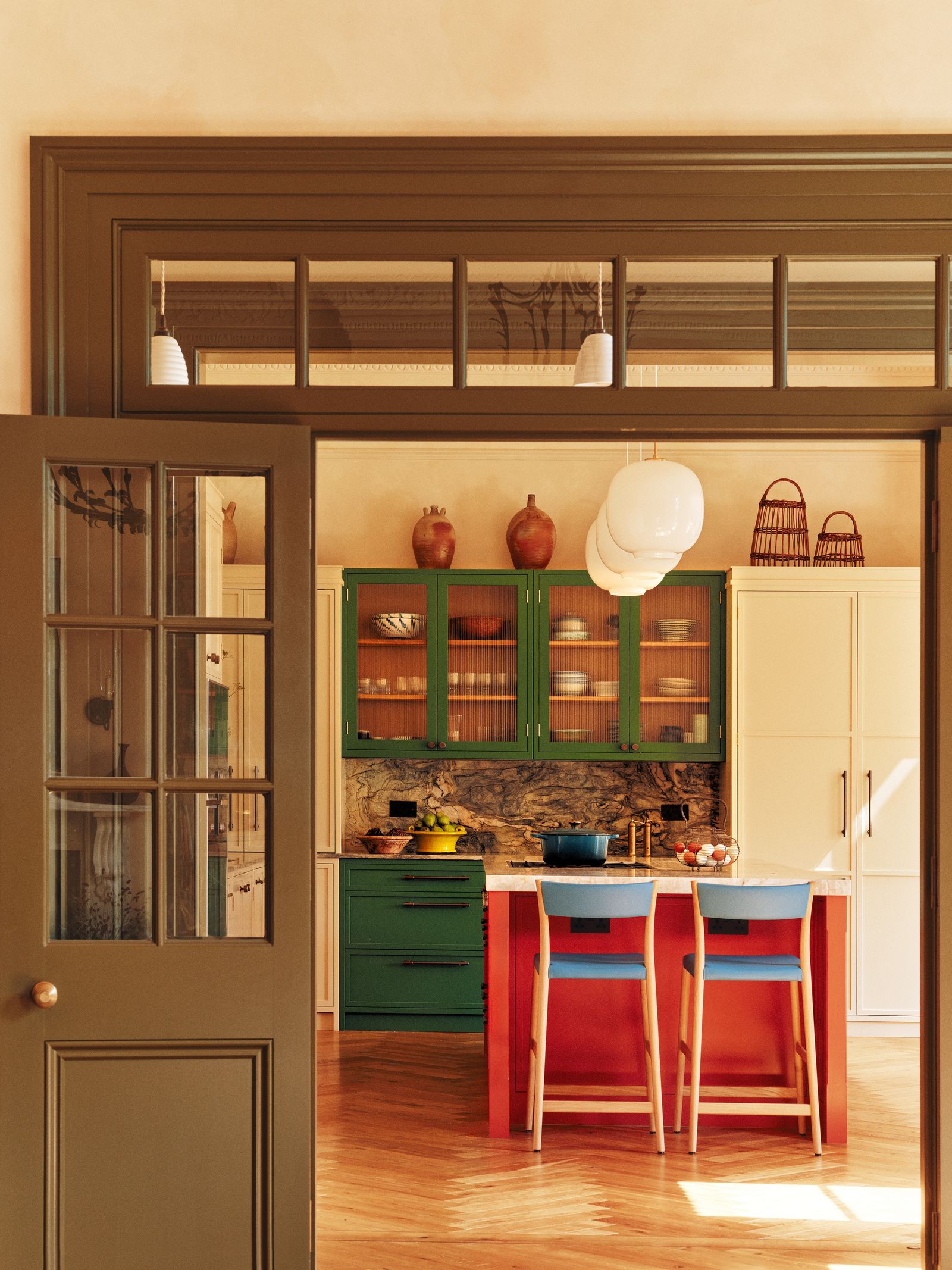
It was in the midst of reviving the first wave of rooms that a bolder and bigger vision for the property began to come to the fore – to relocate the original kitchen, replacing it with a playroom, and to rework the garden room at the back of the house to create an expansive dining and sitting room. This ambitious new layout, brought to life by Chris Dyson Architects and Miles Builders, beautifully blurs the boundaries between outside and in, and has paid dividends, since it has helped to bring the house into alignment with the family’s ever-evolving needs by creating space for togetherness or escape, as required.
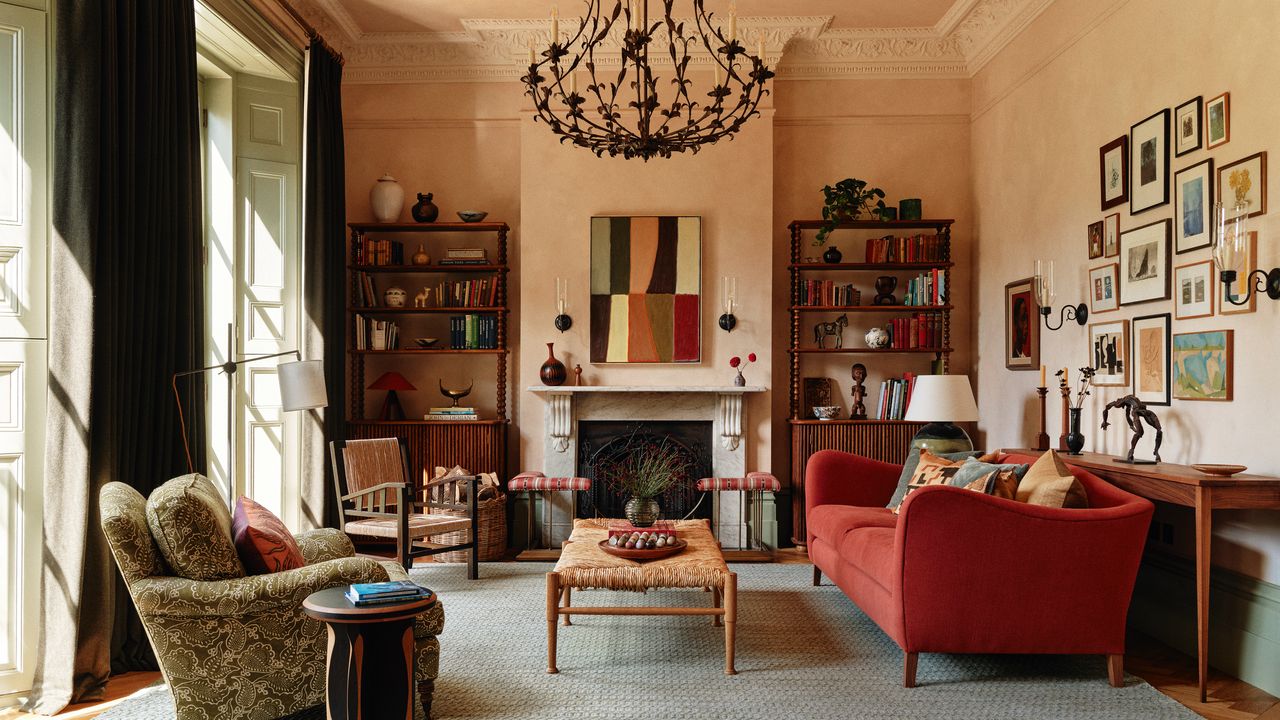
‘It was completely transformative,’ says Lonika, who, together with her three-strong team, set about bringing Chris’s plan to decorative life. Today, the original, wonderfully refined main sitting room, with its chalky palette and french windows out onto the garden, connects to the new kitchen through glazed doors. The units and island by Herringbone House are in vibrant cinnamon and a deep mossy green, with the kitchen stairs leading down into a dramatically reinvented garden room. Instead of the wooden parquet flooring that runs throughout the remainder of the ground floor, the new garden room has polished concrete in a tangy terracotta red, which provides a fiery contrast to the serene views of the garden.
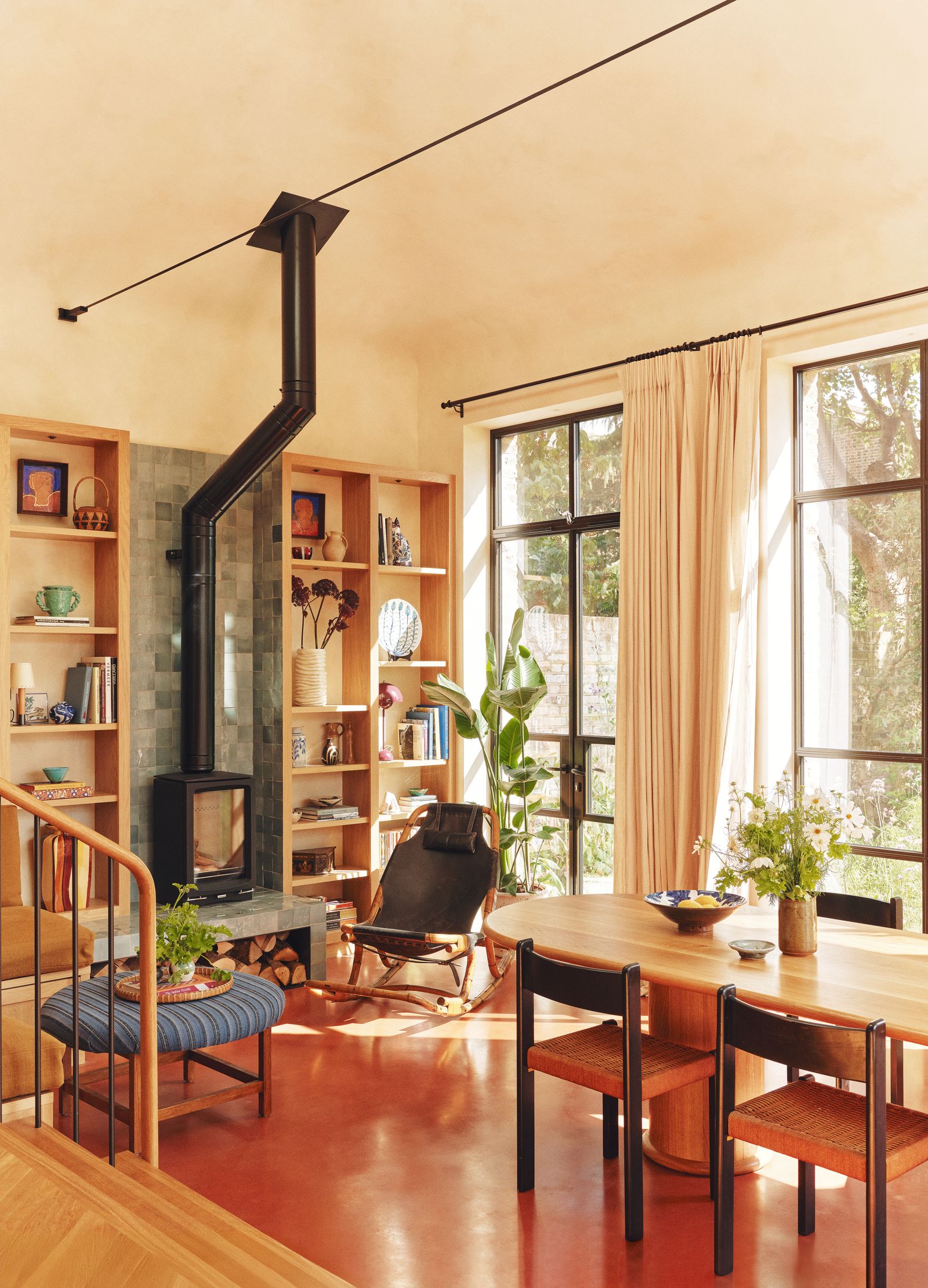
Blue zellige tiles from Mosaic Factory behind the wood-burning stove provide a cool foil to the red polished concrete floor. The 1960s bamboo and leather rocker is from Puckhaber.
Tom Griffiths
‘We wanted the new part of the house to have an entirely different feel,’ says Lonika. ‘So we really upped the ante in terms of tones and textures.’ The eclecticism that so often defines her interiors reaches its zenith in this enticing light-filled extension. The wood-burning stove is surrounded by blue zellige tiles, and the vast custom-made oak shelving displays an assortment of studio pottery, as well as a medley of antique ceramics and curios. It is a record of the owners’ peripatetic lives, gathered and exhibited in a way that is personal, unpretentious and adaptable. Many of these objects also served as a visual springboard for the textiles chosen for the bespoke ottoman and seating.