
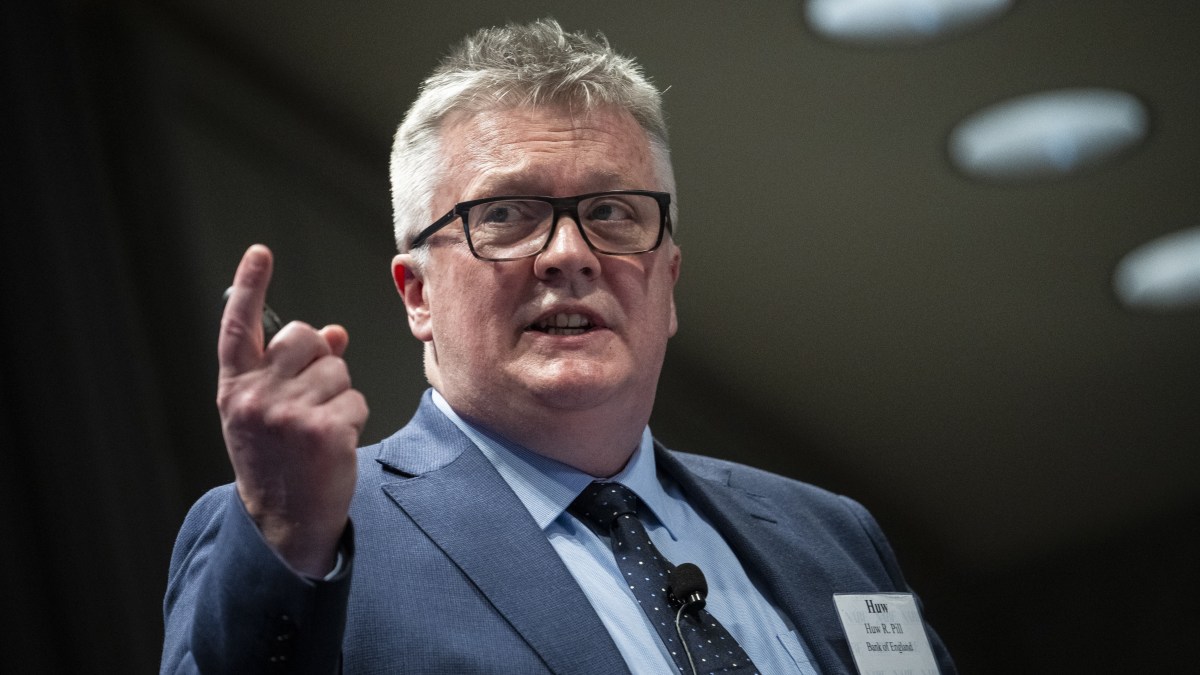
The UK economy could be facing another period of high and rising inflation, limiting the possibility of interest rate cuts this year, the chief economist of the Bank of England has warned.
Huw Pill, a member of the monetary policy committee, said there was a risk that recent rises could lead to “more persistent inflation” after the Bank said annual consumer price growth would peak at 4 per cent in September.
Pill’s comments are his first since he voted to keep interest rates unchanged at the Bank’s August meeting, where there was a 5-4 vote to cut the base rate to 4 per cent — a two-year low and the fifth reduction in the past 12 months.
The MPC’s vote was far closer than expected and underlines growing worries inside the committee that inflation will remain stuck above the 2 per cent target. The Bank also raised its medium-term inflation forecast and does not expect the target to be hit until 2027.
Pill said rising inflation and the risk that this could lead to higher pay increases and companies raising prices was “where more of the dissenting members’ focus” was.
Stubborn inflation could mean the MPC may “have to question whether the pace at which we’re reducing Bank rate over the last year, at a pace of one quarter-point cut every quarter – is that sustainable?” Pill said.
“I think that’s kind of where more of the dissenting members’ focus was, the members of the committee who were voting ultimately to hold rates at 4.25 per cent yesterday.”
Pill and Clare Lombardelli, the Bank’s deputy governor for monetary policy, were the two permanent policymakers who did not want to cut interest rates, along with two external members, Catherine Mann and Megan Greene.
Splits within the committee have led traders to cut back their bets on another interest rate cut this year.
Andrew Bailey, the Bank governor, said rates would still be coming down but there was “genuine uncertainty” about the future path of monetary policy in the face of rising prices.
“It remains important that we don’t cut the Bank rate too quickly or by too much,” Bailey said. Investors expect borrowing costs to settle at 3.5 per cent by the middle of next year.
Official figures are expected to show another acceleration in consumer prices in July, from 3.6 per cent to 3.7 per cent. Inflation has returned on the back of higher energy, food and services prices, but wages — a key measure of price pressures — are falling faster than the Bank expects.
Data on second quarter GDP growth is also expected to show the economy fell flat between April and June after a strong start to the year.