
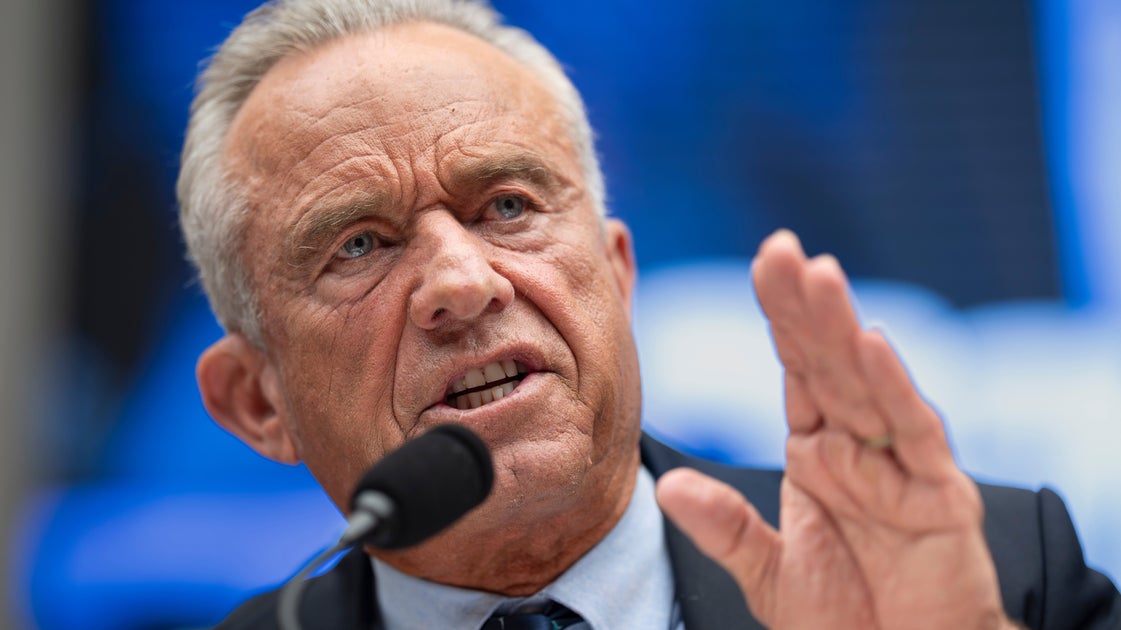
Health Secretary Robert F. Kennedy Jr. rejected the findings of a recent Danish study that found no link between autism and Tylenol use during pregnancy, calling the research “garbage” and “fraudulent.”
“The study is a garbage study; it should be retracted,” he told lawmakers when asked about the findings during Friday’s hearing before the House Committee on Education and Workforce.
The study published in the peer-reviewed medical journal JAMA Pediatrics this week evaluated the potential association using the medical records of over a million women in Denmark.
FOXX: I’ve heard a new Danish study just came out finding no connection between Tylenol and autism. What is your reaction?
RFK Jr: It’s a garbage study. It should be retracted. pic.twitter.com/Ov74eWJR3x
— Aaron Rupar (@atrupar) April 17, 2026
Kennedy argued that the study gleaned its information solely from prescriptions, which he said limited its scope of women who took acetaminophen, the pain reliever that’s often branded as Tylenol and can be purchased over the counter.
“It was a garbage in, garbage out study. The industry has the capacity to generate these studies all the time and it’s fraudulent,” he said.
The study’s publication addressed Kennedy’s concern of potential bias, stating that the “true exposure level among those with low-level exposure was likely underestimated,” but it also noted that past studies of over-the-counter drugs “have shown such bias to be largely negligible.”
One such study carried out in 2021 examined Kennedy’s concern, specifically whether Danish prescription registries are valid data sources for assessing the effects of aspirin and NSAID use. The study concluded that non-recorded use of both medications had a “virtually negligible” influence on the true usage.
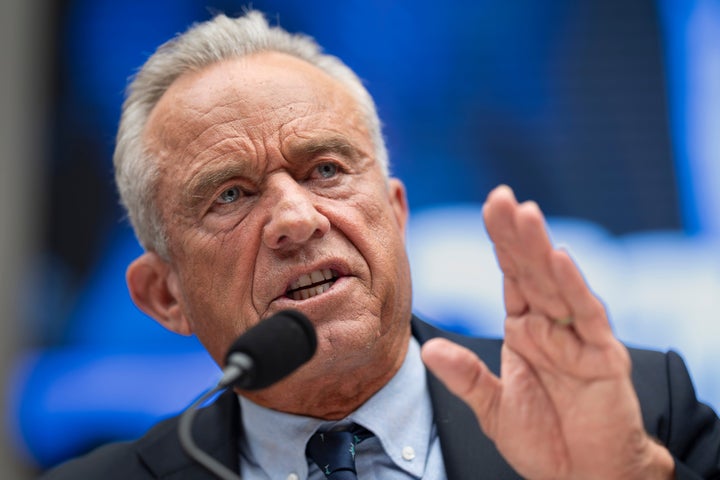 Health and Human Services Secretary Robert F. Kennedy Jr. appears before the House Education and Workforce Committee on Friday to defend his agency’s policies and goals.
Another study out of Sweden in 2024 also found no causal link between autism and Tylenol among siblings.
Kennedy’s office did not immediately respond to a request for comment on the 2021 study and on the latest study’s address of his concerns.
Dr. Jeffrey S. Morris, a professor of public health and preventive medicine at the University of Pennsylvania, who also serves as director of the school’s division of biostatistics, called out that failed acknowledgement by Kennedy, while calling his criticism of the Danish study shortsighted and dishonest.
“He overlooks the fact that the paper acknowledged and earlier Danish research directly examined the potential bias from low-dose, non-prescription use,” he said in an online response to Kennedy’s criticism.
“More critically,” Morris said the study published this past week found that the children of high-dose prescription users, who “should be at greatest risk under his framework,” had no elevated risk of autism.
“Noting this as a limitation would be intellectually honest,” he said of Kennedy. “Calling for retraction, dismissing the study outright, along with all of the other literature failing to support his narrative, is not.”
Kennedy, a year ago this month, said he would identify the cause of the autism epidemic by September.
After failing to make that deadline, he said in October that his office was working to prove that taking Tylenol while pregnant can cause autism in children. Despite admitting that no such conclusive evidence has been found, he has continued to urge caution when taking it during pregnancy.
President Donald Trump has also told pregnant women to “tough it out” and not take it if they have a fever, a direction that medical experts called “reckless and irresponsible.”
Kenvue, the maker of Tylenol, did not immediately respond to a request for comment.