
 Play Brightcove video
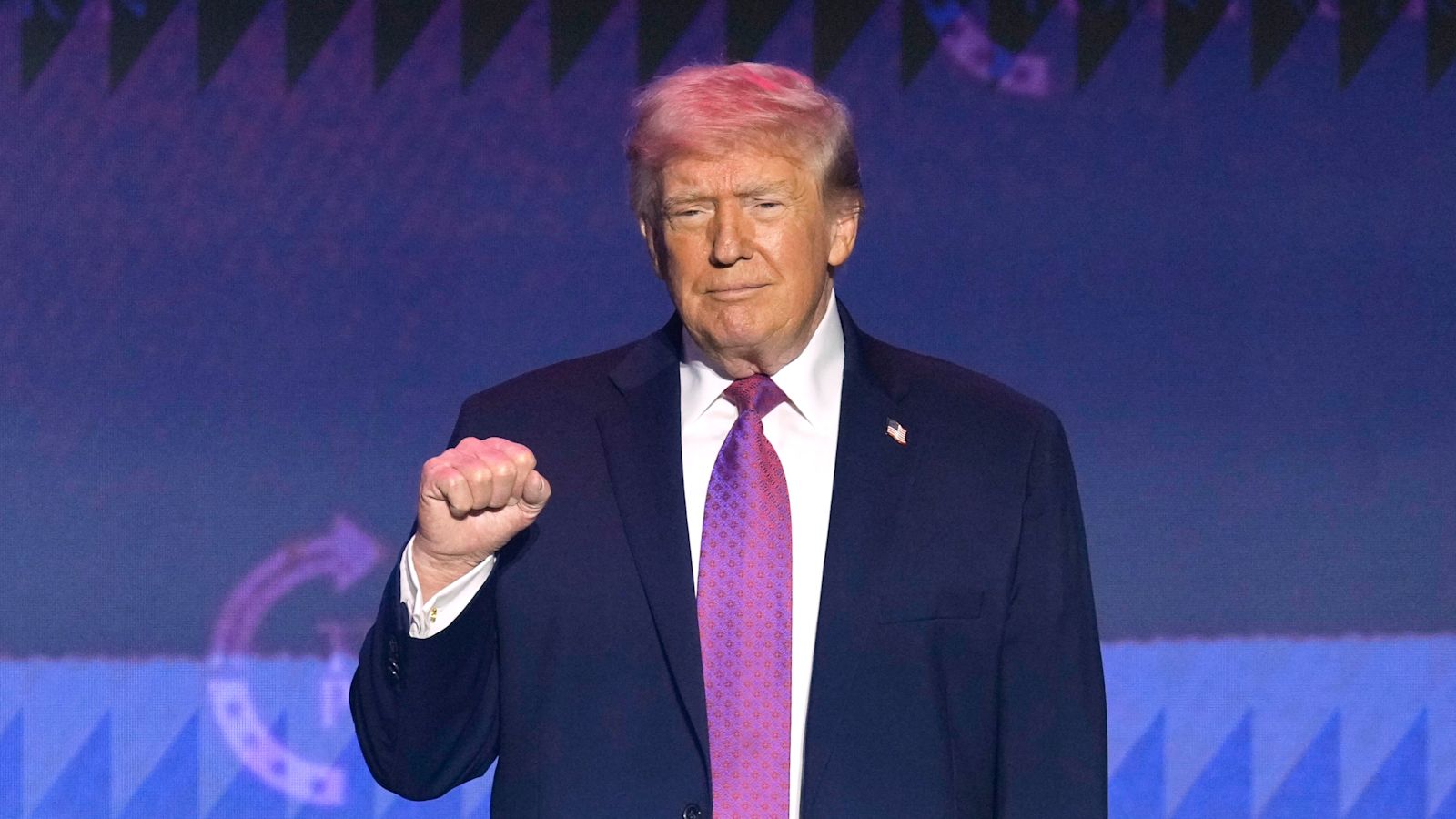
US President Donald Trump shares his thoughts on the re-opening of the Strait of Hormuz on a call with ITV News US Correspondent Dan Rivers
US President Donald Trump said he “feels good” about the Strait of Hormuz reopening, but that the US blockade will remain in place.
He was speaking to ITV News’ US Correspondent Dan Rivers on Friday, shortly after a joint statement with Iranian Foreign Minister Abbas Araghchi, which said the crucial Strait “is fully open and ready for full passage”.
But the Strait is not open as it pertains to Iran, Trump said, adding: “We have to finish the deal before we open it for Iran”.
When asked where this leaves the US-UK relationship with Sir Keir Starmer, he responded: “Not good, not good at all”.
Later on Friday, Trump suggested a second round of talks could happen this weekend.“The Iranians want to meet,” he said in a brief telephone interview with the news outlet Axios. “They want to make a deal. I think a meeting will probably take place over the weekend.”
The US President earlier told ITV News that it’s “too bad” he didn’t receive any help from Nato on the reopening of the Strait, calling the alliance a “paper tiger”.
Speaking at an event in Arizona held by conservative organisation Turning Point USA late on Friday, Trump said the negotiations “should go very quickly”, adding that “most of the points are already negotiated and agreed to”.
He also repeated his earlier claims that Iran “will never get a nuclear weapon” and that they have agreed to hand over their enriched uranium.
If true, it would be a major concession from Iran and would lock in a key demand of the US to end the conflict. Neither Iran nor countries acting as intermediaries in the conflict have said Tehran has made such an agreement.
In a post on Truth Social on Friday afternoon, Trump wrote: “The naval blockade will remain in full force and effect as it pertains to Iran, only, until such time as our transaction with Iran is 100% complete”.
Crude oil prices immediately tumbled 10% as a result of the announcement.
A spokesperson for the Iranian Foreign Ministry said on Friday evening that the blockade violated the ceasefire agreement.
In comments published by Iranian state media, Esmail Baghaei said the Strait is still under Iran’s supervision, which is serious about its commitments. But if the US violates its own commitments, then Iran “will take the necessary reciprocal measures,” Baghaei said.
The Strait of Hormuz, a crucial shipping lane through which a fifth of the world’s oil normally flows, was closed by Iran as a response to America and Israel’s strikes.
In retaliation, Trump had begun his own blockade of Iran’s oil ports, aimed at cutting off Tehran’s fossil fuel income.
The announcement was quickly welcomed by world leaders, with Prime Minister Keir Starmer saying it was “good news” but that there must be a “long-lasting and workable solution, without tolls or restrictions on routes.”
Trump’s decision to continue the blockade despite Iran’s announcement appeared aimed at sustaining pressure on Tehran as the fate of the two-week ceasefire reached last week remains uncertain.
Direct talks between the US and Iran last weekend were inconclusive, as the two nations differed over Iran’s nuclear program and other sticking points.
Mediators are now said to be pushing for compromise on three main points: Iran’s nuclear program, the Strait of Hormuz and compensation for wartime damages, according to a regional official involved in the mediation efforts.
Lebanon ceasefire key to peace
The Iranian foreign minister said that the reopening of the Strait was tied to the ceasefire with Lebanon.
Commenting on the ceasefire in Lebanon on Friday, Donald Trump posted on Truth Social that the US would work with Lebanon and “deal with the Hezbollah situation in an appropriate manner.”
He said: “Israel will not be bombing Lebanon any longer. They are PROHIBITED from doing so by the USA Enough is enough!!!”
The State Department said the prohibition applies only to offensive attacks and not to actions taken in self-defence.
But with Hezbollah not taking part in the negotiations between Lebanon and Israel and Israeli forces still occupying the south of Lebanon, it remains unclear if the ceasefire will hold.
An Israeli drone strike was reported to have killed one person on Friday, despite the ceasefire, according to Lebanese state media.
A strike in the south of the country hit a car and a motorcycle, killing one person and wounding three, Lebanon’s health ministry said.
Oil prices tumbled after the announcement. Credit: PA
It was the first airstrike and first fatality reported since a 10-day truce began.
Israel’s hard-line Defence Minister, Israel Katz, warned on Friday that Israel plans to respect the ceasefire even though attempts to completely disarm Hezbollah in southern Lebanon are “not yet complete.”
Katz said Israel would continue to hold all the places it is currently stationed, including a buffer zone extending 6 miles from the border with Israel into southern Lebanon.
Hezbollah has said Lebanese people have “the right to resist” Israeli occupation of their land and that their actions “will be determined based on how developments unfold.”
But Lebanon’s president struck a defiant tone during his first speech since the ceasefire began.
He said he wants to see Lebanon “flourishing, not committing suicide.” He condemned Hezbollah’s rocket fire into northern Israel that triggered the latest round of fighting, and criticised Iran’s role in arming and backing the group.
The fighting has killed at least 3,000 people in Iran, more than 2,100 in Lebanon, 23 in Israel and more than a dozen in Gulf Arab states. Thirteen US service members have also been killed.
Reporting History sees journalists join News At Ten anchor Tom Bradby to revisit their remarkable on-the-day reports of the defining events of the modern age. Listen to the episodes below…