
 Play Brightcove video
Less than a day after it was opened by Iran, the crucial Strait of Hormuz was closed again by Saturday lunchtime, with Tehran accusing Washington of ‘acts of maritime piracy’, ITV News’ Philip Sime reports.
Iranian gunboats have fired at a tanker in the Strait of Hormuz, the UK military said, after Iran said it had reimposed restrictions on the vital waterway.
The United Kingdom Maritime Trade Operations Centre said the tanker and crew were reported safe, without identifying the vessel or its destination.
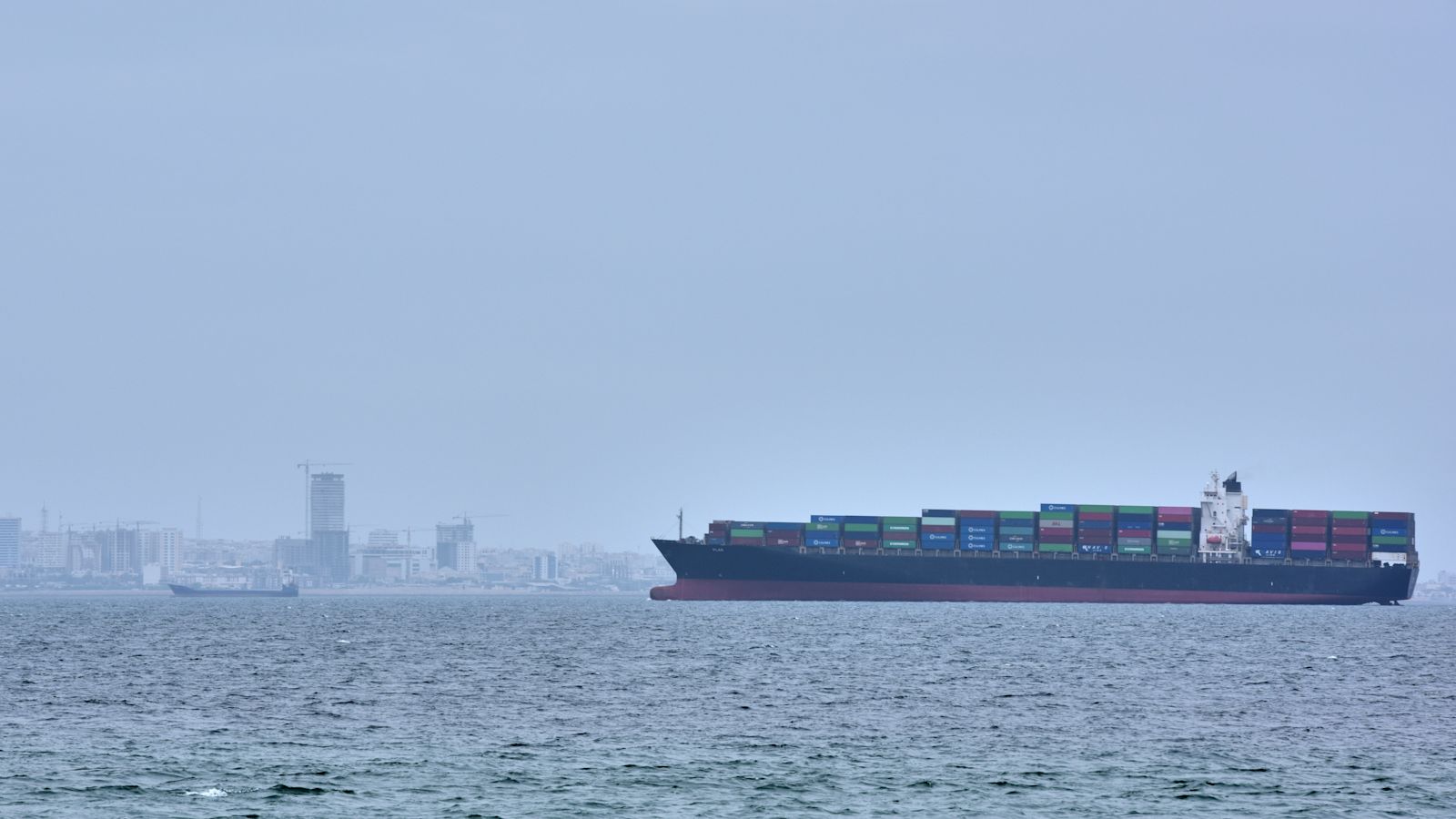
They also said a container ship had been hit “by an unknown projectile which caused damage to some of the containers”.
It comes after Iran reversed course on reopening the Strait, reimposing restrictions on the critical waterway after the US said it would not end its blockade of the Islamic Republic’s ports.
The country’s joint military command said “control of the Strait of Hormuz has returned to its previous state… under strict management and control of the armed forces”.
It warned that it would continue to block transit through the strait as long as the US blockade of Iranian ports remained in effect.
Meanwhile, US President Donald Trump has said there are “very good conversations going on” between the US and Iran, but warned them against “blackmailing us”, adding, “they got a little cute.”
The announcement of the Strait’s re-closure came Saturday morning after Trump said the American blockade “will remain in full force” until Tehran reaches a deal with the US, including on its nuclear program.
As recently as Friday, Iranian foreign minister Abbas Araghchi said that in line with a ceasefire agreement between Israel and Lebanon, the Strait of Hormuz was “completely open” for all commercial vessels.
A map of the region. Credit: iStock
Speaking at an event that evening, Trump said said that while the strait was “fully open and ready for full passage”, the US would “have to finish the deal before we open it for Iran”.
This appeared to present a red line for Tehran, with top Iranian officials claiming the US blockade violated a fragile ceasefire agreement between the two countries.
Early on Saturday, Iran’s parliamentary speaker Mohammad Bagher Qalibaf posted on X that if the US blockade continued “the Strait of Hormuz will not remain open”.
Meanwhile data firm Kpler said movement through the strait remained confined to corridors requiring Iran’s approval.
The US and Iran are in the middle of a fragile truce which is due to last until April 22, while Israel and Lebanon have begun a 10-day ceasefire.
Asked by a reporter on Friday night what he will do if there’s no deal when a ceasefire with Iran expires next week, Trump said: “I don’t know. Maybe I won’t extend it, but the blockade is going to remain.
“But maybe I won’t extend it, so you’ll have a blockade and unfortunately we’ll have to start dropping bombs again.”
However, Trump also told reporters accompanying him aboard Air Force One to Washington that, “I think it’s going to happen,” referring to a deal.
Despite the escalation in the Strait of Hormuz, officials in Pakistan, who helped broker the current truce, say the United States and Iran are still moving closer to a deal ahead of the April 22 ceasefire deadline.
Speaking at a diplomatic forum in Antalya, Turkey, Pakistan’s Foreign Minister Ishaq Dar said the separate ceasefire in Lebanon was a positive sign.
He noted that fighting between Israel and Hezbollah had been a key sticking point before talks in Islamabad ended “very close” to an agreement last weekend.
Pakistan is expected to host a second round of talks between Iran and the US early next week.
US President Donald Trump announced the blockade after nuclear talks between America and Iran broke down Credit: Alex Brandon/AP
Questions remain over Lebanon truce
While mediators have been optimistic, it is unclear to what extent Hezbollah will abide by the truce between the Lebanese and Israeli governments.
The militant group did not play a role in ceasefire talks and has previously said it would not recognise the legitimacy of the negotiations, which have allowed Israel to continue occupying a stretch of southern Lebanon.
Trump said in another post that Israel is “prohibited” by the US from further strikes on Lebanon and that “enough is enough” in the Israel-Hezbollah war.
The State Department said the prohibition applies only to offensive attacks and not to actions taken in self-defence.
An ambulance belonging to Hezbollah’s health unit lies amid the rubble of an Israeli airstrike in Jibchit, southern Lebanon on Friday. Credit: AP
Shortly before Trump’s post, Israeli Prime Minister Benjamin Netanyahu said Israel agreed to the ceasefire in Lebanon “at the request of my friend President Trump,” but that the campaign against Hezbollah is not complete.
He claimed Israel had destroyed about 90% of Hezbollah’s missile and rocket stockpiles and added that Israeli forces “have not finished yet” with the dismantling of the group.
In Beirut, displaced families began moving toward southern Lebanon and Beirut’s southern suburbs despite warnings by officials not to return to their homes until it became clear whether the ceasefire would hold.
The Lebanese army and UN peacekeepers in southern Lebanon reported sporadic artillery shelling in some parts of southern Lebanon in the hours after the ceasefire took effect.
The war, which began with US and Israeli strikes on February 28 has killed at least 3,000 people in Iran, more than 2,290 in Lebanon, 23 in Israel and more than a dozen in Gulf Arab states. Meanwhile 13 US service members have been killed.
Subscribe free to our weekly newsletter for exclusive and original coverage from ITV News. Direct to your inbox every Friday morning.
Reporting History sees journalists join News At Ten anchor Tom Bradby to revisit their remarkable on-the-day reports of the defining events of the modern age. Listen to the episodes below…