
(Credits: Far Out / Andrew Smith)
Sat 18 April 2026 14:17, UK
There are few artists who manage to turn their childhood influences into superfans of their own music, but then again, Jeff Buckley was never like the rest.
While the relationship with his singer-songwriter father, Tim, was difficult, Buckley still grew up listening to a host of classic rock’s biggest icons, ranging from Queen, Jimi Hendrix, Pink Floyd and, most importantly, Led Zeppelin.
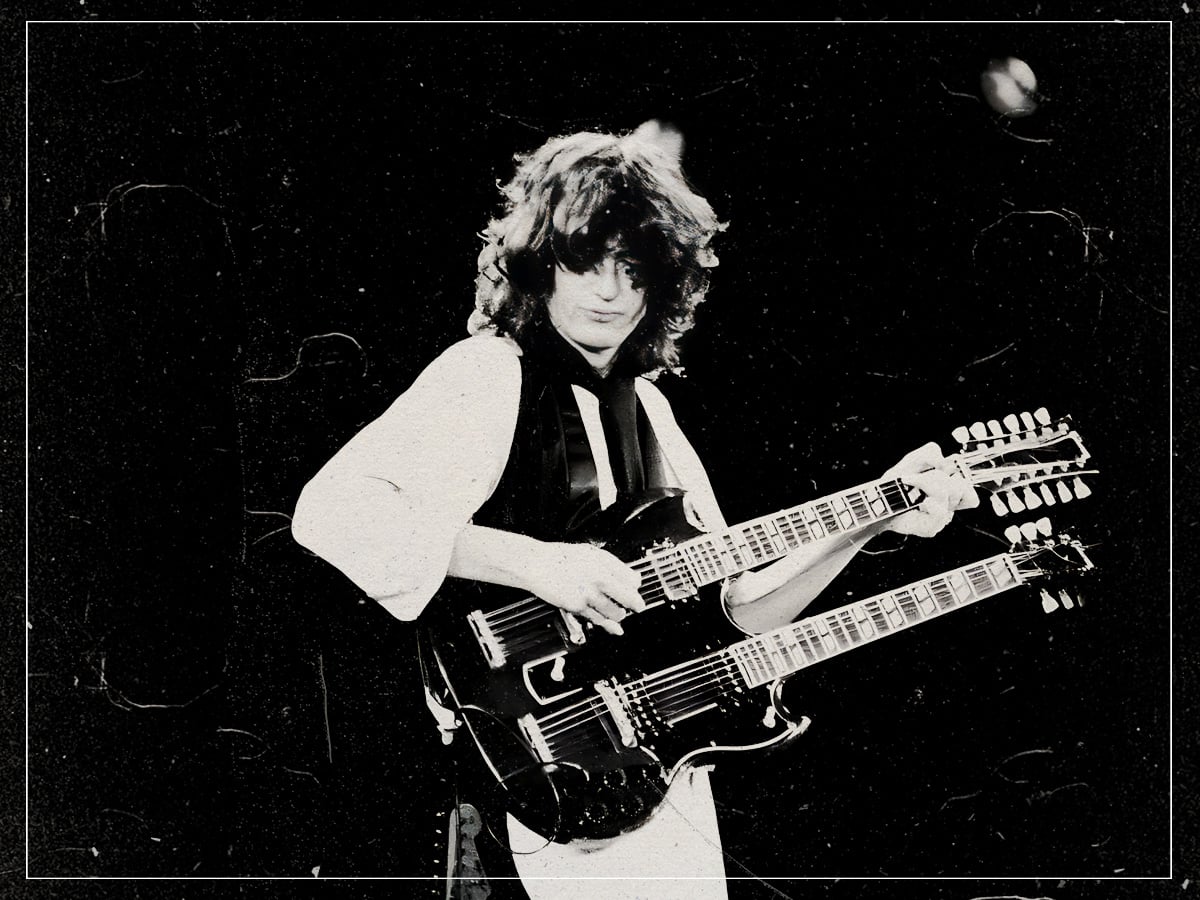
Perhaps unsurprisingly, Led Zeppelin’s 1975 record Physical Graffiti was the first album Buckley owned. In 1993, his first commercial recording, the Live at Sin-é EP, featured a cover of ‘Night Flight’, an ode to their influence on him in his youth. Eventually, his childhood hero, Jimmy Page, became equally enamoured with Buckley’s own musical output.
Reflecting on the legacy of the singer-songwriter, Page once took to Instagram to call Buckey an “ethereal spirit” and a “magical musician”.
He continued: “Grace showcased a unique talent. His name was on the lips of all musos from the release of that album and for the next two years.” Page first heard Buckley perform live while headlining Glastonbury Festival with Robert Plant. He reminisces on the magic of Buckley’s presence, “you could feel him, it was extraordinary”.
 (Credits: Far Out / Magnolia Pictures / HBO Documentary Films)
Page admired the performance so much that he set out to see him in Melbourne at the Palais Theatre in 1996, recalling: “His level of communication through the dynamics of his music, vocals, lyrics, guitar playing and rapport built to something of a spiritual communion. I know those that witnessed him would agree.” The effect of this on Page remained, as he named Grace as close to being his “favourite album of the decade” during the documentary Jeff Buckley: Everybody Here Wants You.
There is certainly a transcendent, ethereal nature to Buckley’s music. In his haunting, emotionally-charged vocals, the poetry of his lyricism, and his sparkling, layered guitar instrumentals, there’s an unexplainable beauty few musicians have come close to obtaining.
When Buckley finally met his childhood hero, the experience reduced them both to tears. In an interview with Uncut, Fishbone’s Chris Dowd shared Buckley’s experience of the encounter, recalling, “Jeff told me they cried. They actually cried when they met each other. Jimmy heard himself in Jeff, and Jeff was meeting his idol. Jimmy Page was the godfather of Jeff’s music. A lot of people thought Tim was the influence on Jeff, but it was really Zeppelin.”
Buckley invited Page to work with him on his next album, but Page never saw him again. He concludes: “he left a tantalising legacy”.
Returning the favour of Page’s early influence on him, Buckley had a huge impact on Page with his transcendental music. This impact is not limited to Page – Buckley’s influence can be felt throughout music. Since his death, few others have managed to forge songs with so much emotion and magic.
In many ways, Buckley represents one of those rare artists whose reach far exceeded the brief span of his career. Despite only releasing one studio album in his lifetime, the depth of feeling in Grace ensured that it resonated with musicians and listeners alike, continuing to inspire long after his passing.
That connection between influence and legacy feels almost cyclical in Buckley’s case. The same records that shaped him as a young artist eventually led him to stand shoulder to shoulder with his heroes, proving that great music has a way of folding back in on itself, creating new voices from the echoes of the past.
