
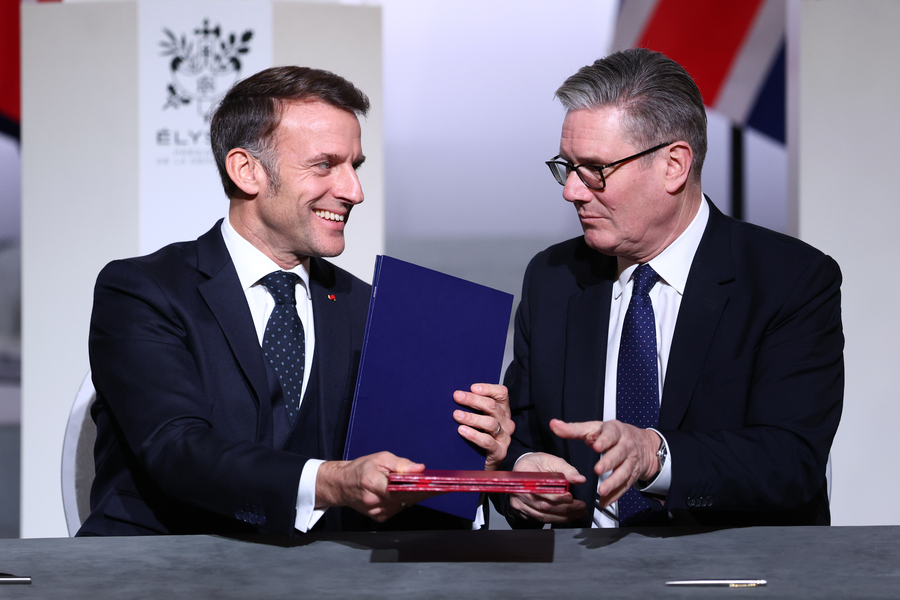
France and the United Kingdom are accelerating efforts to promote a European-led initiative focused on the security of the Strait of Hormuz. Against the backdrop of escalating tensions between the United States and Iran, this initiative is seen both as an attempt to safeguard maritime order and as a reflection of growing strategic differences between Europe and the United States.
The Telegraph reported on April 15 that French President Emmanuel Macron and UK Prime Minister Keir Starmer plan to jointly host a video conference on April 17, bringing together dozens of countries to discuss the establishment of a “multilateral and purely defensive” maritime operation. According to the French side, the mission aims to restore freedom of navigation in the Strait of Hormuz when security conditions permit. Participating states would mainly consist of “non-belligerent countries,” although a specific list has not yet been released.
French Foreign Minister Jean-Noël Barrot stated that the mission would only be deployed once the situation calms and hostilities cease, and would not include direct belligerents such as Israel, Iran, or the United States. Macron also revealed that he had previously spoken separately with U.S. President Donald Trump and Iranian President Masoud Pezeshkian in an effort to de-escalate tensions diplomatically.
Meanwhile, Politico noted that after weekend U.S.-Iran negotiations failed to reach an agreement, the Trump administration proposed blocking the Strait of Hormuz to force Iran to make concessions on its nuclear program. This hardline stance has become an important backdrop to Europe’s development of an alternative approach.
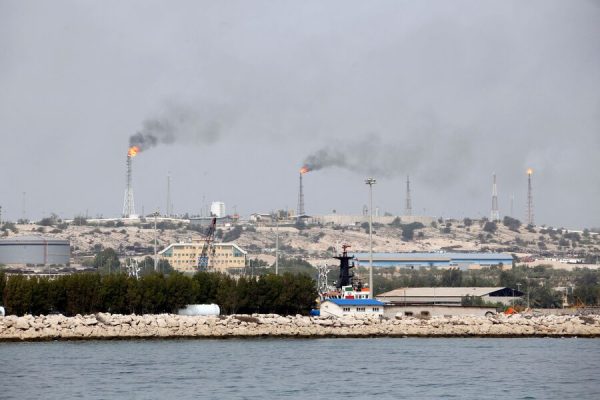 An oil facility on Khark Island along the Persian Gulf coast, Iran’s primary crude oil export terminal. (Image: ATTA KENARE/AFP via Getty Images)
A European security vision bypassing Washington
Unlike the more confrontational U.S. approach, the Franco-British plan clearly favors European leadership. Euro News disclosed that the two countries are planning to form a Europe-led coalition similar to the “coalition of the willing” used in the Ukraine context, with the intention of eventually leading post-conflict patrol and mine-clearing operations in the strait.
Success
You are now signed up for our newsletter
Success
Check your email to complete sign up
The plan includes deploying minesweepers, unmanned underwater vehicles, surface and aerial drones, as well as frigates and destroyers for escort and surveillance missions. The goal is to remove wartime mines and restore passage for hundreds of stranded vessels. The UK reportedly favors greater use of unmanned systems to reduce personnel risk.
Sources say the scale of the operation could resemble the multinational escort missions during the 1980s “Tanker War,” when several countries deployed large naval forces, including carrier strike groups, to the region. Europe currently possesses around 150 mine-related vessels, giving it a degree of capability advantage in this area.
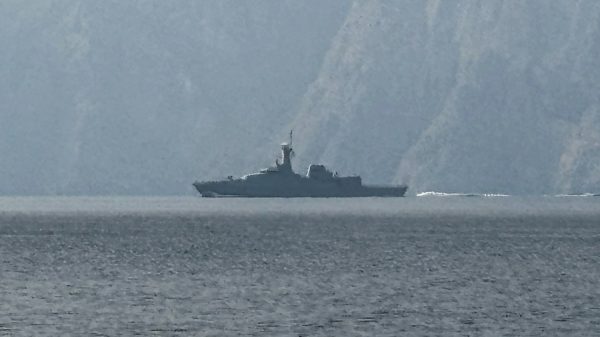 A naval vessel sails through the Strait of Hormuz on March 1, 2026. The Strait of Hormuz is a vital waterway for most of the world’s oil and gas. (Image: Sahar AL ATTAR / AFP via Getty Images)
Divergence from the US intensifies Europe’s push for strategic autonomy
There are also divisions within Europe over whether to include the United States. French officials argue that U.S. participation would make the operation less acceptable to Iran, while British officials worry that excluding the U.S. could anger Trump and ultimately weaken the mission’s effectiveness.
The Telegraph also noted that several European countries have already rejected participation in a U.S. proposal to blockade Iranian ports, emphasizing that this is not Europe’s war. Germany is expected to participate, but its overseas military operations are constrained by domestic political limits; Italy has stated it will not deploy ships without a United Nations mandate.
Additionally, it remains unclear whether China and India will be invited to take part. This “defensive mission” is not only a response to the Middle East crisis but also reflects Europe’s broader push for greater strategic autonomy in security affairs. Amid overlapping global crises, divisions within transatlantic relations are becoming increasingly apparent.