
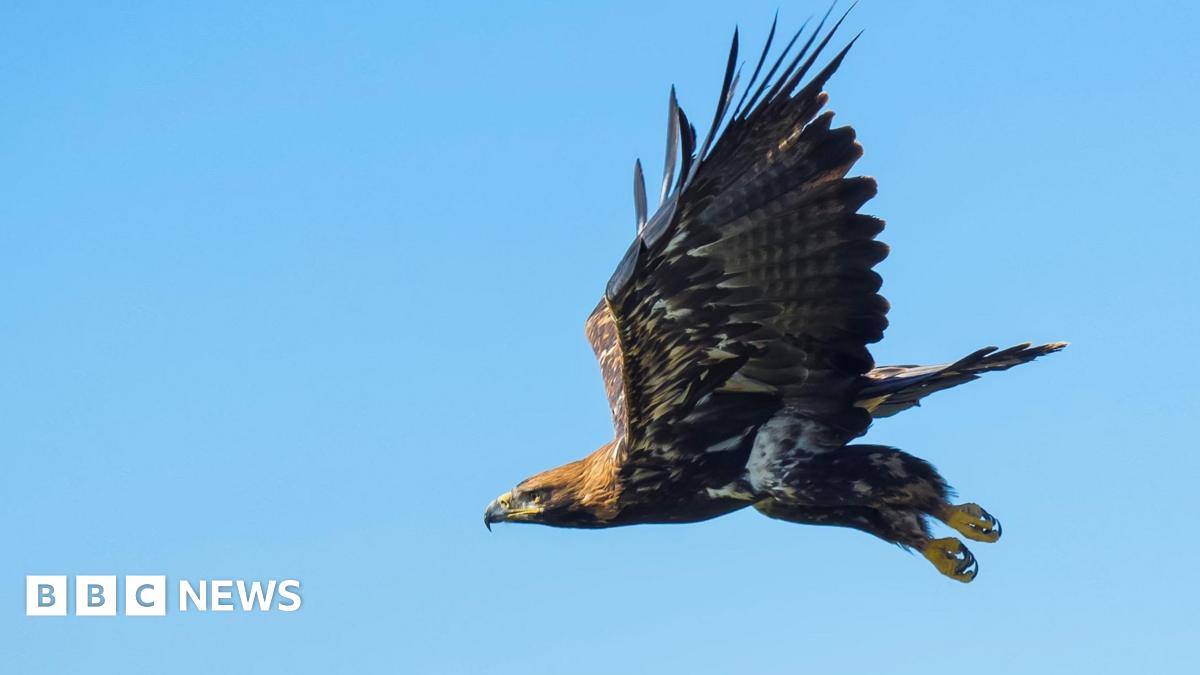
Tom Orde‑Powlett, landowner and estate manager at Bolton Hall Estate in Wensleydale, said he was “excited” by the prospect, but stressed farmers most likely to be affected needed to be listened to.
A member of the Country Land and Business Association (CLA), he said losses of lambs, particularly valuable breeding stock, could have serious financial consequences.
“If you’re a sheep farmer and you’ve got a very large bird of prey that comes and takes some of your lambs, or your most expensive tup lamb, that would be a huge blow to someone’s business.”
He added: “I think as well as the sheep, in terms of game management there might be concerns.
“It might not all be negative though – there is anecdotal evidence that golden eagles might see off many other more generalist predators such as buzzards or red kites, so they could have a positive impact.
“I’m not saying it will happen, but again it’s all these things that need to be discussed.”
Orde‑Powlett said he had previous experience of species recolonisation on the estate, pointing to the return of ospreys, where breeding birds have become established in recent years.
“It is a very exciting prospect of having another wonderful species like golden eagles return to the skies.
“I think as long as local communities are listened to and everyone voices are heard, then there’s every cause to be optimistic.”
Following the re-introduction of the sea eagle, the only other UK apex predator, Scottish farmers reported having to abandon their hill farms after the birds decimated their lamb populations. And the National Farming Union Cymru has previously raised similar concerns, external of the risks from golden eagles.
Forestry England has said it will run a public consultation with landowners and farmers, but chicks could be brought in as early as next summer.