
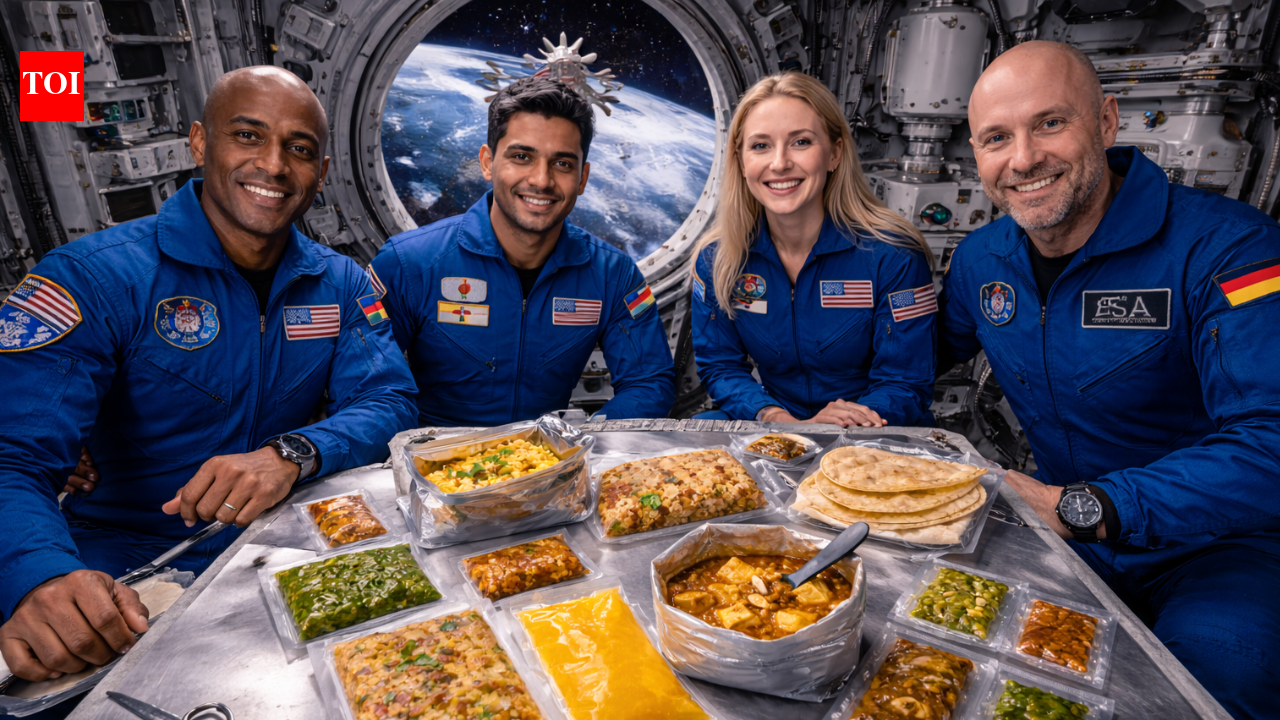
By the time India began preparing for crewed missions of its own, the food story had become more systematic. For Gaganyaan, the country’s first crewed space mission, the menu developed by the Defence Food Research Laboratory included around 30 dishes, among them idli sambar, upma, vegetable pulao, egg rolls, veg rolls, chapatis, chicken curry, spinach and paneer.
Behind this menu lay years of careful food science. Researchers had to ensure the meals were lightweight, nutritionally balanced, safe for long storage and easy to eat in microgravity, where crumbs, spills and floating particles can become serious problems.
The food was designed to be packed in ready-to-eat form, with water added where needed, and astronauts were also to be given food heaters and special liquid containers.
Idli was especially interesting because it had to be reimagined for space rather than merely packed for it. Reports on the DFRL work say the idlis were made small, dried with infrared radiation and then further dehydrated, while the accompanying sambar and chutney were turned into powder-based sides that could be revived later. In other words, the dish was preserved, but not stripped of its identity. It was still idli, just one that could survive the physics of orbit.