
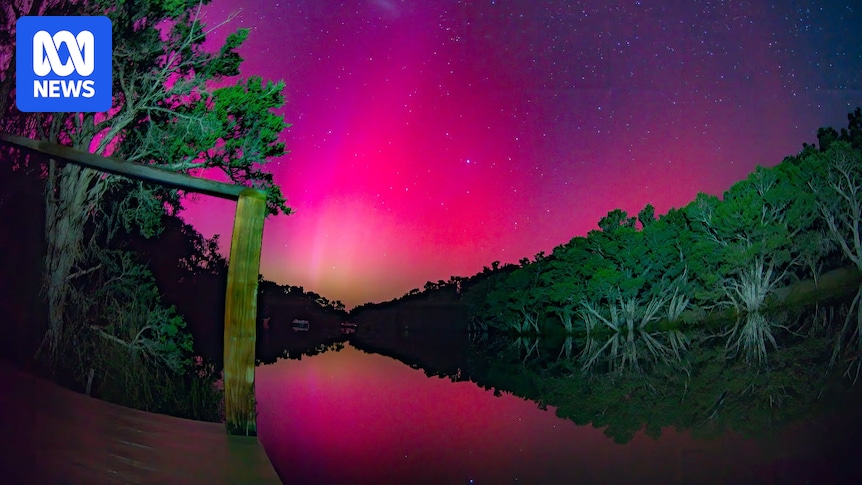
Rising fuel prices are failing to deter two West Australian amateur photographers from pursuing their passion for aurora australis.
Leonie and Dean McFaull live on Molloy Island, an isolated townsite on the Blackwood River around 320 kilometres south of Perth.
Around 15km from the nearest town, with a small population and little-to-no light pollution, the settlement provides an idyllic country lifestyle.
But it’s also allowed the McFaulls to produce some spectacular night-time photography.
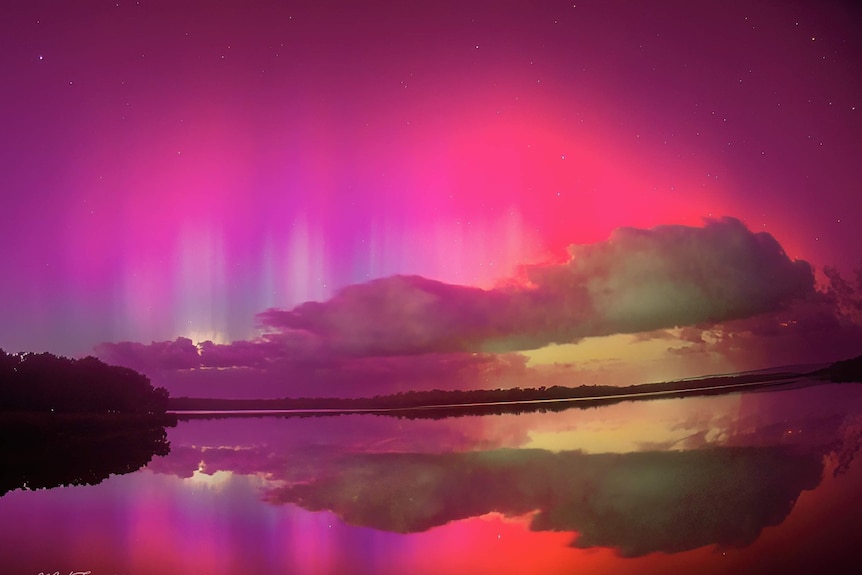
Spectacular Angels Wings captured during a G5 storm in late 2024 near Molloy Island. (Supplied: Dean and Leonie McFaull)
The couple, along with thousands of other photographers across the globe, were entranced by the images being produced during a period of high solar activity.
“We got addicted in February 2023,” Mr McFaull said.
“We noticed the shots coming from New Zealand, so we knew we had about five hours to get a good spot.”
While it’s meant plenty of late nights and early mornings, the passion has produced some spectacular results, capturing more than 100 of the solar storms.
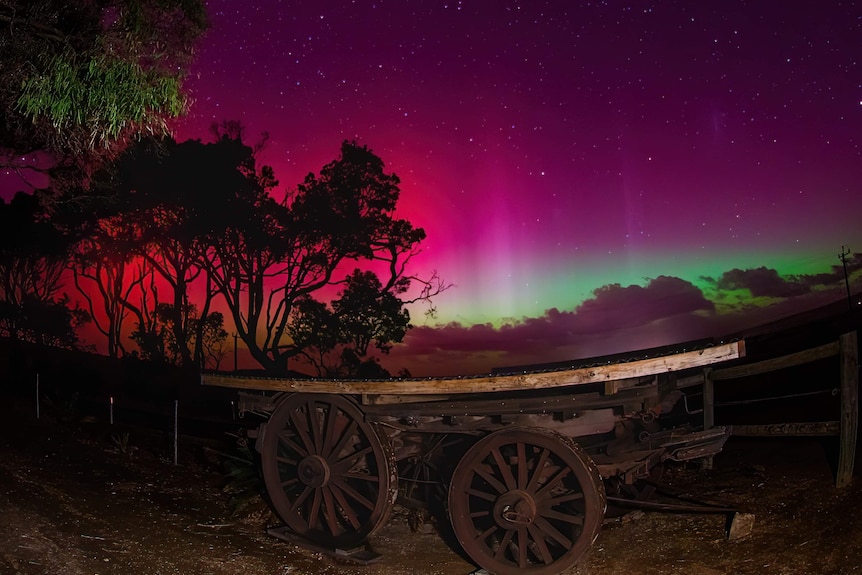
Isolation and a lack of light pollution helps the McFaulls with their photography. (Supplied: Dean and Leonie McFaull)
“It helps not to need much sleep,” Mr McFaull said.
“It’s different every single time … Western Australia is more pinkish because we’re a lot further up the Earth.”
The reddish hue of aurora australis captured by the McFaulls is down to how the displays are seen from WA.
Solar electrons emit red light when colliding with oxygen atoms at high altitudes; normally 150-250km above the ground, according to information published by the Australian Antarctic Division.
“Our 10.5mm lens captures 170 degrees, and sometimes you still can’t fit the aurora in,” Mr McFaull said.
“Sometimes it’ll go right up … over our heads, directly above us and further over.”
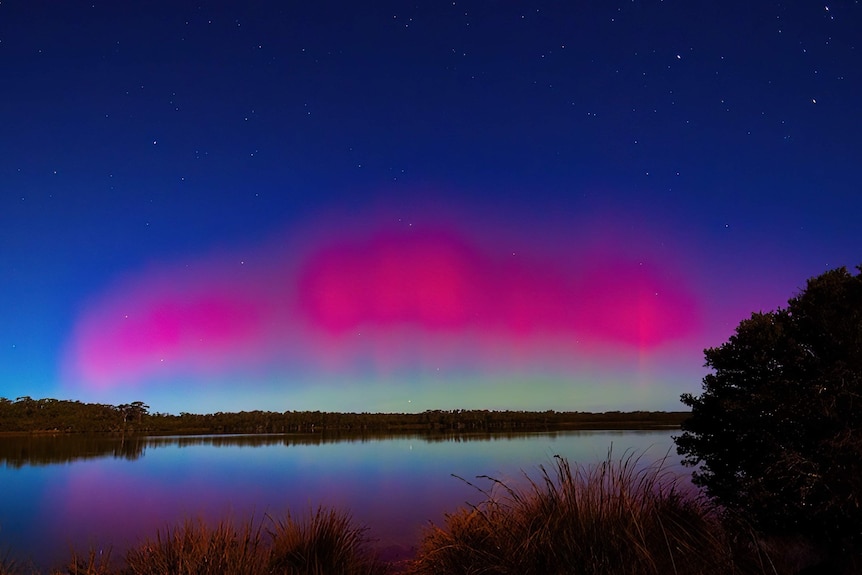
The McFaulls have captured more than 100 separate auroras on camera. (Supplied: Dean and Leonie McFaull)
Right time to be on the move
The more famous green and violet displays are from collisions at lower altitudes, not visible from WA, but ideally spotted from Tasmania, where the McFaulls are currently headed.
“They’re getting 2-3 auroras a week,” Mr McFaull said.
The pair were around 10km out of Cocklebiddy when they spoke to the ABC, about 1,050km east of Perth and 270km from the WA/SA border.
“Lots and lots of caravans still, I couldn’t believe it,” Mr McFaull said.
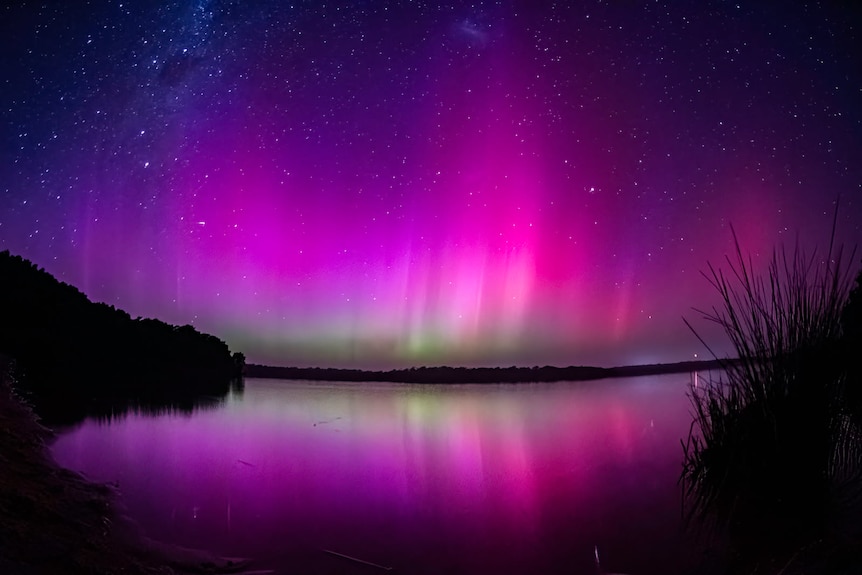
The reddish-pink colouring reflects the atmospheric activity visible from WA. (Supplied: Dean and Leonie McFaull)
“Still lots of people trying to holiday.”
Bureau of Meteorology senior forecaster Helen Reid said the timing was right for chasers to be on the move.
The bureau’s space weather service currently indicates a period of reduced solar activity.
“We have had a very active phase, it’s an 11-year cycle,” she said.
“But we’re going into a much quieter phase.”