
The launch of the NVIDIA GeForce RTX 5090 has delivered strong performance, but it has also brought back concerns about the safety of 16-pin (12V-2×6) connectors. To address this issue, ASUS has introduced the ROG Equalizer, a cable designed to reduce the risk of overheating.
Recent user tests show that this accessory is not just marketing. It provides real improvements in both temperature and voltage stability.
ASUS ROG Equalizer Reduces RTX 5090 Cable Temperatures 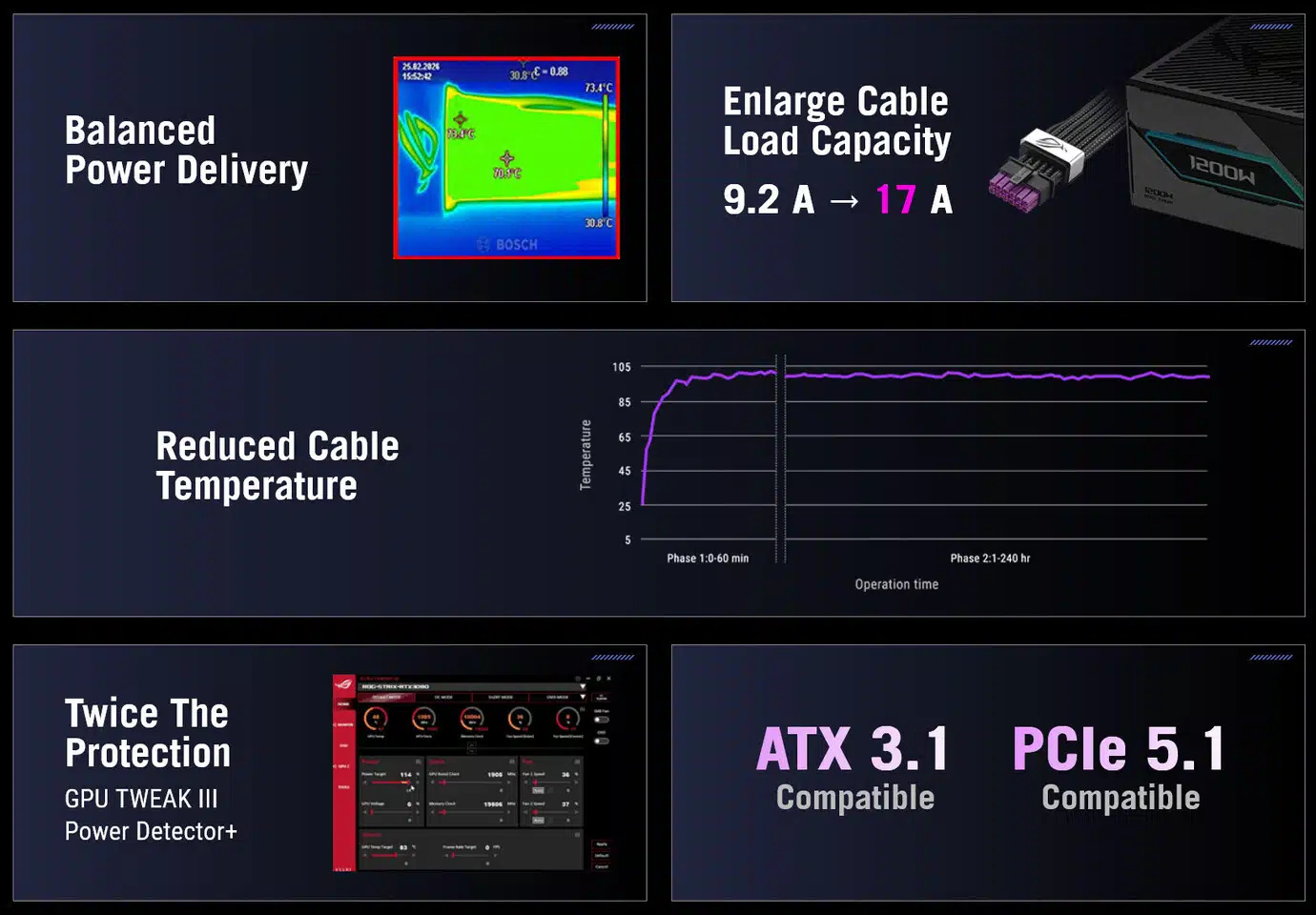
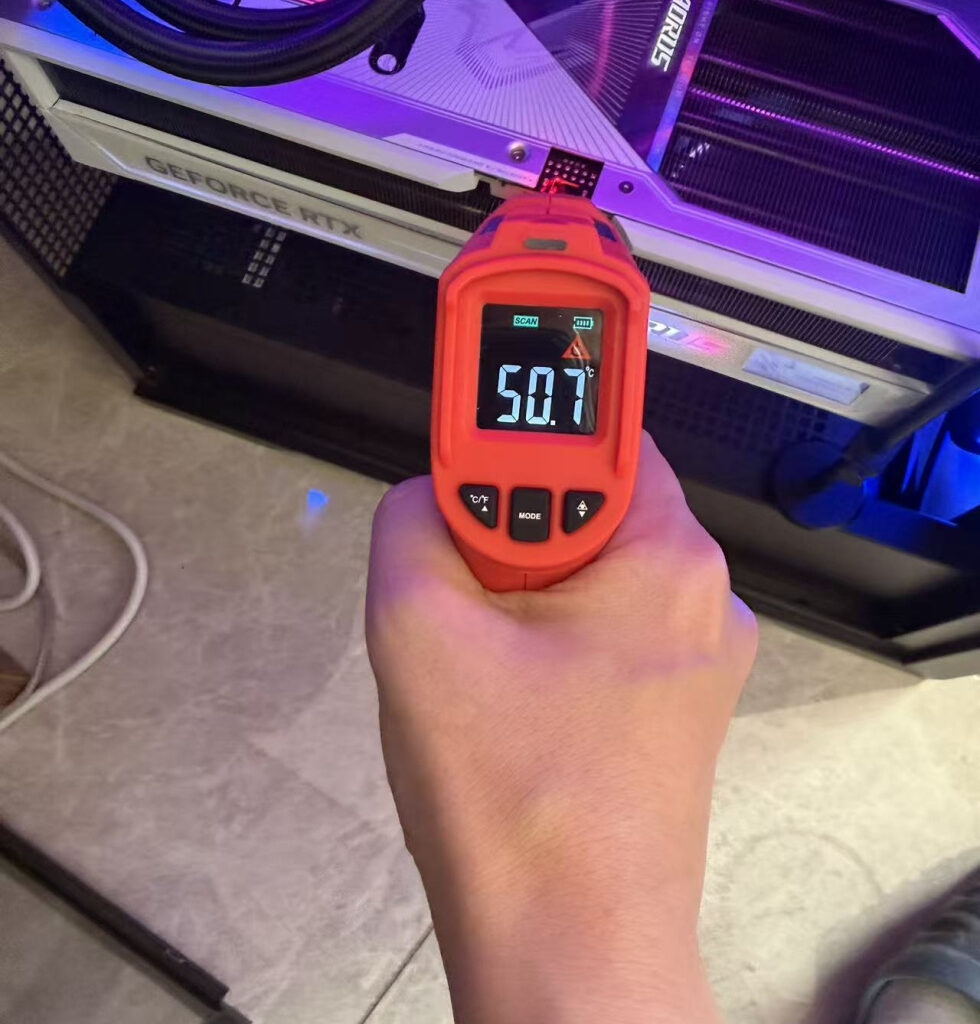
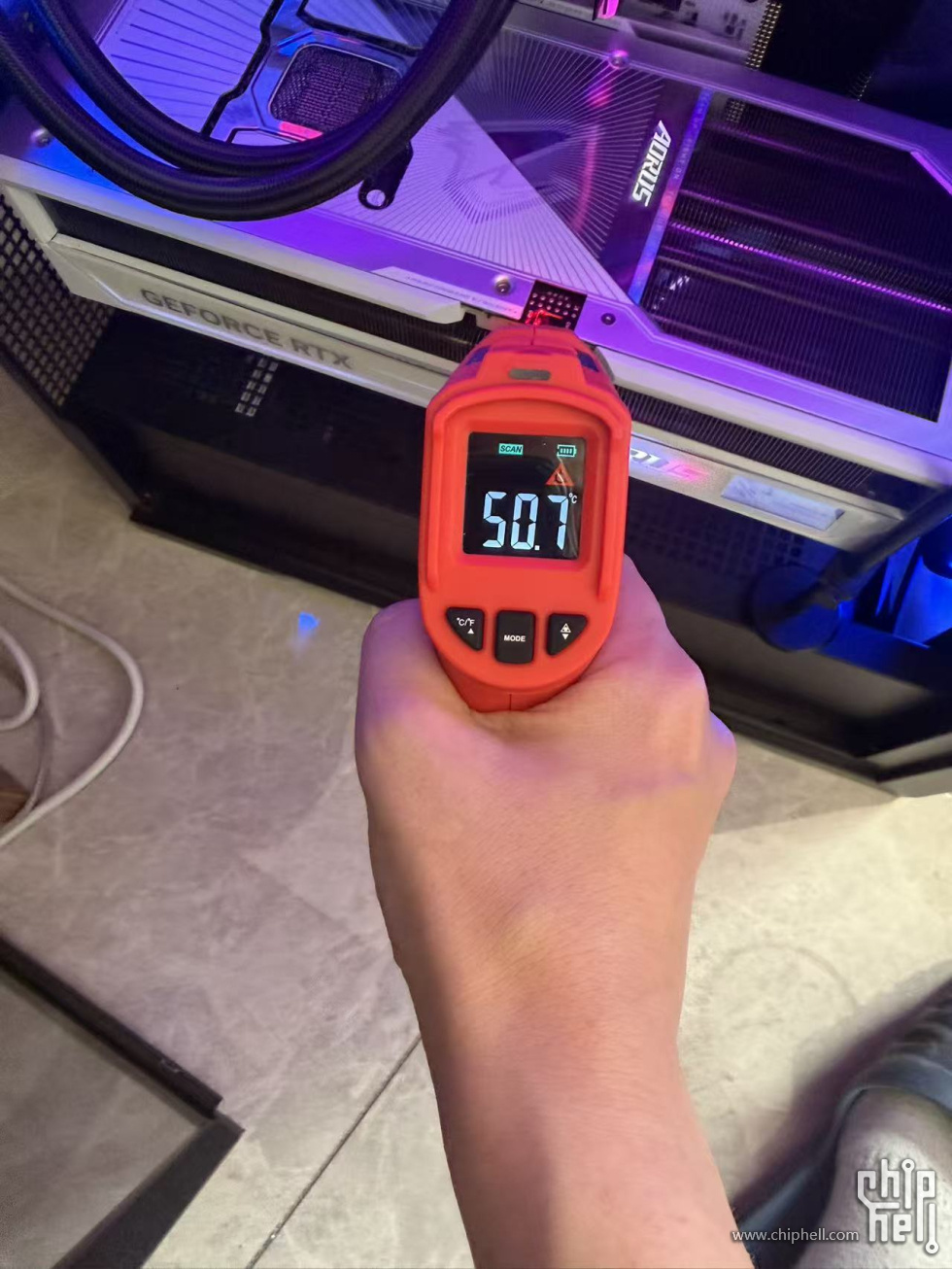
In stress tests shared on forums like Chiphell, the ROG Equalizer showed clear advantages over standard 16-pin cables. A typical cable reached temperatures of 59.8°C under load, while the ROG Equalizer stayed at 50.7°C. This drop of nearly 10°C is important, as it helps reduce wear on materials and lowers the risk of melting issues in the connector, which has been a known problem with RTX 5090 graphics cards.
The ROG Equalizer uses a patented design that balances power delivery across all pins. In regular cables, the load is often uneven, which can create hot spots. ASUS uses tin-plated oxygen-free copper wires, allowing up to 17A per pin, compared to about 9.2A in standard designs.
This also improves voltage stability. Standard cables can show voltage drops between 0.08V and 0.14V, while the ROG Equalizer keeps the supply close to 12V, with very small variations between 0.005V and 0.04V. This stable power delivery helps protect the RTX 5090 and can also improve performance, especially when overclocking.
With a price of around $15, the ROG Equalizer is a good option for users who already own an RTX 5090 and want a safer and more stable power solution.