
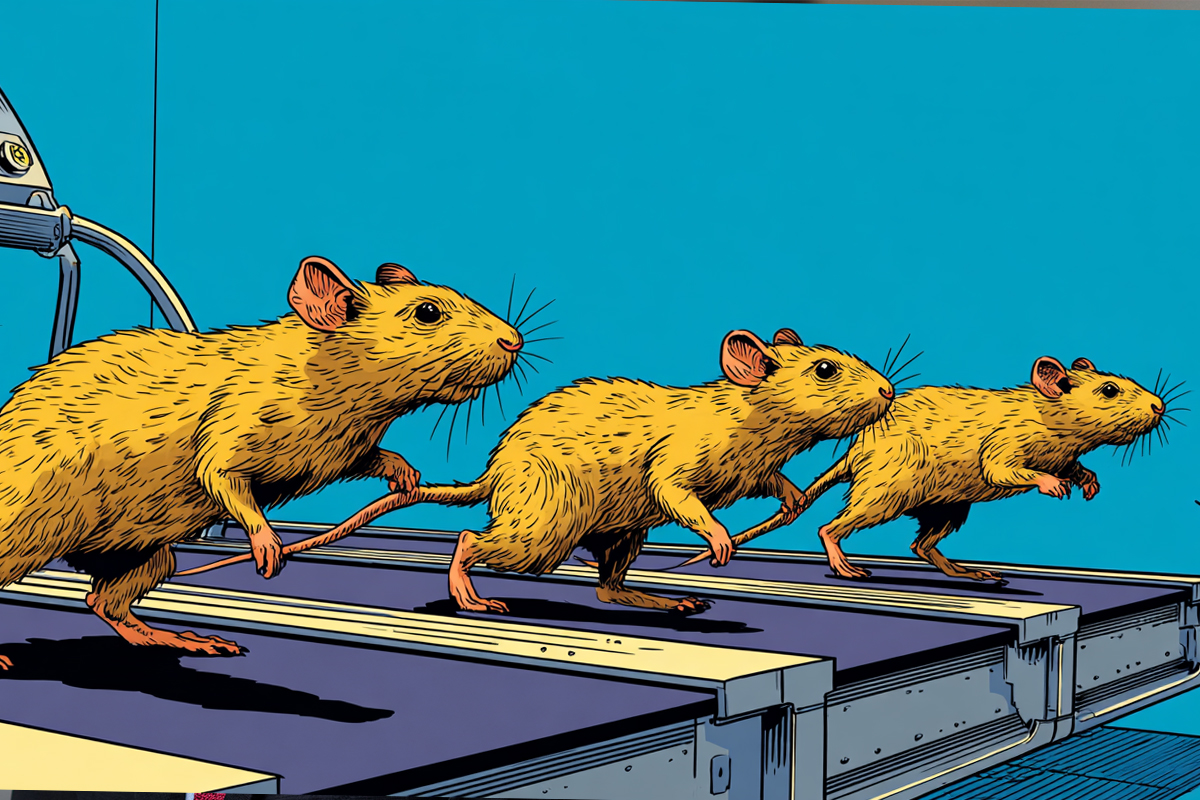
Oral combination therapy boosts lifespan 33% and slows frailty, pointing to a more holistic approach to aging.
What if the reason we haven’t “solved” the mysteries of aging yet is that we’ve been treating it like a single disease? That’s the question underneath new data from Seragon Biosciences, which has just published preclinical results on its investigational longevity drug, SRN-901.
The headline figure is hard to ignore: a 33% increase in median remaining lifespan in adult mice [1]. However, the more interesting story isn’t just that the mice lived longer; it’s how they aged along the way.
In longevity research, there’s a growing understanding that adding years isn’t enough. The real goal is to stretch the “good years,” the time when the body still works the way it should. Here, SRN-901, which includes urolithin A, quercetin, nicotinamide riboside, alpha-lipoic acid and Seragon’s SRN-820, appears to do both.
Mice treated with the oral therapy didn’t just survive longer; they stayed healthier, deeper into old age. Frailty progression, a measure of how quickly the body breaks down over time, was reduced by 70% compared with untreated mice. Even late in life, treated animals looked visibly healthier, maintaining posture and grooming habits that typically decline with age.
There was also a 30.53% reduction in tumor incidence, hinting at a broader protective effect against age-related diseases.
Taken together, the data suggest that extending lifespan may be less meaningful unless it comes with preserved function and this drug seems to move both levers.
Why single “antiaging” fixes keep falling short
For years, longevity science has chased individual compounds that target specific pathways – think of them as trying to fix one faulty wire in a much larger, tangled system.
Some of these approaches have shown promise. The well-known drug rapamycin, for instance, extended lifespan in this same study – but by 21%, noticeably less than SRN-901. Other popular molecules like NMN and NR didn’t significantly move the needle at all.
The gap points to a deeper issue. Aging isn’t driven by one process; it’s a network of interconnected changes: inflammation, DNA damage, metabolic slowdown, cellular stress. Tweak one, and the others keep pushing forward.
“Developing interventions to delay aging and improve lifespan and healthspan is a critical goal in aging research, yet individual geroprotective compounds fail to address the complexity, interconnectedness, and dynamic nature of biological systems,” said Dr David Scieszka, MBA, Chief Scientific Officer at Seragon Biosciences.
SRN-901 takes a different approach. It’s a combination therapy designed to act across multiple aging pathways at once.
Aging, but with the brakes on
To understand what SRN-901 is doing, it helps to think of aging as a slow drift out of balance. Over time, the body’s internal systems – repair, energy production, stress response – start to fall out of sync. Cells become less efficient, damage accumulates and resilience fades.
According to the study’s multi-layered analysis (which examines genes, proteins and metabolism together), SRN-901 appears to counteract that drift. It boosts pathways linked to DNA repair while dialing down those tied to inflammation and cellular stress. It also reshapes metabolism in a way that makes older mice look, at least internally, more like younger ones. Here’s a simpler way to understand it: instead of fixing one broken part, the drug appears to retune the system.
It’s still early (Note: these are animal results, not human trials), but the implications are already rippling beyond the lab. Longevity biotech has long struggled with a credibility gap. Bold claims often run ahead of solid evidence, and translating mouse data into human outcomes has historically been hit-or-miss.
Nevertheless, studies like this begin to shift the tone because they align with a more mature understanding of aging biology: that meaningful intervention likely requires multi-target strategies. Also, a therapy that can delay multiple age-related conditions at once could reshape healthcare costs, workforce longevity and the economics of aging societies.
Where this leaves longevity
The real story here isn’t just about one drug or one dataset. It’s about a shift in mindset. For decades, medicine has treated diseases of aging as separate battles. Longevity science flips that perspective, asking whether we can intervene earlier, at the level of aging itself.
And Seragon is not operating in a vacuum; the competitive picture also shows how unusual SRN-901’s design is. In the longevity biotech landscape tracked on DLT, only a small handful of companies are pursuing clearly comparable multi component aging interventions rather than single-pathway bets. Combilytics is advancing a quercetin-fisetin senolytic combination for aging and healthspan, Profound Products is built around the better-known dasatinib plus-quercetin pairing, and ROKIT Healthcare is exploring an earlier-stage anti aging platform that combines an NAD+ precursor with fisetin and quercetin. Other overlap is more ingredient specific than formula-specific: Amazentis and Abinopharm are active in urolithin A, while Senescence Life Sciences has a formulation that includes alpha-lipoic acid. Put differently, pieces of SRN-901 are already familiar to the field, but its attempt to stack mitochondrial support, senolytic logic, redox control and NAD+ biology into one oral program still stands out as a relatively differentiated strategy rather than a crowded me-too play.
SRN-901 doesn’t answer that question about earlier intervention just yet, but it sharpens it. If combination therapies can consistently show this kind of dual impact – longer life paired with sustained function – they may mark a turning point, from chasing lifespan in isolation to engineering resilience across the entire arc of aging.