
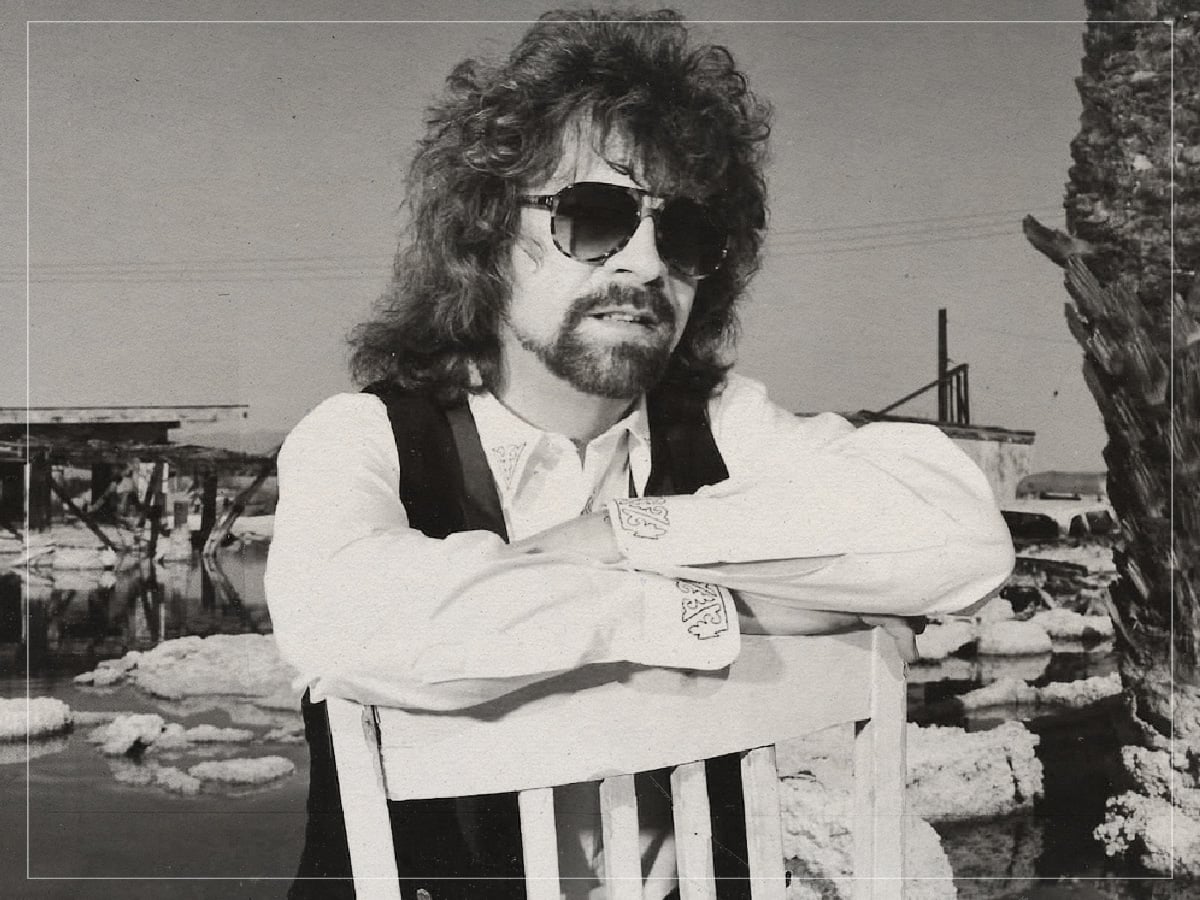
(Credits: Far Out / Jeff Lynne)
Sun 19 April 2026 12:00, UK
There aren’t many songwriters in the world who have the ability to transform a song with just one simplistic change, but one who has always undoubtedly been blessed with this knack is Jeff Lynne.
There’s very little that the former Electric Light Orchestra frontman and co-founding Wilbury has ever produced that doesn’t have even the faintest whiff of his magic sprinkled over the top of it. While there are certainly songs that may seem weaker than others from his extensive catalogue, there’s usually at least one redeeming feature that has crept its way into the composition, proving that he’s still a master of his craft.
However, even though many songwriters who have this gift make it appear easy, Lynne has always maintained that it doesn’t come without plenty of hard graft, and that he’s entered many dark periods where he didn’t have the belief in his songwriting abilities. Safe to say, the mid-1970s was not one of those periods.
During this spell, Lynne and Electric Light Orchestra were on fine form, releasing four classic albums in successive years that produced seven top ten singles between them, and when reflecting upon this string of releases that excelled even his own expectation during a 2014 interview with Jon Kutner, he claimed that one particular song stood out to him for how straightforward the manner in which it came to him was.
“I wrote so many songs so quickly in that 1974–78 period, and it was like a conveyor belt, really,” Lynne explained, “I was just banging them out. But I’m particularly pleased with ‘Livin’ Thing’, because I like the chorus, it’s really interesting. I think it’s interesting because there is one chord change just before ‘higher and higher, baby’ that makes the whole thing work, and if I hadn’t found that, it would never be a song.”
While there’s nothing particularly complex about the chord progression, what Lynne had done with the existing structure up until that point was trap himself in a minor key, looking for an interesting way of welcoming the song back into a major key without using brute force.
In order for it to feel natural as a segue between the pre-chorus and the main chorus, it needed to have a transitional flow that connected the two parts, so at the end of the verse, Lynne holds on an F minor chord, which he acknowledged could have reverted to C major or G major, but instead of choosing the obvious route, he opted to then move to E minor and D minor, taking the root notes down a whole tone before bringing them back upwards with an F major and G major to return to where things were.
When you think of the song and try to make it progress in one of the alternative ways that Lynne suggested, then it resolves quicker, but lacks the charm that his songs have always possessed.
Searching that little bit longer for the right chord progression, via the means of a quick key change, allowed Lynne to find exactly what the song needed. “It’s like magic,” the song proclaims, and it might seem like sorcery, but if you know a little bit about your way around chords and their relationships, then it turns out it’s more just a case of excellent songcraft.
