
(Credits: Far Out / YouTube Still)
Sun 19 April 2026 19:19, UK
Whatever you might think of him, no one can deny that Roger Waters isn’t forthcoming with his opinions. Alongside being a musician of genius status, the former Pink Floyd man has made his name as one of the most outspoken figures in rock music, earning both plaudits and heavy criticism for such a nature.
As is well-known, Waters’ character is so imposing that it caused a schism with Pink Floyd after the release of 1983’s The Final Cut. After leaving the band in 1985 and then trying and failing to end the band through heavy legal action, Waters would be regarded as the antithesis to his old bandmate and songwriting partner, David Gilmour. This notion is still alive today, with both enduring a long and brutal history since.
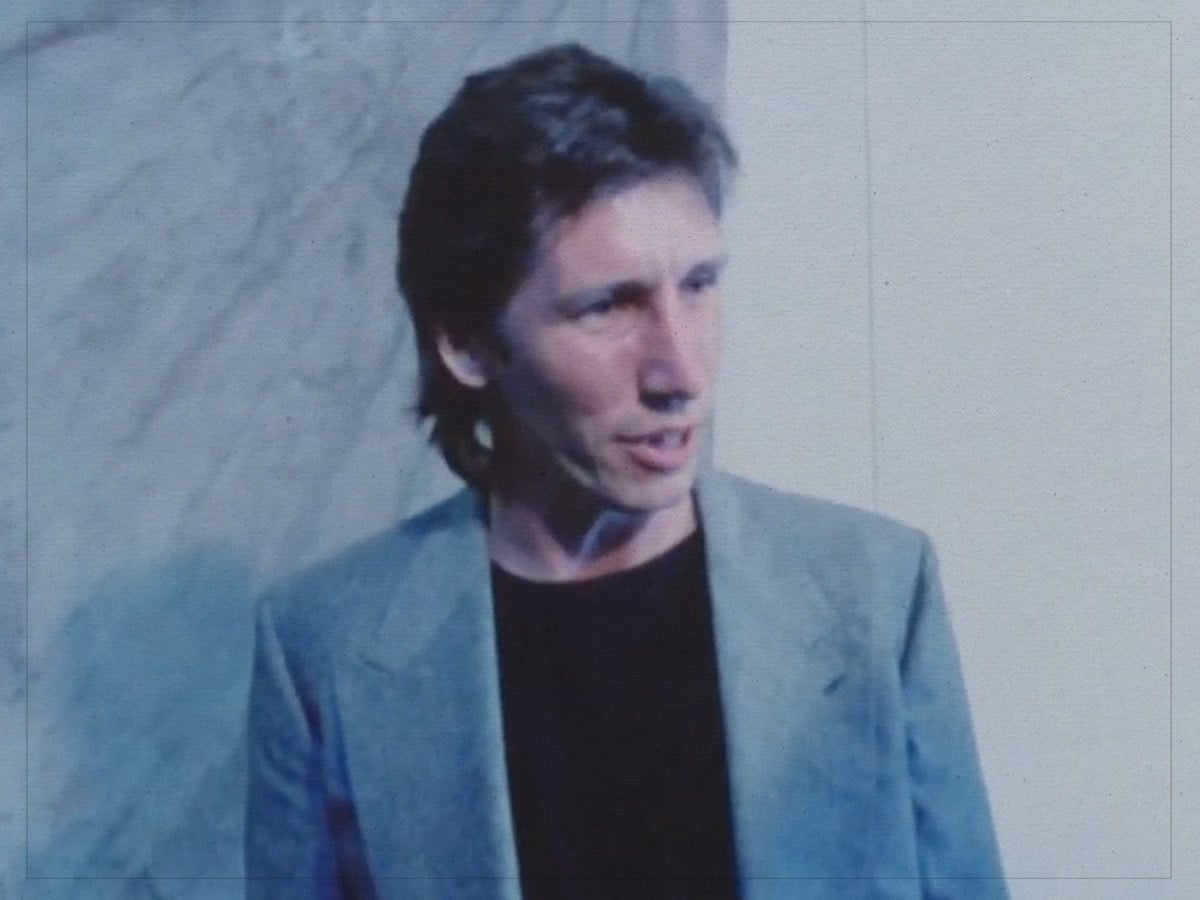
Waters’ thoughts on Pink Floyd have always been a source of wonder due to his ability to vocalise his views as directly as possible. In 1987, when he was interviewed by Chris Salewicz shortly after the release of his second solo album Radio KAOS, he revealed his thoughts on the album widely hailed to be Pink Floyd’s finest, The Dark Side of the Moon. Despite the record being one of the most successful and influential of all time, after touching on its brilliance, Waters described it as the album that “finished” the band off “once and for all”.
Asked why he thinks The Dark Side of the Moon was so “colossally successful”, Waters replied: “It’s very well-balanced and well-constructed, dynamically and musically, and I think the humanity of its approach is appealing. It’s satisfying. I think also that it was the first album of that kind. People often quote S. F. Sorrow by The Pretty Things as being from a similar mould – they were both done in the same studio at about the same time – but I think it was probably the first completely cohesive album that was made.”
Touching on how the record signalled the end for the group, Waters continued: “A concept album, mate! I always thought it would be hugely successful. I had the same feelings about The Wall. Towards the end of the studio work, at about the time I’d be putting the tracks together, there was a very good feeling of satisfaction on both records. You’d stand back from them and they’d each feel very complete”.
Concluding: “But of course, Dark Side Of The Moon finished the Pink Floyd off once and for all. To be that successful is the aim of every group. And once you’ve cracked it, it’s all over. In hindsight, I think the Pink Floyd was finished as long ago as that.”
That sentiment might sound like classic Waters contrarianism on the surface, but it actually cuts to the core of how he has always viewed art and success. For him, reaching the summit was never the end goal in itself. Instead, it marked the point where the hunger, tension, and uncertainty that fuelled creativity began to dissipate, replaced by expectation and repetition.
In the case of Pink Floyd, The Dark Side of the Moon didn’t just elevate them to global superstardom, it fundamentally altered the dynamic within the band. What had once been a collaborative unit searching for direction became, in Waters’ eyes, a machine tasked with maintaining an impossible standard. The very cohesion that made the album so powerful also set a blueprint that was difficult to escape without fracturing the group entirely.
Looking back, it becomes easier to understand why Waters would later double down on concept-heavy works like The Wall as a way of reclaiming that sense of purpose. If Dark Side represented perfection, then the only way forward was to deconstruct it, to push further into narrative and personal expression. In that sense, his claim that the album “finished” Pink Floyd feels less like bitterness and more like a recognition that once you’ve said something so completely, everything that follows is an attempt to either live up to it or break away from it entirely.
Pushed to name the main problems with such immense success, Waters said: “Mainly the one of what to do with all the money! You go through this thing where you think of all the good you could do with it by giving it away. But, in the end, you decide to keep it!”
Listen to The Dark Side of the Moon below.
