
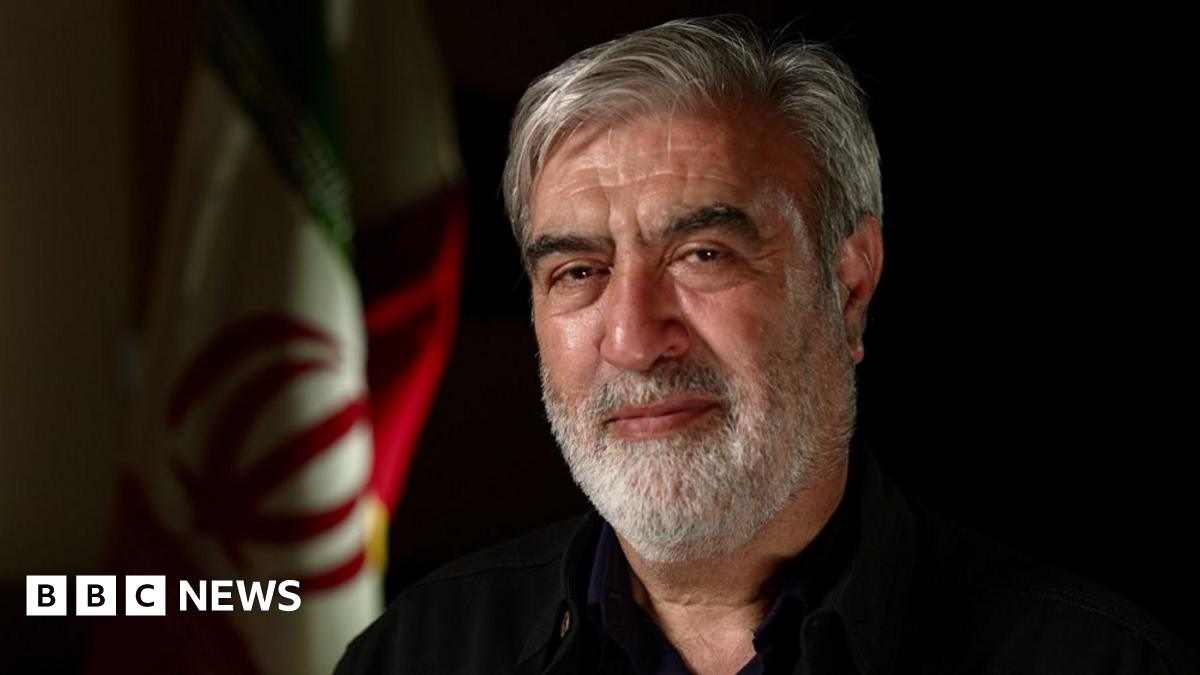
Iranian officials are so far silent on whether their own team, led by parliamentary speaker Mohammad Bagher Ghalibaf, will return to Pakistan. Local media are reporting that Iran won’t attend as long as a US blockade of Iranian ports remains in force.
Trump has repeatedly ordered Iran to open this maritime corridor, including in an expletive-laden social media post on 5 April in which he warned Iran would be “living in hell” if it failed to comply with his command.
He’s now accused Tehran of trying to “blackmail” the US.
“I don’t expect much from a man who twists the truth,” Azizi scoffs. “We are just defending our rights in the face of American blackmail.”
Like many high-level Iranians, he often hits back at Trump with mocking social media posts on X. Their trolling underlies how they enjoy access to the international internet denied to the vast majority of Iranians in the near-total digital blackout in force for many weeks.
Azizi, whose parliamentary file also includes national security, wouldn’t say when it would be lifted, only emphasising “when it is safe and secure we will lift the ban so that the enemy will not take advantage”.
I also asked him about recent waves of arrests and what human rights groups, including Amnesty International, say are dozens of death sentences handed down to protesters detained during January’s nationwide protests, which were crushed with lethal forces and killed many thousands. Several executions, including of young people, have recently been carried out.
Azizi repeated the government’s claim that the US and Israeli spy agencies (the CIA and Mossad, respectively) had been involved in the unrest.
He dismissed rising concern among some Iranians that internal security will tighten further.
“In war, even in a ceasefire, there are rules,” he declared.