
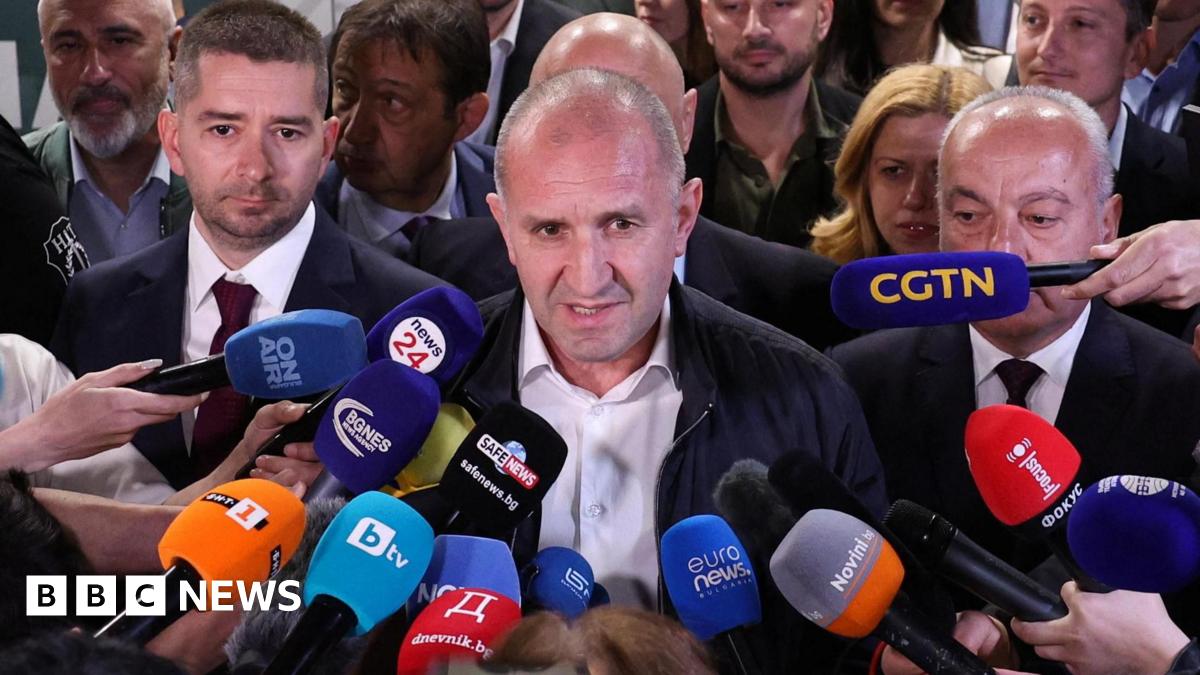
Bulgaria is an important supplier of ammunition and explosives to Ukraine, through third countries, especially neighbouring Romania.
The war has given a boost to an arms industry which has struggled since the Soviet era.
Since 2022, Radev has frequently spoken out against the sale of the Bulgarian stockpile of Soviet era weapons to Ukraine, on the grounds that they prolong a war Ukraine cannot win – a similar argument to that made by outgoing Hungarian prime minister Viktor Orban.
The VMZ factory in Sopot, two hours drive east of the Bulgarian capital Sofia, produces explosives and NATO-grade 155 mm artillery shells.
In October 2025, the German arms company Rheinmetall announced a €1bn joint venture with VMZ, to produce up to 100,000 155mm shells a year.
A separate gunpowder factory will also be built in Sopot. Rheinmetall will have a 51% share in the company.
Production will be part of efforts across Europe to scale up military production.
While he opposes military supplies to Ukraine, Radev took credit for inviting the CEO of Rheinmetall, Armin Papperger to Bulgaria in March 2025.
“Bulgaria is becoming part of the European defence ecosystem,” Radev said, on a visit to the Rheinmetall headquarters in Unterluss, Germany, in August 2025.
His position, as head of government, seems likely to be similar to that of Slovak Prime Minister Robert Fico – critical of EU support, but not imposing a veto on the manufacture of arms by private companies for Ukraine.