
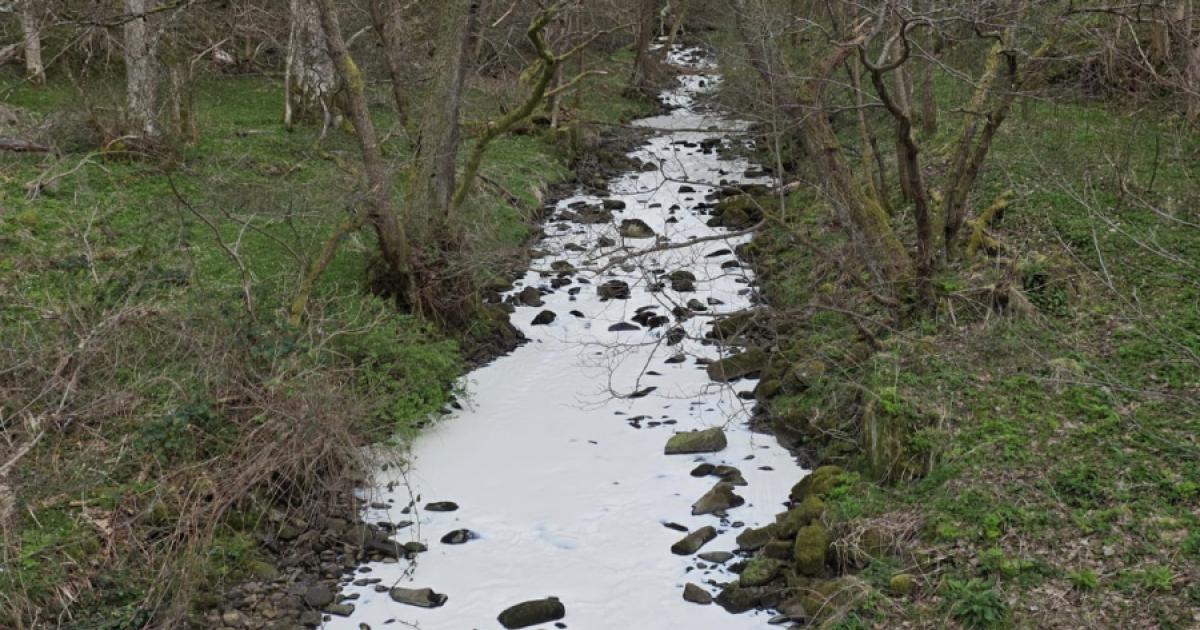
The Carron Burn, near Aberlour, leads into the River Spey and was covered in a white paint-like substance.
Officers at the Scottish Environment Protection Agency (Sepa) received a report of the incident on Tuesday from local fishermen and traced the source of the pollution back to a layby on the nearby A95.
The Spey Fishery Board also conducted its own investigation and tracked the source back to the same layby.
READ MORE: Delays expected as major road in Scotland closed due to car fire
It was reported that a number of fish as long as frogs died in the incident.
A spokesperson for Sepa: “We received a report of white discolouration in the water on the afternoon of Tuesday 14th April.
“On attending, our officers confirmed the impact to the water and detected a turpentine-like odour. Impacts to the burn appeared to be localised at the time, and initial investigations traced the pollution back to a layby on the A95.
“We received a further report of white discolouration and more significant impacts in the evening from the Spey Fishery Board, including a number of dead fish. The Spey Fishery Board tracked the source back to the same layby.

“Officers attended the layby this morning (Wednesday 15th April) and confirmed the water in the burn is now running clear.
“As our investigation continues, SEPA officers remain in the area.”
Sepa has urged anyone with information about the incident to make contact on 0800 80 70 60 or online at www.sepa.org.uk/report.
It comes after a major fuel spillage into the River Dochart, Killin, contaminated local water supplies in February.
The spillage was caused by a “botched” fuel robbery, which left a storage tank damaged.
Certas Energy, which operates the Gulf Lix Toll site near the village, confirmed the major contamination incident was caused by a botched diesel robbery at the temporarily closed petrol station.
It said in a statement that a fuel tank was damaged during the attempted theft, resulting in a loss of diesel, which leaked into the nearby river which runs into Loch Tay.