
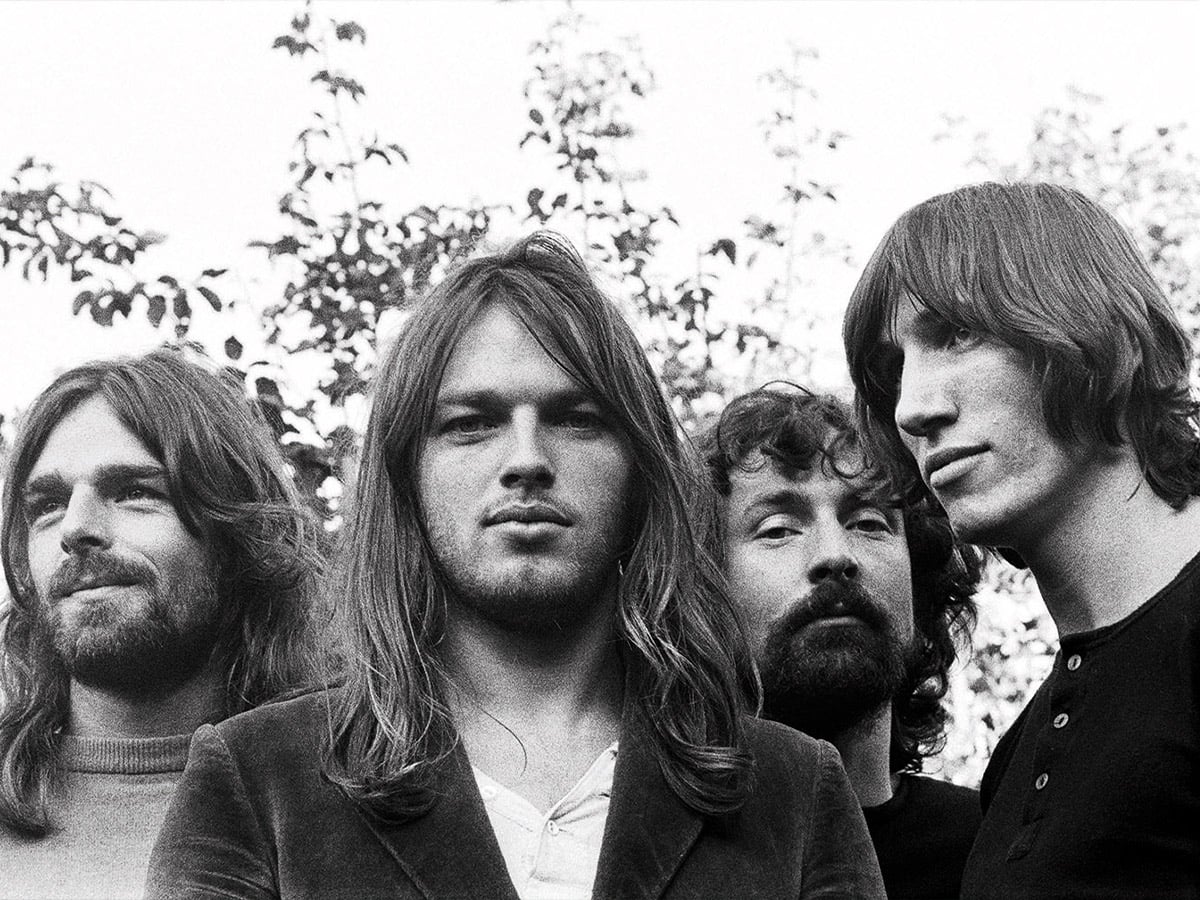
(Credits: Storm Thorgerson / Sony Music Entertainment)
Mon 20 April 2026 21:06, UK
When creating Atom Heart Mother in 1970, Pink Floyd were in a transitional period, moving away from their early psychedelic years.
The release of Ummagumma had already started to close that chapter, but Atom Heart Mother pushed the band further from what had come before. It marked the start of their interest in more structured compositions and the concept album format, something they would fully embrace over the following decade. Although the record was commercially successful at the time, the band have never looked back on it fondly. In fact, former creative force Roger Waters once described it as “a really awful and embarrassing record”.
Guitarist David Gilmour was also scathing in his account of the album, describing it as “a load of rubbish, to be honest with you”, before adding: “We were at a real down point. We didn’t know what on earth we were doing or trying to do at that time, none of us. We were really out there. I think we were scraping the barrel a bit at that period.”
The band’s late keyboardist, though, Rick Wright, detailed the record in a more balanced fashion than his bandmates. He said, “I’d say the transition was between Ummagumma and Atom Heart Mother. Like a lot of bands, we got interested in the concept album. At the time, I thought we were making the most incredible music in the world, but looking back, it wasn’t so good.”
Part of the problem was that Atom Heart Mother arrived before Pink Floyd had fully worked out the identity that would define their most celebrated work. The band were experimenting with orchestration, long-form composition, and conceptual structures, but those ideas had not yet crystallised into the confident vision that would later produce albums like The Dark Side of the Moon and Wish You Were Here. In hindsight, what sounded ambitious in 1970 felt to the band like a collection of half-formed ideas rather than a finished statement.
For all of the criticisms that the band directed at Atom Heart Mother, it’s still a compelling album. One of the highlights is the eponymous opener, a 23-minute, six-part suite comprised of the pieces ‘Father’s Shout’, ‘Breast Milky’, ‘Mother Fore’, ‘Funky Dung’, ‘Mind Your Throats Please’, and ‘Remergence’. An expansive number that alluded to the cerebral brilliance to come, it remains a significant moment in their oeuvre. The project was so impactful that even auteur Stanley Kubrick wanted to use it in his 1971 movie A Clockwork Orange, but the band denied his request.
The quartet worked with composer Ron Geesin for ‘Atom Heart Mother’ in co-writing and orchestration, as well as Abbey Road Session Pops Orchestra, John Alldis Choir, and Hafliði Hallgrímsson to bring the song to life on the final product. However, it all started with just bassist Waters and drummer Nick Mason. Miraculously, in the most noteworthy moment in the song and album’s recording, the pair played for 23 minutes in one take to get it down.
Mason later looked back on the song’s creation and revealed that he listens to it with a sense of discomfiture today simply because the rhythm section was captured in the singular take that they just “staggered through”.
He said: “Now I listen to it with acute embarrassment because the backing track was put down by Roger and me, beginning to end, in one pass. Consequently, the tempo goes up and down. It was a 20-minute piece, and we just staggered through it. On the other side, ‘Alan’s Psychedelic Breakfast’ was another great idea – gas fires popping, kettles boiling, that didn’t really work on record but was great fun live. I’ve never heard Roger lay claim to it, which makes me think it must have been a group idea.”
However, he conceded: “I don’t mind admitting that ‘Atom Heart Mother’ was very rushed – we had to go on an American tour right after that.”
Despite the band’s harsh assessment of the record, Atom Heart Mother remains an important step in Pink Floyd’s creative journey. The sprawling title suite, the orchestral experimentation, and the willingness to push beyond conventional rock structures all pointed toward the sonic ambition that would soon define their work in the 1970s. Even if the band themselves later dismissed the album, it captures a moment when Pink Floyd were testing the limits of what their music could become.
