
Government projections show the State’s surplus is set to grow from €5 billion to €9 billion, figures published this lunchtime suggest.
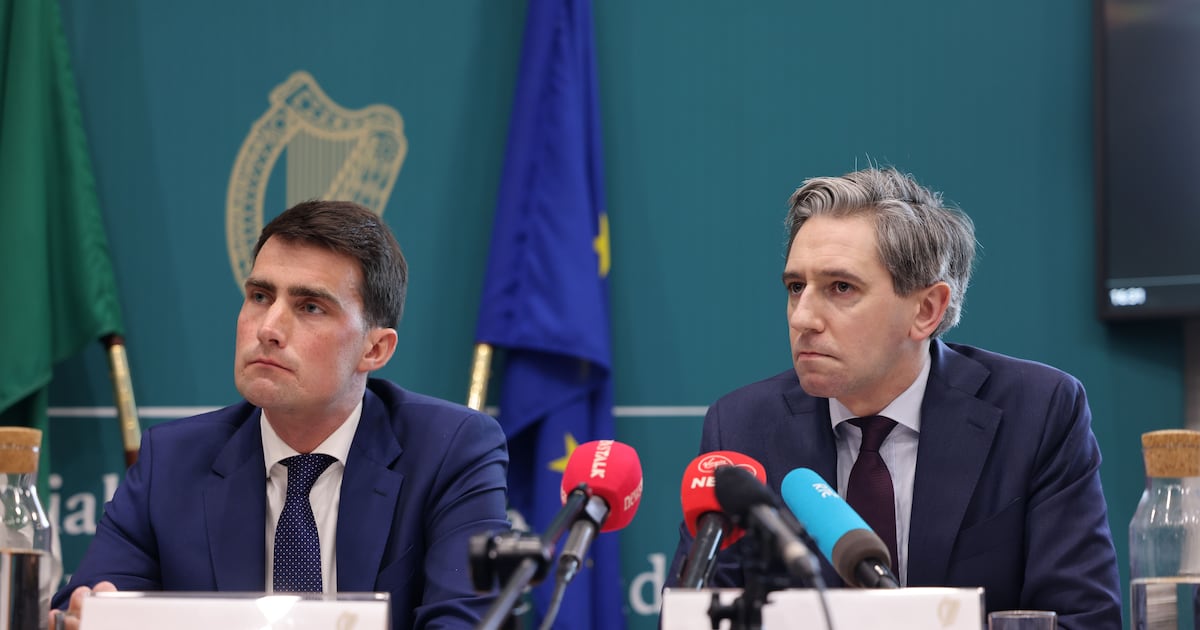
The spring economic forecasts published by Minister for Finance Simon Harris and Minister for Public Expenditure Jack Chambers show that officials believe the Government’s finances will be bolstered by economic growth this year to be ahead of expectations at the time of the budget last year.
The figures are likely to increase the pressure on Government for further cash assistance later this year, especially if high fuel prices continue.
While the document published by the Department of Finance this lunchtime is full of warnings about the international economic fallout from the war in the Persian Gulf and its effects on fuel prices, it shows that officials are not so pessimistic about the ultimate outcome for Ireland.
The document contains three scenarios – “baseline,” “adverse” and “severe”. But even in the severe scenario, it expects growth to continue. The Department of Finance said that “as of today” the most likely outcome is somewhere between the baseline and adverse scenarios.
The Department said that it had planned to increase its growth projections for the economy this year before the war broke out, in part because of strong investments in data centres at the end of last year and the beginning of this year.
In the severe scenario, however, inflation could rise above 6 per cent in the second half of this year.
However, even in the “severe” scenario, it expects the economy to grow by over 3 per cent.
In the baseline scenario, the Department projects an exchequer deficit of €1.2 billion – an improvement of over €600 million from the time of the budget last year.
It forecasts a general government balance of 2.5 per cent of GNI – an improvement from the 1.4 per cent projected last year.
The cash figure has increased to €9 billion from last year’s €5 billion, though some of the surplus has been reduced by expected departmental overspends and cost of living supports outside of the budgetary cycle.