
1. Chinese hospitals are monetizing vast patient record archives to fuel the AI industry [para. 1].
2. The First Affiliated Hospital of Shandong First Medical University sold a liver disease dataset to Shandong Shanke Zhixin Technology for 30,000 yuan ($4,399), marking Shandong’s first medical-data transaction [para. 2].
3. The dataset covers over 1,000 de-identified clinical histories of liver failure patients needing transplants, for AI diagnostic model development [para. 3].
4. Real-world health data from hospitals is crucial for medical AI training, scarcer than algorithms or computing power [para. 4].
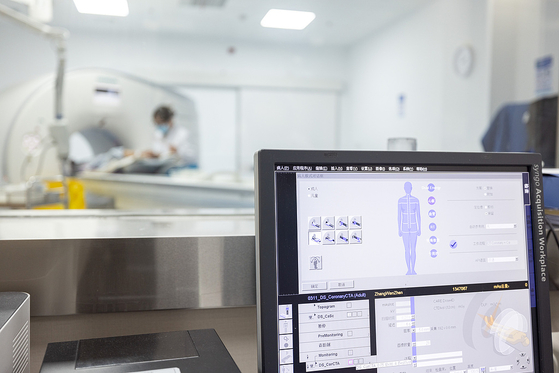
5. Patient files, lab results, imaging like CT/MRI, and research data, once idle post-treatment, are now a digital gold mine [para. 5].
6. A 2024 government action plan by National Data Administration and 16 departments targets data commercialization in 12 sectors, including healthcare [para. 6].
7. Beijing’s first public hospital data sale: Capital Medical University’s Xuanwu Hospital sold 2,550 carotid artery stent records on Beijing International Big Data Exchange for medical device R&D [para. 7].
8. National Data Administration director Liu Liehong pushes for trading high-quality data; Wenzhou mandates 45 medical data listings and 10 transactions by year-end [para. 8].
9. Fujian’s Minqing County General Hospital sold a neurology, cardiology, geriatrics database for over 450,000 yuan on Beijing exchange [para. 9].
10. Xi’an Youjun Medical Information listed 70+ datasets on Guiyang Big Data Exchange for lung/liver cancers; Guangzhou hosts oncology imaging from Beijing Jingxi Oncology Hospital [para. 10].
11. Shenzhen People’s Hospital offers geriatric dataset (2015-present) with de-identified demographics, visits, imaging, labs, and AI-structured text [para. 11].
12. Shenzhen Maternity and Child Healthcare Hospital lists prenatal ultrasound images/sketches (2010-2012) and pregnancy-induced hypertension records (2018-2023) [para. 12].
13. Buyers include AI firms, pharma/device makers, and research institutes for diagnostics, drug discovery [para. 13].
14. Strict de-identification ensures no link to individuals, protecting privacy [para. 14].
15. Data quality is key; historical records need cleaning/annotation for AI use [para. 15].
16. Hospitals incur high costs to prepare data, but raw data has low value, hindering trades [para. 16].
17. Industry insider compares unprepared data to half-finished apartments, unsellable [para. 17].
AI generated, for reference only