
An account of Peter Mandelson’s vetting process given by the former top civil servant Sir Olly Robbins has raised new questions about whether Robbins was misled about the findings of the agency responsible for vetting.
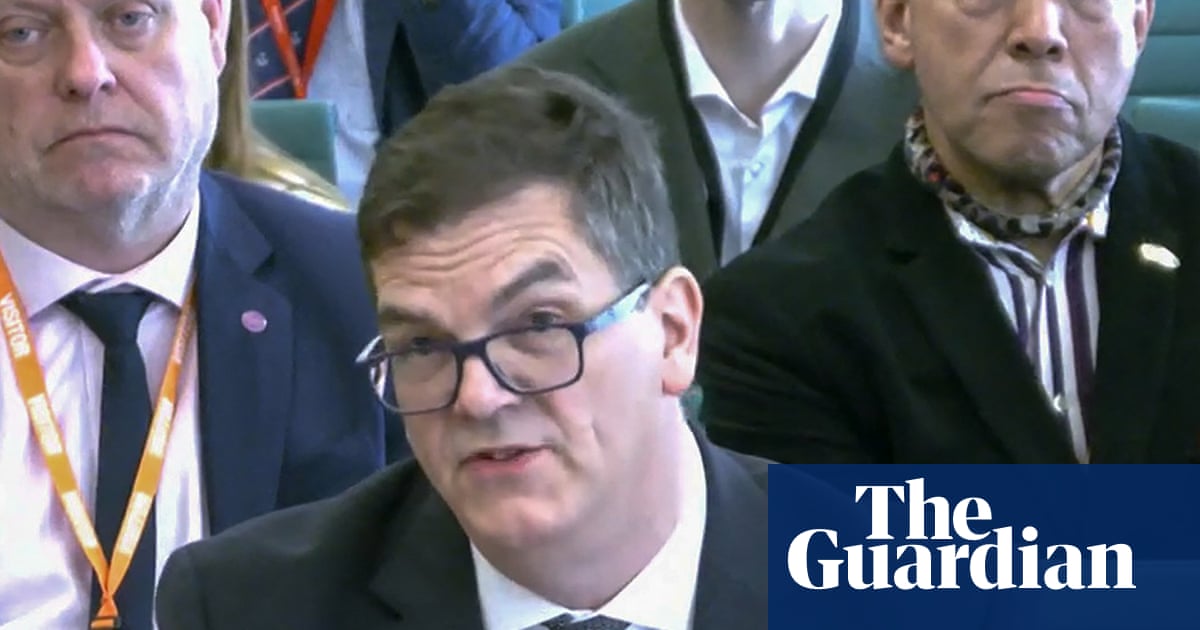
Robbins, who was sacked from his role of permanent secretary at the Foreign Office last week after revelations in the Guardian, gave testimony about the process to a select committee.
Robbins told MPs that he did not see the vetting file produced by United Kingdom Security Vetting (UKSV), which he described as existing in a “hermetically sealed box”.
However, he said he was briefed on the risks it highlighted at a meeting on 29 January 2025 with a top Foreign Office security official. That was the day after UKSV had submitted its recommendation.
According to Robbins, he was briefed that UKSV considered Mandelson “a borderline case”, and vetting officials were “leaning towards recommending that clearance be denied”. Robbins said he was told the case was not clearcut, and UKSV had indicated the Foreign Office “may wish to grant” Mandelson clearance with mitigations put in place.
But he was repeatedly questioned by MPs on the committee about the UKSV vetting file – a template of which was released on Friday.
A template page from the summary document produced by UKSV after Mandelson’s vetting. Illustration: No Credit
They said they understood the vetting file document clearly showed that UKSV’s advice was that Mandelson should be denied clearance as there was high concern, with ticks beside two key red boxes on the form.
The document in question lists three rankings for possible “overall concern”: low, medium and high, colour-coded in green, yellow and red, respectively. In the next box, there is a space for a vetting officer to list the outcome of the assessment with their “overall decision or recommendation”.
Again, there are three colour-coded options: clearance approved, clearance approved “with risk management”, and – in a red box – clearance denied. MPs on the committee said they understood that Mandelson had received two ticks beside red boxes.
Responding to questions from the Tory MP John Whittingdale, Robbins said he did not recall the briefing he received being “that definitive”.
In a letter he submitted to the committee before giving evidence, Robbins said he was told in an “oral briefing” that “UKSV considered Mandelson a ‘borderline’ case, leaning towards recommending that clearance be denied”.
 Mandelson vetting row: Starmer v Robbins blame game deepens – The Latest
In the hearing, he reiterated his position that UKSV was “leaning against” granting Mandelson clearance. But he said that “the way in which it was described to me” was that UKSV and Foreign Office officials had “debated some of the assessments UKSV had made” which had “shifted up and down” before he was briefed. And he in effect conceded that he nonetheless took the decision to grant Mandelson clearance without even seeing the UKSV file.
Robbins suggested that the file was a highly confidential document. He said that the usual process was not to reveal its contents to officials, except in “wholly exceptional circumstances”.
He said his team consulted the Cabinet Office and was told that Robbins “required a national security justification” to see the UKSV file and he did not pursue the matter further.
Get in touch
Contact our investigations team
The best public interest journalism relies on first-hand accounts from people in the know. If you have something to share on this subject, you can contact us confidentially using the following methods:
Secure Messaging in the Guardian app
The Guardian app has a tool to send tips about stories. Messages are end to end encrypted and concealed within the routine activity that every Guardian mobile app performs. This prevents an observer from knowing that you are communicating with us at all, let alone what is being said.
If you don’t already have the Guardian app, download it (iOS/Android) and go to the menu. Select ‘Secure Messaging’.
SecureDropIf you can safely use the tor network without being observed or monitored you can send messages and documents to the Guardian via our SecureDrop platform.
Finally, our guide at theguardian.com/tips lists several ways to contact us securely, and discusses the pros and cons of each.
Show more