
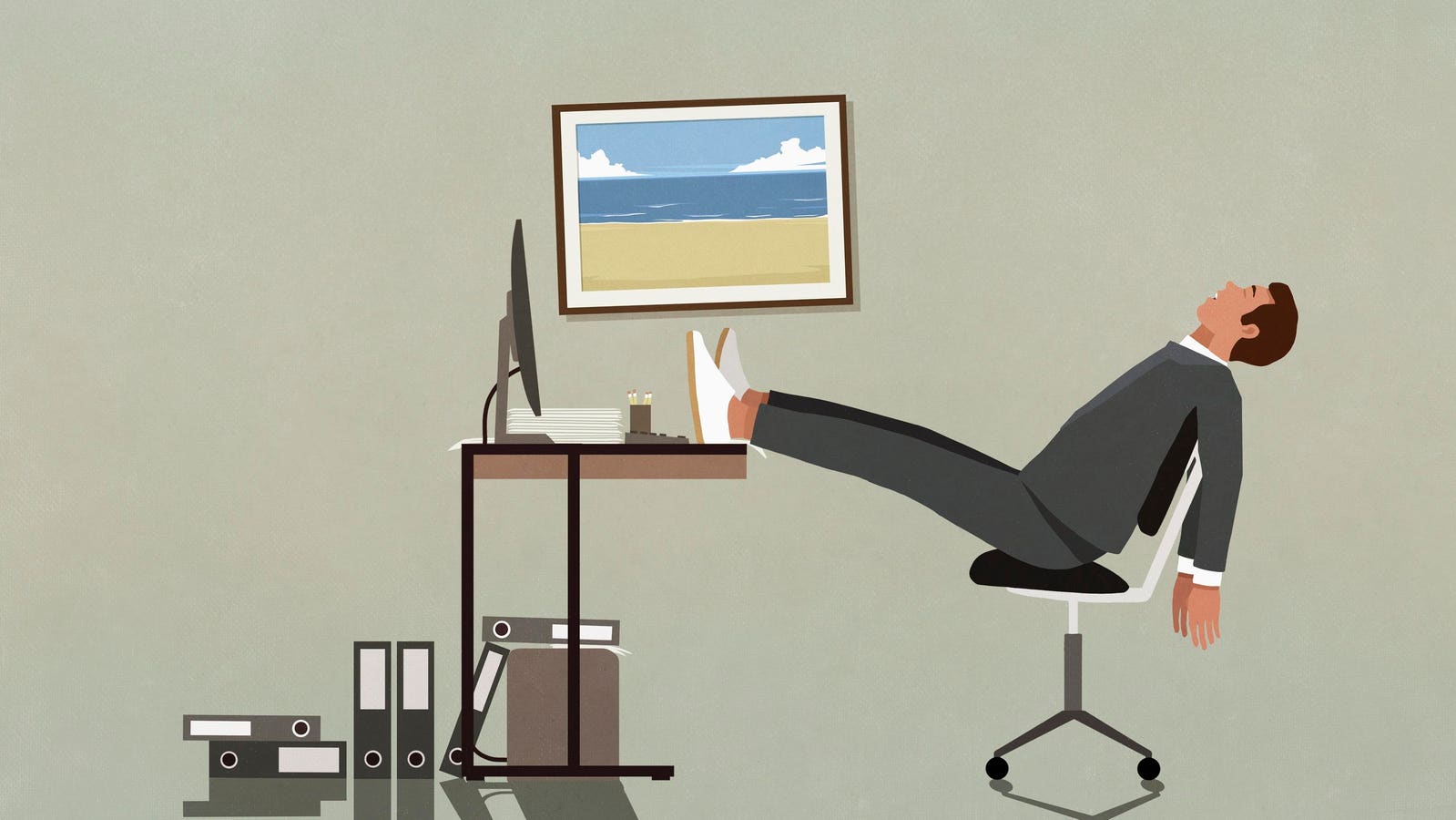
Most people don’t realize these everyday habits are working against their own capacity for brilliance. Here’s how they might be undermining your intelligence.
getty
We live in what’s possibly the most cognitively stimulating era in human history. More information is available to us in a single afternoon than most people encountered in a lifetime a century ago. And yet, complaints about poor memory, difficulty concentrating and mental fatigue have never been more common. The explanation, it turns out, may be less about what we’re consuming and more about how our brains are being trained by the habits that surround that consumption.
A growing body of research in cognitive psychology and neuroscience suggests that certain everyday mental patterns, ones that feel completely ordinary, even productive, may be eroding the very capacities we depend on most. Here are three of the most well-documented.
1. Habitually Multitasking
There is a persistent and flattering belief that multitasking is a sign of a sharp, efficient mind. The research suggests otherwise, and quite decisively.
First, it helps to understand what’s actually happening when we “multitask.” The brain does not process two demanding tasks simultaneously. It switches rapidly between them, and each switch incurs an attention cost. The task you just left lingers in your cognitive background, competing with whatever you’re trying to focus on next. The result is a kind of perpetual mental static.
In a landmark 2018 review published in Proceedings of the National Academy of Sciences, Stanford researchers synthesized more than a decade of evidence on media multitasking and cognitive performance. Their conclusion was striking: heavier media multitaskers consistently showed poorer performance across multiple cognitive domains, including working memory and sustained attention. Not a single published study in their review found a significant positive relationship between heavy media multitasking and working memory capacity.
Interestingly, the implications go beyond task performance. A 2014 neuroimaging study published in PLOS One found that individuals who scored higher on a media multitasking index had measurably smaller gray matter density in the anterior cingulate cortex — a brain region central to cognitive control, attention regulation and error monitoring. The researchers were careful to note the correlational nature of the data, but the structural difference was independent of personality traits, making it a genuinely striking finding.
There is also a particularly uncomfortable wrinkle here: heavy multitaskers are also largely unaware of their own performance decline. They tend to rate themselves as effective, even as cognitive testing reveals significant impairment. The illusion of competence, it seems, is part of the condition itself.
The practical takeaway is not to aim for a distraction-free life, as this is neither realistic nor necessary. It’s to recognize that every time you deliberately choose to finish one thing before starting another, you are doing something your brain genuinely benefits from. Depth is a trainable habit.
2. Habitual Passive Content Consumption
There is a meaningful difference between reading something and processing it. Between watching something and thinking about it. The distinction matters far more than most people realize.
The modern content environment is engineered for frictionless consumption: autoplay queues, algorithmically optimized feeds, pre-packaged opinions delivered with minimal cognitive demand. The result is that it’s entirely possible to spend hours absorbing content while doing almost no actual thinking. You finish a scroll session with a vague sense of having been informed, but you cannot recall a single thing you saw.
A 2023 review published in Frontiers in Cognition examined the cognitive impact of digital technology and social media on a range of key functions, including attention, memory and critical thinking.
Across multiple studies, exposure to algorithmically curated content was associated with reduced ability to critically evaluate information and impaired decision-making. Participants who encountered misleading social media posts showed measurable decreases in their capacity to assess the credibility of information they subsequently encountered.
The mechanism worth understanding here is cognitive offloading: the tendency to delegate mental work to external tools or systems. Some degree of offloading is adaptive and inevitable. But research on habitual dependence on digital retrieval suggests that when offloading becomes the default, the brain’s own capacity for information retention and independent reasoning can weaken over time.
It’s also worth noting that passive consumption does something more insidious than simply filling time. It replaces the conditions that produce actual thinking: sitting with uncertainty, forming an opinion before seeking out someone else’s, working through a problem without an immediate answer. These are precisely the cognitive experiences that passive feeds are designed to eliminate.
The shift that matters here is not how much content you consume, but the quality of engagement with it. Pausing after reading something to articulate what you actually think, before scrolling to the next item, is a small behavior with disproportionately large effects on how deeply information is processed and retained in your brain.
3. Habitually Avoiding Cognitive Discomfort
Of the three habits discussed here, this one may be the most counterintuitive. It feels sensible to choose the easiest path to understanding something. A shorter summary, a clearer explainer or an AI-generated answer seems preferable to working through the problem yourself. But decades of learning science suggest that this preference for ease may be quietly undermining the quality of our thinking.
Robert Bjork, a cognitive psychologist at UCLA, has spent his career studying what he calls “desirable difficulties” — the counterintuitive finding that conditions that make learning feel harder in the moment tend to produce significantly stronger, more durable knowledge. Retrieval practice, spacing and interleaving are more effortful and less satisfying processes than passive review, yet they consistently outperform easier methods in terms of long-term retention and transfer.
Put simply, the experience of struggling with something is not a sign that you are learning poorly. In many cases, it is the mechanism by which you are learning at all. When we consistently choose the path of least cognitive resistance, we deprive the brain of the very friction it requires to build lasting capability.
The daily version of this is more accessible than it sounds. It might mean reading a book that challenges rather than reassures you. Sitting with a problem for a few minutes before reaching for a search engine. Engaging seriously with a perspective you initially disagree with rather than scrolling past it. They’re not dramatic interventions, but when repeated over time, they constitute something neuroscientists take seriously: a mind that is actively building its own resilience.
It’s worth being clear about what this research does and does not suggest. These habits are not signs of irreversible damage. The brain is plastic, and patterns that have been learned can be unlearned. The same neurological flexibility that allowed these habits to take root is the mechanism through which they can be changed.
What the evidence does suggest is that intelligence is not a fixed quantity passively maintained. It is something actively shaped by the quality of attention we practice every day — by whether we work with the grain of how the brain actually learns, or habitually against it.
Do you want to know if your daily habits have affected your capacity for deep thinking? Take my science-inspired Cognitive Style Test to know if you’re a speed processor or a leisurely reflector.