
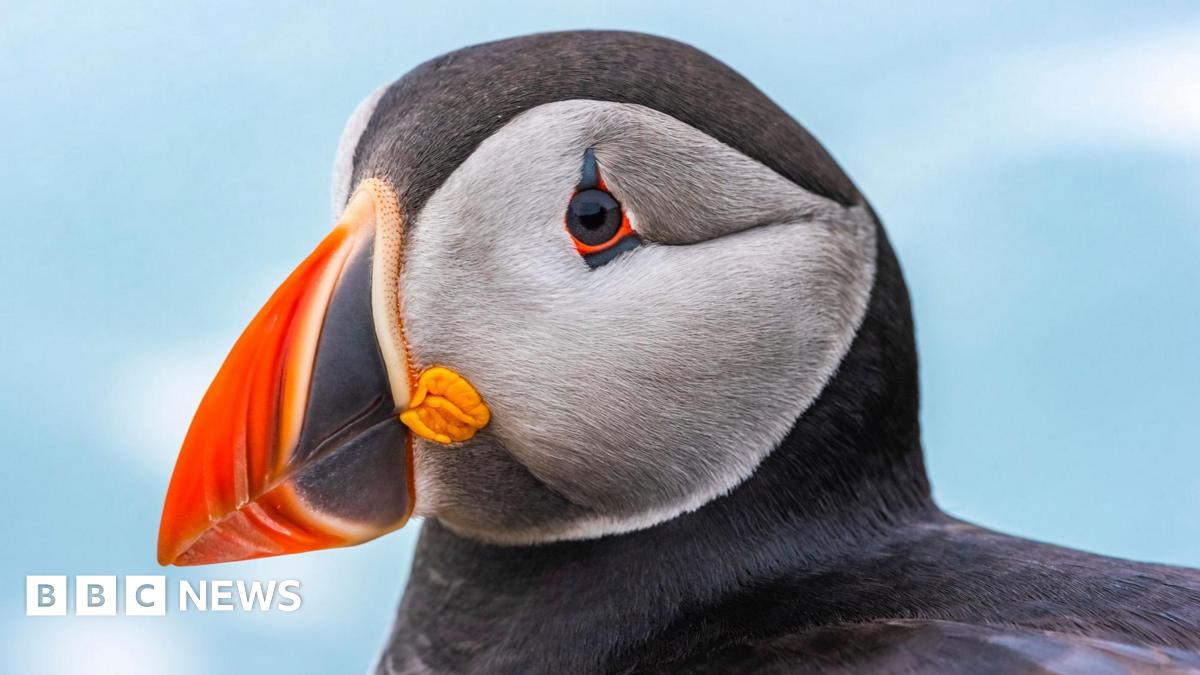
The WTSWW undertakes its annual seabird count on the island to monitor the population of birds that return every spring to breed.
Leighton Newman, Skomer Island Warden for WTSWW, said: “After the tragic number of seabirds washing up on beaches across southern Europe earlier this year… it’s a very pleasant surprise to see the puffin population thriving.”
The Skomer team set out on a calm, clear evening with binoculars and notepad in hand to count every single puffin on land, in the sky and at sea.
The island is broken up into seven sections, and the team must work against the clock and the elements to make sure they have accounted for every puffin.
Too early in the season and the bulk of birds will not have returned, too late and they will be settled on eggs in their burrows.
The same method has been used to count the puffins since the 1980s, so they can compare more than 40 years of puffin population data.
This year 52,019 puffins were recorded, beating the previous record of 43,626 set in 2025.
Wardens, with the help of volunteers and researchers, also conduct boat-based surveys to record the number of guillemots, eazorbills, kittiwakes and fulmars breeding on the cliffs around the island.
They also monitor manx shearwaters, reptiles, marine mammals and the endemic Skomer vole.