
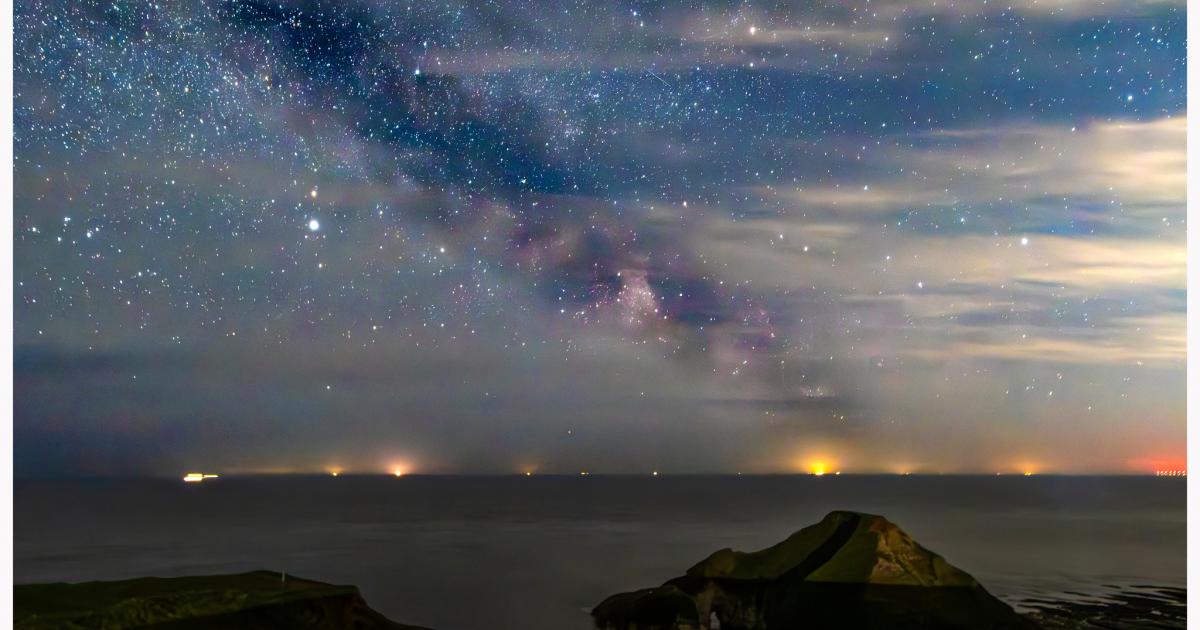
Daz Allon took the image at Flamborough Head at around 1.30am on April 18, after setting out to photograph the Milky Way above the distinctive ‘Drinking Dinosaur’ rock formation.
Mr Allon said he arrived at the site in the early hours and spent around an hour and a half photographing the night sky.
Self‑taught photographer’s journey
Sharing the image on Facebook, Mr Allon said the photograph was his favourite capture from the night and, in his view, the best Milky Way image he has taken so far.
“I’m all self‑taught by using search engines and watching video tutorials,” he said. “I’ve always had an interest in astronomy.”
From landscapes to astrophotography
Mr Allon explained that when he first began photography around eight years ago, his main focus was landscape images.
He explained: “I then started experimenting with astrophotography and had previously taken photos of the Milky Way at Malham and Snowdonia, which were good in their own right, but this has been my best capture to date.”
Planning, patience and camera settings
He said success in astrophotography often comes down to preparation and using the right equipment and settings.
He said: “It’s all about the settings on the camera, especially having a wide‑angle lens with a very high aperture to let as much light in as possible,”
Mr Allon added that while the Milky Way is visible to the naked eye, it does not appear as vivid as in the final image.
“You can make it out a bit, similar to the Aurora,” he said. “You tend to see it better on the back of the camera, and I’ve edited the image with software to make it more vivid.”
Why timing matters for Milky Way shots
Mr Allon said the Milky Way’s position in the sky changes throughout the year, making research an important part of planning a shoot.
He added: “The Milky Way is usually south‑facing in mid‑summer, but during spring and autumn it can shift from south‑east to south‑west and be visible at different times of the night…it’s hardly visible at all from October to February.”
Despite the striking results, Mr Allon said he is still developing his skills.
He said: “I’m just a hobbyist who enjoys taking photos whenever I can.”