
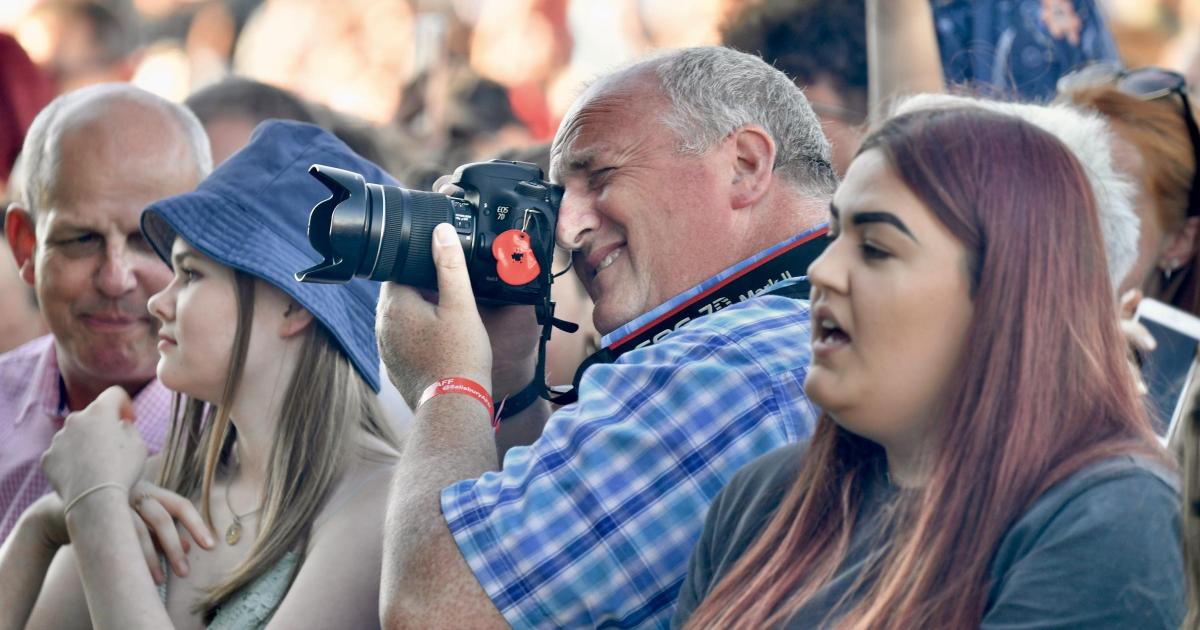
Spencer Mulholland, 56, who has worked with the Journal for many years, said his decision marks the end of an era but the beginning of a new chapter dedicated to supporting others.
“I’ve always loved photography,” he said.
“I didn’t want to commit at first in case I lost interest, but as soon as I started, I realised almost straight away that I absolutely loved it. I wanted to capture something new and interesting every day.”
Spencer Mulholland at the time of investigation of Salisbury Poisonings (Image: Simon Ward)
His journey into photography began as a passion project, guided by a mentor, before gradually developing into a long-term commitment to documenting life in Salisbury. He estimates he has photographed “thousands” of events over the years.
“I just turned up for everything in Salisbury,” he said. “I love the community, I love where I live, and I love recording it. My love of history and photography seemed to combine so well.”
That sense of history has been a driving force behind his work, with many of his images now preserved in local archives.
“I love the thought of my photography being kept and used for reference in future years,” he said.
“It might not seem important now, but give it 100 years and it will be incredibly interesting.”
Among his most memorable assignments was being selected to photograph a royal visit.
“I somehow managed to get through the ballot and spent the whole day with the Queen,” he said.
“I was walking backwards in front of her most of the day. It was an incredible opportunity.”
Spencer Mulholland with his camera (Image: Simon Ward)
Closer to home, he said community events have always been at the heart of his work, with the annual Diwali celebrations standing out.
“That’s been my favourite over the years,” he said. “It’s the sound, the music, the people, the food, the atmosphere – everything you’d want in a photography job.”
Reflecting on his time contributing to the Journal, Spencer said it had been deeply meaningful.
“I’m all about history, so the fact the Journal has always been there, recording everything, I love it,” he said.
“You’ve got to have integrity as a photographer – what you see is what you get.”
While he will miss aspects of the role, it is the people he has met along the way who stand out most.
“I’ll miss the people, really,” he said.
“But I’m not going anywhere – you’ll still see me around.”
His decision to step back comes as he takes on a greater role in fostering, something he describes as needing his “full attention”.
“Fostering has been a focus for many years,” he said.
“I can’t do both, and this deserves everything I can give it.”
Despite retiring from commissioned work, he does not plan to put his camera down completely.
“Any opportunity I get with history photography, I’ll still do,” he said.
“I love getting into the places people don’t normally see – the dusty corners, the old buildings. It really captures my imagination.”
Looking back, Spencer said he has no regrets.
“I’ve loved doing it,” he said.
“It’s given me the best opportunities. I’ve never regretted it for one minute.”