
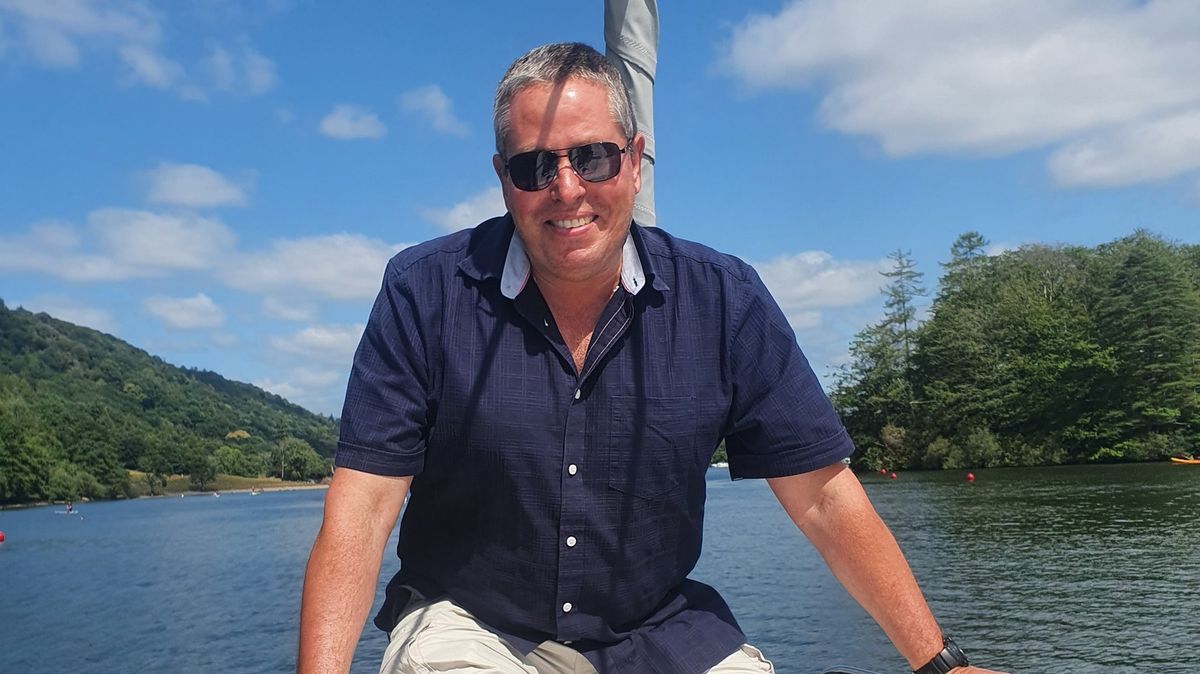
A “deeply-loved” Houghton-le-Spring dad died at just 53 after an operation went wrong at Sunderland Royal Hospital. Neil Pentland, an engineer, fell ill with a bowel condition called diverticulitis in April 2025.
After initially receiving advice from his GP practice over around a fortnight – when it was thought he had gastroenteritis -he attended A&E on April 26 and that evening underwent emergency surgery to remove a section of his large bowel.
However, in the two hours following the conclusion of that surgery in the early hours of the next day, the “join” – formally called an anastomosis – had leaked. This led to sepsis and despite two further surgeries, Mr Pentland died on April 29.
At an inquest which has resumed at Sunderland Coroner’s Court, senior coroner David Place heard surgeons dispute which procedure should have been offered. Consultant Rachael Coates, who had been on-call at South Tyneside Hospital – led a procedure which would have avoided the need for Mr Pentland to have a stoma afterwards.
However, independent expert Prof David Jayne of Leeds University and the Leeds Teaching Hospitals NHS Trust told the court that while her decision was “reasonable”, “the majority” of surgeons would not have taken the course Ms Coates did and that instead a so-called “Hartmann” procedure to remove some of the organ and create stoma would have been preferred.
Prof Jayne later said that during the lengthy surgery – which took close to seven hours, those operating should have made a decision that “enough was enough” and chosen to change course. At the inquest’s outset, Mr Pentland’s sister Denise read a moving “pen portrait” on behalf of his family – emphasising how important remember the man he was remains to them.
Ms Pentland said: “Almost everyone, every person here today or who will come through those doors, will only know Neil as a name on a page. I am here to say he was so much more than that.”
She said he had been a “deeply loved” dad, husband and son. She added: “And he was my little brother. These were roles that mattered to him and he gave so much of himself to those roles.”
In her tribute, she added: “He was a generous, thoughtful and much-loved friend.” Ms Pentland said her brother had made decisions to prioritise family, and loved hosting gatherings.
She added: “He had a gift for bringing people together.” And she also said: “In a world that can often feel harsh, Neil was one of life’s true good people.”
Speaking on behalf of his family, she added: “We are here to understand how he died, but it’s just as important to remember how he lived. We hope that we will get the answers that we deserve [and] that no other families will experience loss in the same way.”
The inquest heard evidence from surgeon Ms Coates, who said that she did not accept Mr Pentland had been a high-risk patient. She also rejected the coroner’s suggestion that she had “gambled” during his care. She said: “]Neil was well-tolerating the operation. There was nothing to suggest that what we were doing to him was not the right thing during that operation.”
The court heard how at one stage during the operation there had been complications including that the contents of Mr Pentland’s bowel had leaked into his abdomen, that she had to remove an additional 4cm of his bowel, and that the “joined” organ had then failed its first “leak test”. It did pass a second test after she took action, the court heard.
Did you know you can make ChronicleLive a preferred source of North East news in Google, which will mean you get more of our breaking news, exclusives, and must-read stories straight away? Here’s more information about what this means and how to do it – you can also do it straight away by clicking here.
Asked whether it had been the right move to use laparoscopic – “keyhole” – surgery, she said this was the case, and that in fact it had reduced the risk to Mr Pentland – as she had been able to use the magnification from a surgical camera. However the expert witness later said this was a trade-off as a surgeon would not have a benefit of their hands to “feel” the nature of a problem.
Ms Coates added: “I’m incredibly sorry that Neil had these complications and it resulted in his death. It has been devastating for us as a team.” The surgeon said she would have wanted to be informed when Mr Pentland’s condition began to deteriorate just hours after surgery was concluded. As it happened, the court heard this did not happen until mid-morning the next day.
Ms Coates also said that in future, in cases where surgery was set to take place in the evening, she would not make the decision to attempt such a procedure, due to the limited overnight support in case of complications after surgery was complete.
Prof Jayne told the court he felt there should have “come a point” where the surgical team re-evaluated. He said: “I think in the UK, the majority of surgeons would have undertaken the Hartmann [procedure].”
Prof Jayne said it had been right to balance the risks to quality of life that come with a stoma, and the need for any reversal operation, but that there was a significant risk – 10 to 20%, he said – that in emergency patients like Mr Pentland a join would leak, with potentially fatal complications.
“A leak is probably the worst complication a bowel surgeon can have,” he said. “The risk of death is around 20% if you are lucky.”
Prof Jayne said the strategy of starting a procedure on a keyhole basis – but being prepared to “convert” this if necessary – was safe, but highlighted that he felt there were points this decision should have been made. He said that it appeared to have become clear the operation was not straightforward – and he agreed with the coroner that “it could have been predicted that the operation would become very difficult”.
The professor added: “What I think I can safely say is that part-way through the operation, I think many surgeons would have said ‘enough is enough’ and this is going to be too difficult.”
Later in the day’s evidence, consultant surgeon Christophe Thomas, who had been on-call at Sunderland Royal on the day in question, told the court that because his own experience had not been in keyhole lower bowel surgery, he would have been compelled to opt for a Hartmann procedure – which he accepted was “safer” when questioned by the coroner.
Mr Thomas said he had initially called Ms Coates for advice and presented two options, but that she suggested a third – performing the anastomosis. The inquest continues, and is set to conclude on Friday April 24.
Our ChronicleLive Daily newsletter is free. You can sign up to receive it here. It will keep you up to date with all the latest breaking news and top stories from the North East.