
Modern, metaphor-heavy trauma horror—or metaphorror—tends to separate the drama from the chills, intentionally or otherwise, resulting in diluted cinema in which the mere fact of interpretability is considered a virtue. This trend, and its reductive “elevated” label, were birthed during the last decade with intimate films like the white-knuckle Babadook and the gradually creeping It Follows (both from 2014), which are grand and imaginative in their own ways, but also led to numerous imitators aping only their surface. Twelve years later, Leviticus from Australia’s Adrian Chiarella plays like a successor to them both, but re-imbues the symbolic approach of recent arthouse horror with a pitch-perfect dramatic moroseness, applied like an unrelenting vise grip.
The Sundance premiere (which was picked up by NEON, and subsequently programmed at Austin’s South by Southwest and New York’s New Directors/New Films) is a film of queerness and religious conversion therapy, whose not-so-hidden ideas brush right up against the fine membrane between genre and real-world meaning. In broad strokes, it concerns a violent, demonic presence made to latch onto young queer teens in rural Victoria, Australia, tempting them by taking the form of the person they’re most drawn to. The symbolism therein becomes overt and obvious: once they’re cursed by an evangelical healer, this presence approaches each kid when they’re alone—and at their most depressed or emotionally vulnerable—seducing them before viciously ripping them apart. Their hatred for their own identities, once placed under a microscope, fills them with so much shame and fear that they have no choice but to flee their lovers, their truth, and their lived experience, or die in the process.
While it has a fair few explanatory scenes, of tragic star-crossed boys Naim (Joe Bird) and Ryan (Stacy Clausen) figuring out what they’re up against, Leviticus never gets bogged down by exposition and mechanics. Its story is rooted, instead, in the unflinching drama of teenage uncertainty beset by isolation. We first meet the young classmates loitering about in an open field and an abandoned warehouse, as their repressed roughhousing turns quickly into something more sexually charged. Naim, although trepidatious, is taken by the strawberry blond Ryan’s rough exterior and sensitive eyes. However, petty jealousies over other boys lead Naim to tell their local pastor about Ryan’s sexuality. This eventually leads to Naim’s own single mother (Mia Wasikowska) calling upon the elderly Deliverance Preacher (Nicholas Hope), whose proclamations—made with a lighter in hand—cause seizures, as he curses Naim with the voracious, all-consuming spirit of orthodoxy.
It’s conform-or-die for Naim and Ryan, but the film also centers their fragile dynamic as adolescents still figuring themselves (and each other) out. That there ends up being a symbolic toxicity between them, wherein each other’s presence becomes painful and potentially dangerous, isn’t just the work of forced conformity, but of the very untamed, self-destructive desire that the Preacher wants to shield them against. These are beating, three-dimensional characters whose pain and need are writ large across the screen in frightening hues each time the boys approach each other from a distance, leading to uncertainty about whether the person about to embrace them is doing so lovingly, or out of cataclysmic instinct.
The only “lore” Naim and Ryan can discern is that being around other people helps keep this presence at bay, but this too has its limits, leading to paranoia each time they come face to face. The filmmaking assists in this looming sense of suspicion as well. The setting’s dusty heat is rendered as a kind of fog, and the screen direction between cuts is occasionally obfuscated, so you’re never quite sure which version of the character has just entered stage left or exited stage right. The trauma therein isn’t just the threat of bloodshed, but the betrayal of the boys’ own families, who have tried to exorcise an innate part of their souls. This pain resonates in the form of all-encompassing uncertainty.

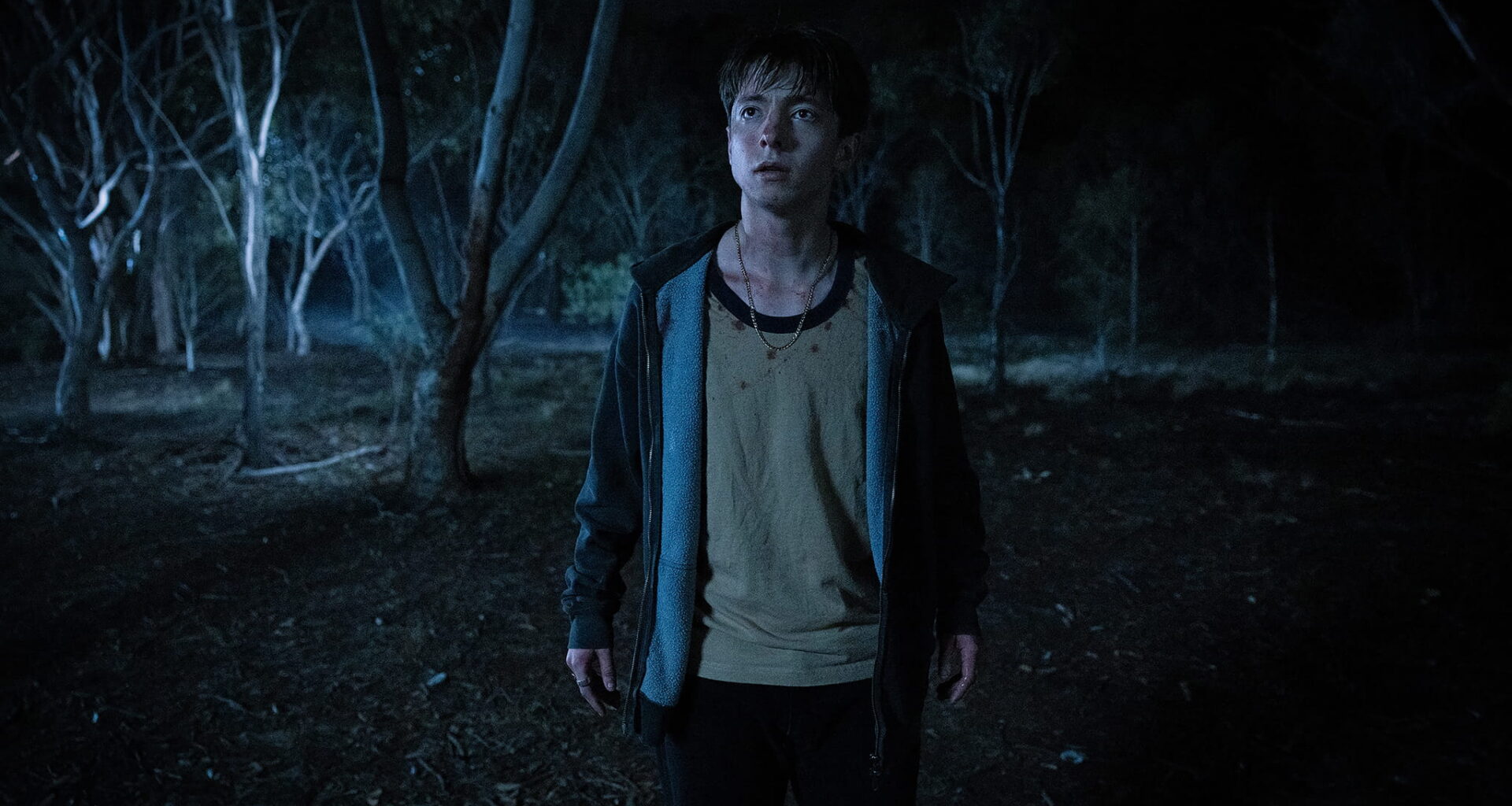
From left, Joe Bird as Naim and Stacy Clausen as Ryan in “Leviticus.”
Courtesy of Sundance Film Festival
Chiaralla, as a gay filmmaker, draws on his own experiences to create this story, and it’s hard to imagine that his mixed Italian Chinese heritage didn’t also factor into the sense of outsidership his characters feel. That Naim’s father is absent from the film, and that he has an ethnically ambiguous appearance among otherwise white characters (including his mother), only adds to this lingering sense of seclusion. Something is always amiss in Leviticus, and as much the movie’s “monster” is an embodiment of external bigotry, its very nature is internal, and reflective, forcing amorphous feelings of guilt and worthlessness into a shape that, unfortunately, makes perfect sense. We are all, ultimately, the first casualties in the blast radius of our own misery. The second is usually the person we love the most.
As Naim, Bird unearths the emotional volatility of this sensation with the utmost aplomb, ensuring that as much as the film is about the building fears of physical violence, it’s equally about the mounting tension of living with yourself, and with another individual, when the floor is about to slip out from under you. In a literal sense, the premise results in Naim trying desperately to convince people that he and Ryan are being chased by a shape-shifting ghost, but Bird’s commitment to the part ensures that his desperation is more far reaching. Naim is someone who just wants to be seen, and understood. Instead, he’s drowning in thin air, and the film’s tricks of POV seat us alongside him, turning moments of intimacy hair-raising, and nauseating, at the sheer thought of what tragedies might transpire should he give into temptation—or simply, the desire to be loved.