
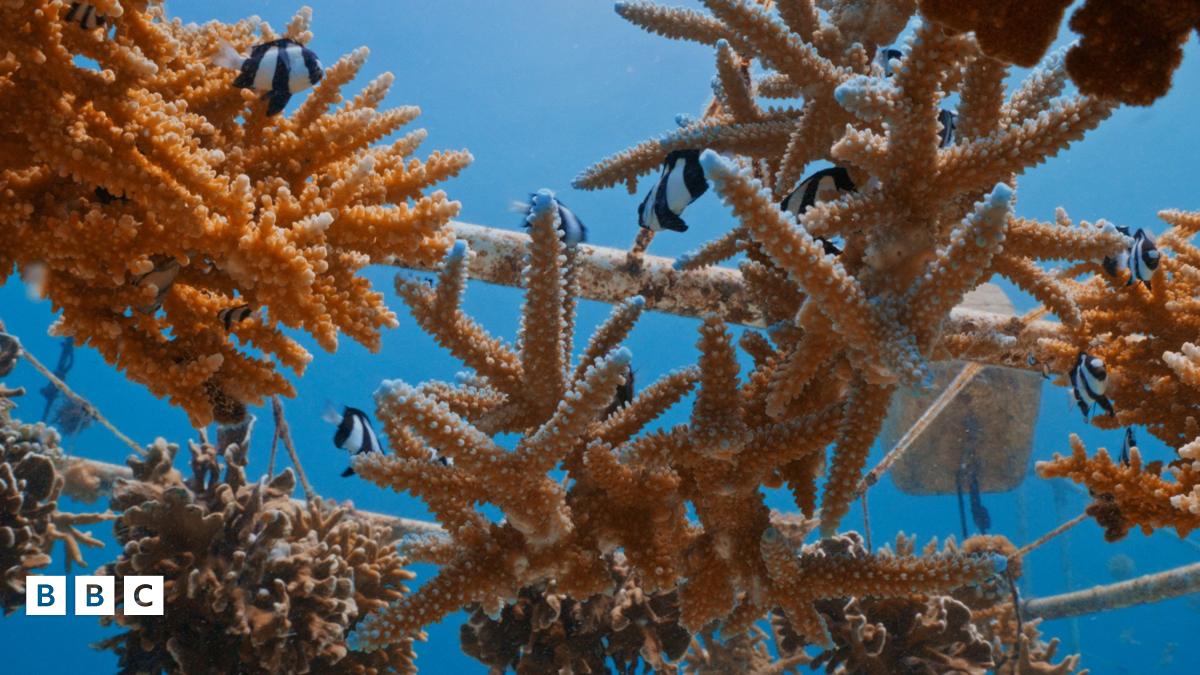
Marine Biologist Professor Steve Simpson from Bristol University has found out that coral larvae actively choose where to settle and develop.
They can move through the water using tiny hairs on their surface to push themselves along.
He has also found that they are attracted to the sounds of a healthy reef, so if a thriving underwater soundtrack is played in the water, the coral larvae are more likely to land and start growing.
Using this technique, they can attract the larvae to the areas that need to be restored.
He told Newsround: “If you create safe places for coral to survive they are in a position to grow back into the area where they’ve been lost.”
He has teamed up with Prof Harrison and they have been working together to try and boost coral on the Great Barrier Reef, near Australia.
It is the largest coral reef in the world and has been badly affected by coral bleaching.
Prof Simpson told Newsround that even damaged reefs can bounce back with human help but that the underlying causes of climate change also need to be tackled.
He said: “We’re working with nature to keep coral reefs alive while also tackling climate change.”
“We’re not just hoping for a better future, we’re making hope happen,” he added.
Deadly 60: Saving Coral Reefs is available on BBC iPlayer.