
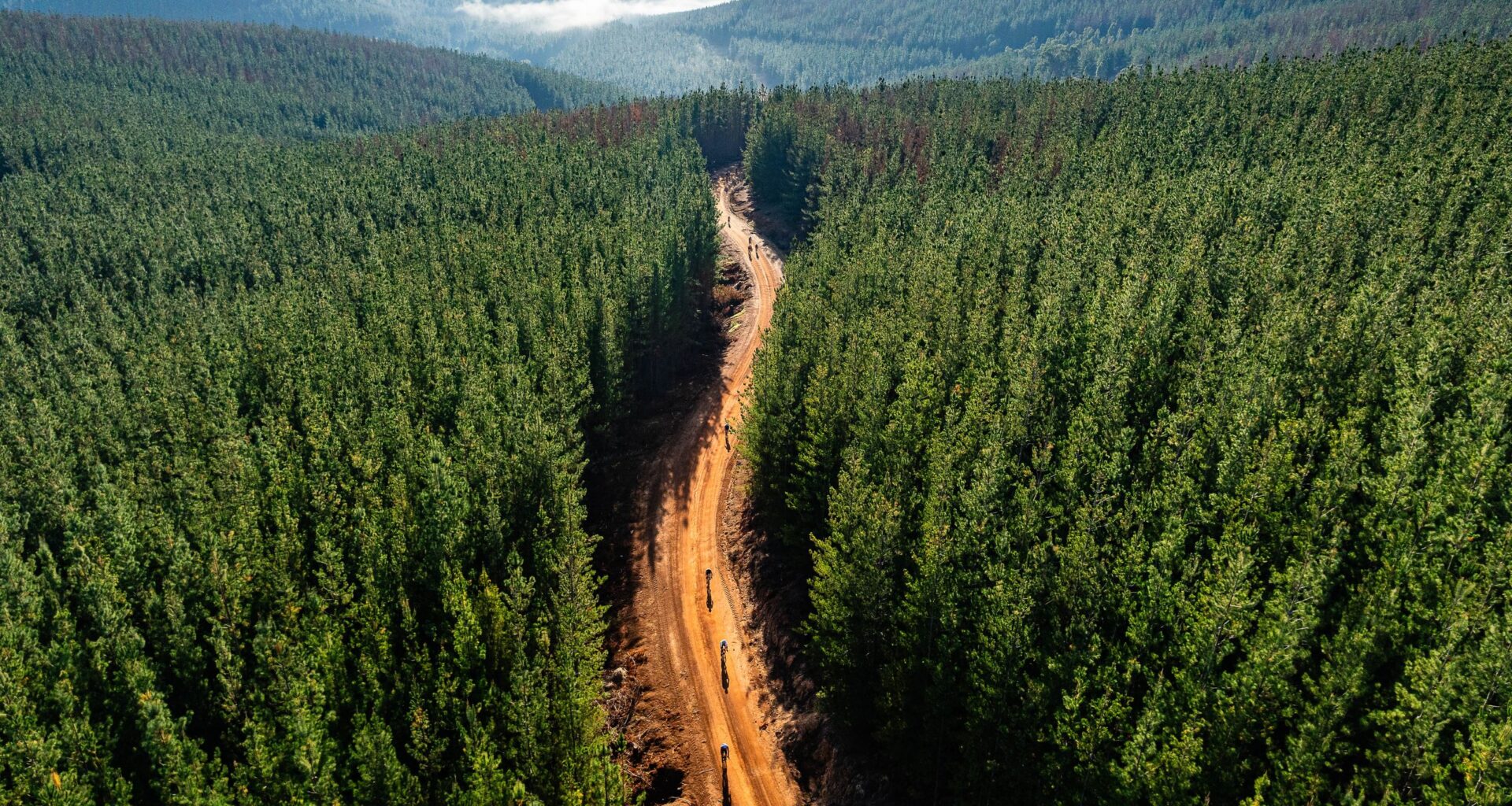
Until this year, the UCI Gravel World Championships has taken place in Europe but the flavour of the event will change distinctly in 2026 as the race is heading all the way to a corner of Australia, where UCI bike races may be a rarity but the terrain to hold this one on is bountiful.
“I’m a little bit biased but the southwest region of Western Australia is a gravel cycling mecca,” event and race director Stephen Gallagher told Cyclingnews. “You have the climate, and the topography of the region is very hilly – it is a very Liège-Bastogne-Liège type of elevation and demand – so that combined with thousands of kilometres of pristine gravel has given us the perfect storm for brilliant gravel cycling.”
Article continues below
You may like
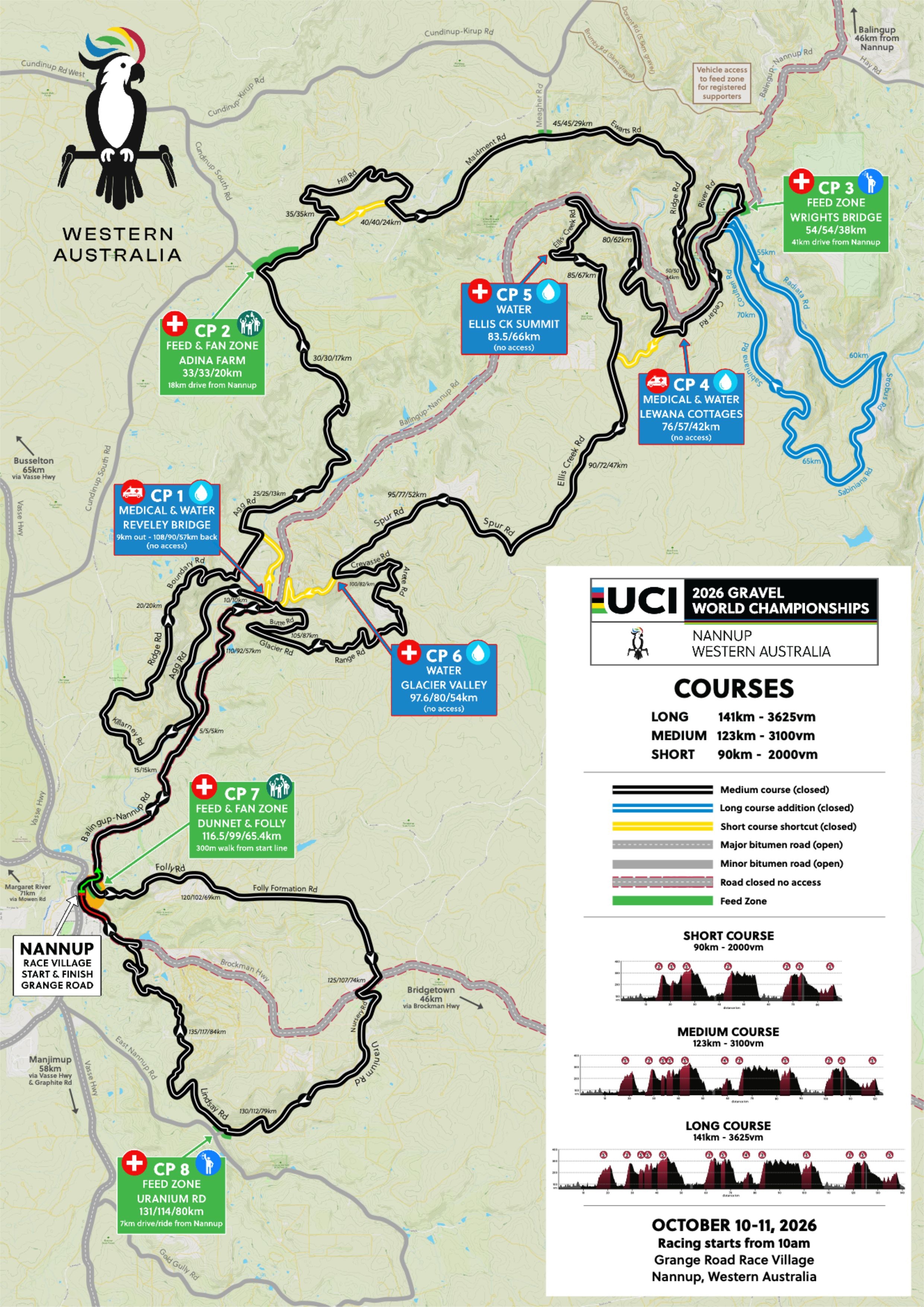
All in all there will be more than 80 percent gravel on the courses which include 3,625m of elevation gain for the men and 3,100 for the women, and the route can be broken into three distinct parts – each is separated by a flatter section of either tarmac or pristine gravel which will give riders a short break from the consistent climbing.
(Image credit: 2026 UCI Gravel World Championships, Nannup, Western Australia)The opening gambit
The race starts with a relatively flat section of around 15 kilometres, the first nine of that being a tarmac surface before turning left onto the gravel.
What to read next
“This is allowing us to get ready, to get deeper into the race and take a bit more of a deep breath before you hit the climbs,” said Gallagher. “That’s the first distinctive part and that next hard section, you’ve got about 30 kilometers there of hard terrain with 1000 meters of elevation gain.”
The first of the climbs in that section comes on Killarney Rd but it is the next, Brockman, that has the most bite with its 2.4km at an average gradient of 8.2% and a short dip down to the first feed zone before another succession of shorter climbs, Shale Hill and Maidment.
“In my eyes there will be a distinct selection there,” said Gallagher.
Then a substantial descent that begins at about 45km into the event will provide an opportunity for a reset.
With about 14km of combined descent and flat “the front group will probably swell” says Gallagher of the likely situation of the lead in to the middle section of climbing in the race.
Though how long that lasts is another thing given what’s ahead.
Short-lived relief
Through the flat lead in, there is also a second feed zone, and shortly after that is where the elite men take off on an extra loop of less than 20km. This loop adds the Arcadia climb – 2.7km at 7.5% – before they then rejoin the same course that the women race on. Even without Arcadia that middle section contains a hefty dose of climbing, as not long after the men’s loop rejoins there is also the tough Ellis Creek ascent – 2km at 9.1%.
“in this block here, from about kilometer 60 to around 100,” said Gallagher referring to the long course, “you have two very hard, longer climbs and the key thing that what makes those climbs hard is that after each of them there’s no descent.”
Instead riders have to keep the pressure on once they reach the peak – with a saw like profile for these sections rather than the triangle of a quick up and down.
It’s a section where Gallagher expects the groups to start getting smaller and for opportunists to perhaps try to go long.
The opportunity to try and pull back time on those who may take advantage of the climbs to take off will likely have to wait for the descent and following flat section which starts with under 40km of racing to go. That also offers a last chance to catch a breath before the decisive loop around Nannup.
Rainbows on the horizon
Just when riders are almost back to where they started, having headed toward town after the middle section on the flatter but still undulating tarmac, they will be directed left to take on a 24km loop around Nannup. This will offer spectators plenty of vantage points and riders another array of chances to shake off their rivals.
In fact, one of the harder climbs of the race, particularly given what is already in the legs at this point, opens up the final section. While the race guide for SEVEN may outline that it is 2.4km with a 4.8% average, that doesn’t tell the full story given there is an easing up part way through and then it steepens across the final kilometre or so. What’s more, there is no easing off at the top, with it being another one of those ascents that has no quick downhill after, but a flattening out instead where riders still have to stay on the pedals.
It may not be be the final decider, said Gallagher, as the climb is still 20km from the end of a race that has challenges still to come, “but I would see that as being one of the major points where the race will be won or lost.”
There are some more short punchy climbs on the loop and then a final effort up Lindsay Rd – 2.36km at 2.6% – which Gallagher said “I would best describe as a very hard drag”. Plus it is one with a wide open view, so there will be no hiding from any pursuers that could be trying to close the gaps and keep their World Championships hopes alive.
Once over the top there is about a kilometre of descent. Then for the last nearly two-and-a-half kilometres it is is a relatively flat final run to the line in Nannup with the race finishing on a wide paved road, which has a rainbow jersey waiting at the end of it.