
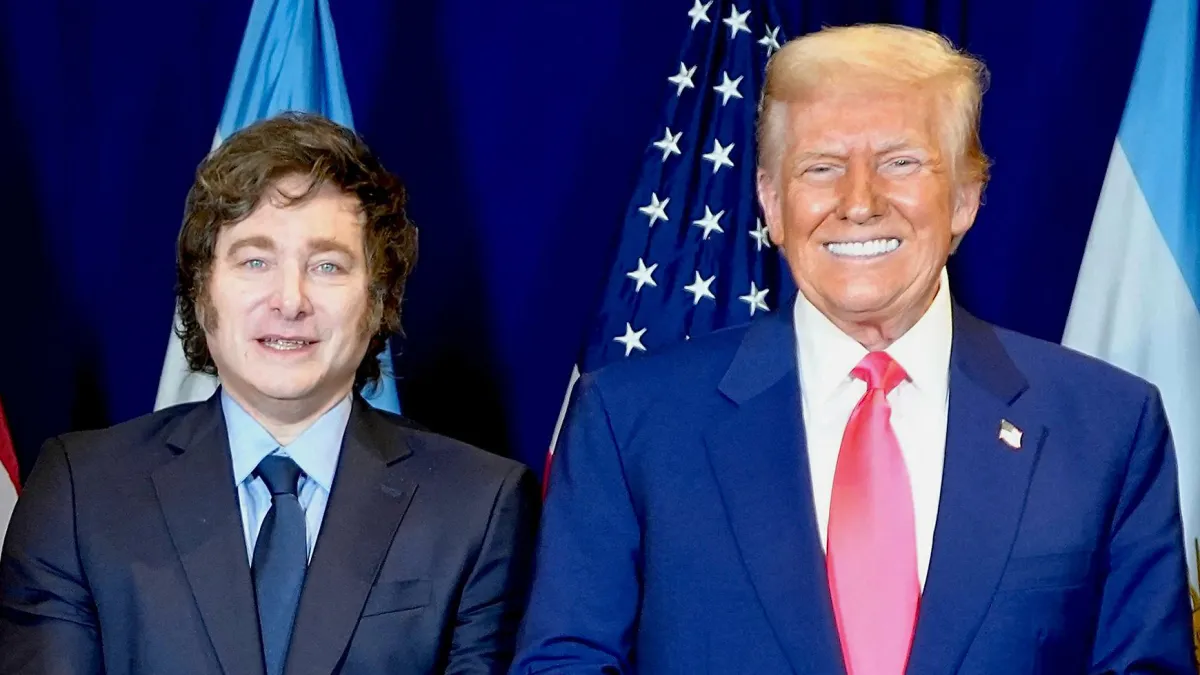
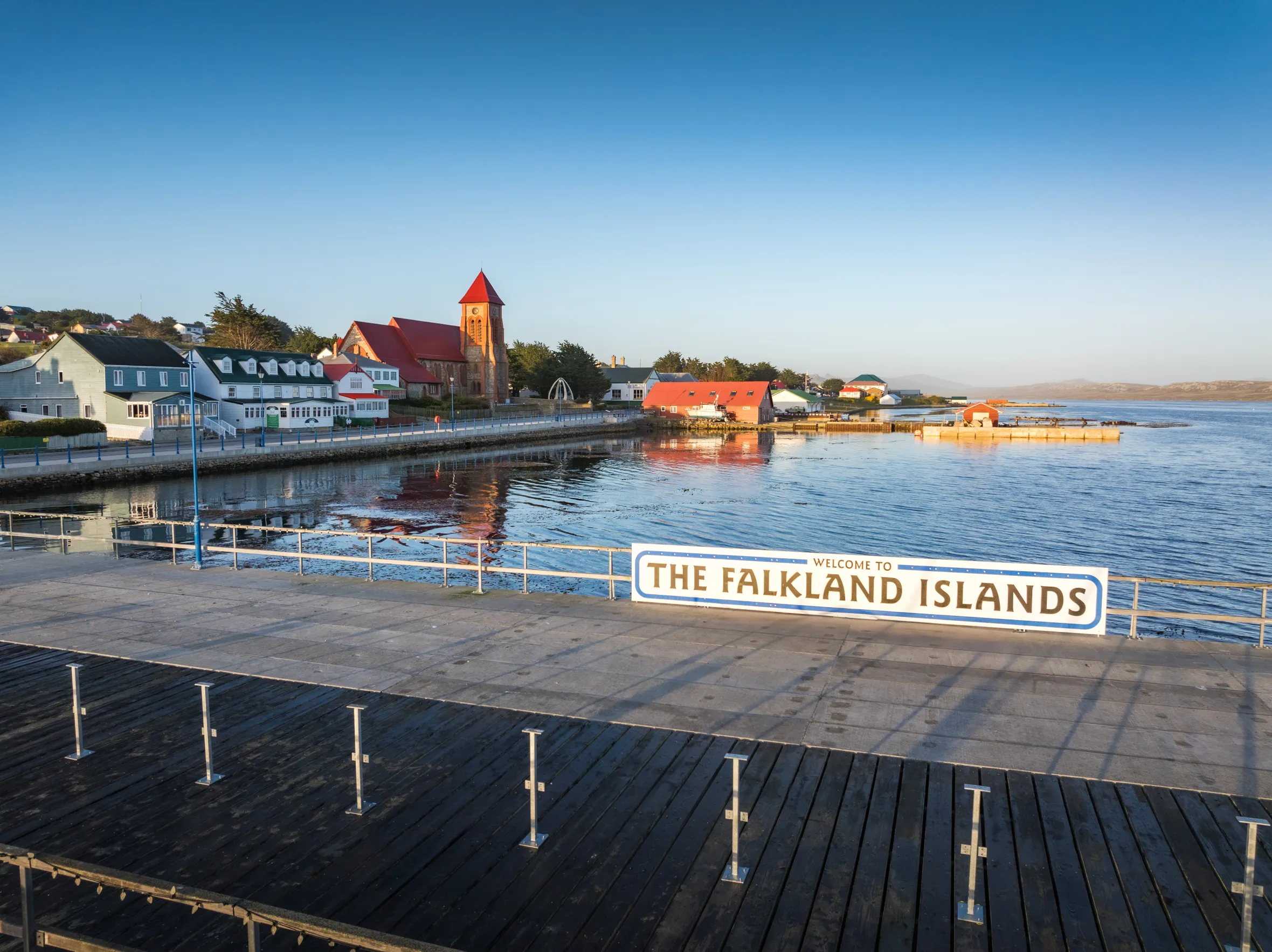
Downing Street told President Trump on Friday that Britain’s control of the Falkland Islands was “not in question” after a leaked Pentagon memo suggested America could back Argentina’s claim to the territory.
The internal email outlined options for the United States to punish European allies who had not given their backing to the president’s war on Iran.
This included reassessing diplomatic support for longstanding European “imperial possessions”, such as the Falklands, 300 miles from mainland Argentina. Another option was the suspension of Spain from Nato.
 Getty IMAGES
Kingsley Wilson, the Pentagon press secretary, said: “As President Trump has said, despite everything that the United States has done for our Nato allies, they were not there for us.
“[We] will ensure that the president has credible options to ensure that our allies are no longer a paper tiger and instead do their part. We have no further comment on any internal deliberations to that effect.”
The row threatens to overshadow the King’s four-day state visit to Washington next week to mark the 250th anniversary of American independence.
War and peace newsletter
Tom Newton-Dunn’s concise guide to global conflict – with reasons for optimism.
Sign up with one click
Sir Keir Starmer’s spokesman said Britain “could not be clearer” in its backing for the self-determination of the islands. “We’ve expressed this position to successive US administrations,” the spokesman said.
“The question of the Falkland Islands and the UK’s sovereignty and the islanders’ right to self-determination is not in question, and we’ve expressed that position clearly and consistently.”
Stephen Doughty, a Foreign Office minister, later added: “The Falkland Islands are British.”
Trump has repeatedly attacked Starmer for withholding the use of RAF bases for offensive strikes on Iran. However, a senior UK government figure said ministers had been blindsided by the leaked memo and were attempting to confirm whether it represented an official plan to change America’s position on the Falklands, which has been one of neutrality.
Defence and foreign policy experts told The Times that the Pentagon email represented an implicit threat from the US that it would support Argentina’s claim to the islands.
Whitehall officials said it could also reflect a difference in stance between the US State Department and the Pentagon. State Department officials have told British diplomats they were unaware of any plans by the administration to withdraw support for UK sovereignty over the islands.
Argentinian forces staged an invasion of the Falklands in 1982, rapidly overcoming a small garrison of British marines and claiming the territory as its own.
A British military taskforce quickly mobilised and Argentina was forced to surrender ten weeks later. Some 649 Argentinian soldiers and 255 British troops died in the conflict, in which several ships sank with crew on board, as well as three islanders.
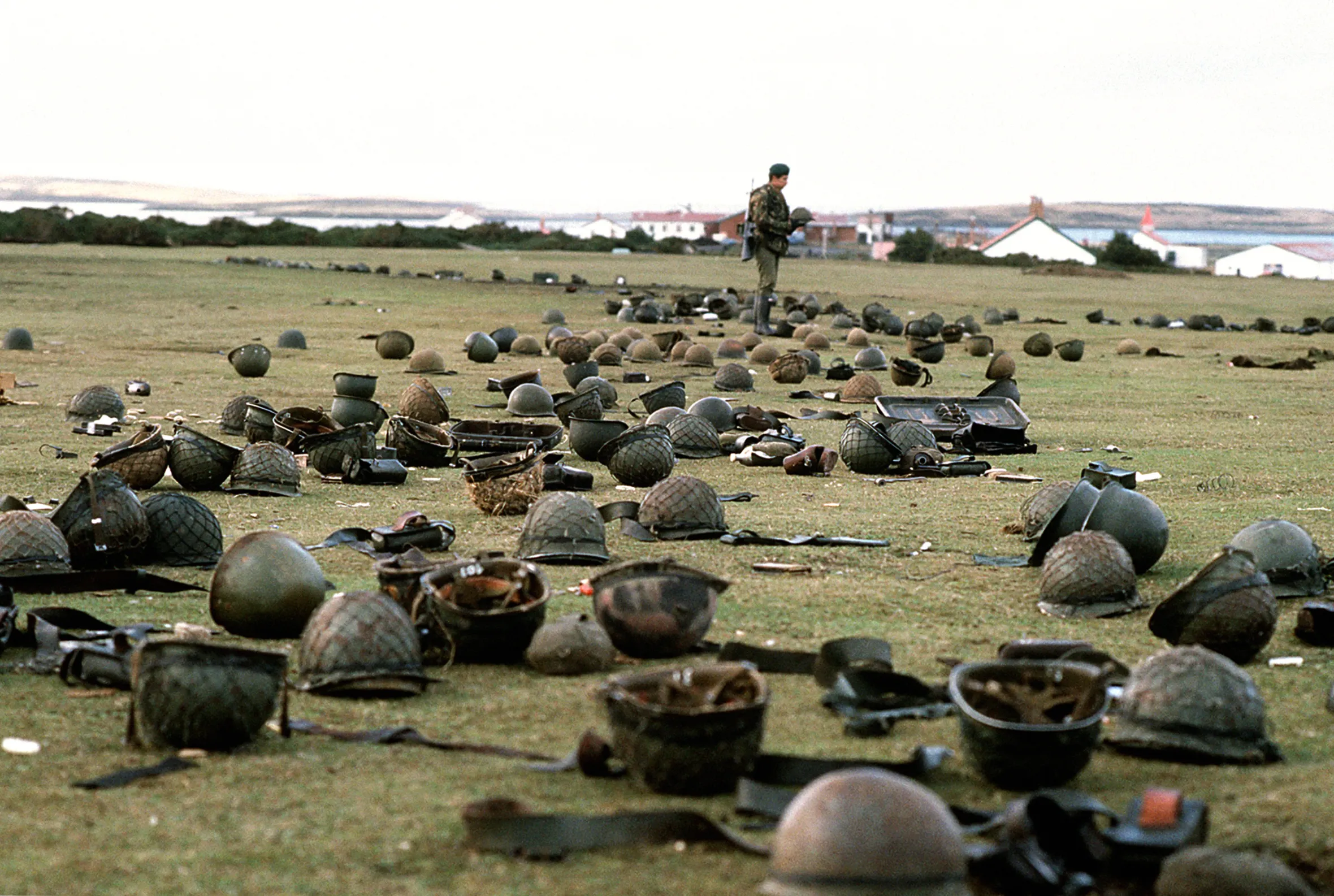 Steel helmets abandoned by Argentinian troops who surrendered at Goose GreenPA
Fewer than 1,000 British troops are now stationed on the Falklands, with four Typhoon aircraft. Meanwhile, Argentina is upgrading its military capabilities with the help of Nato allies, including the US, which is supplying missiles.
Three weeks ago Argentina’s leader President Milei, an ally of Trump, reasserted his country’s sovereignty claim over the islands, known in Argentina as the Malvinas, and called for negotiations with Britain.
Sir Grant Shapps, the former defence secretary, said Starmer’s decision to surrender sovereignty of the Chagos Islands to Mauritius had not helped the government’s case.
“There have now been 19 defence secretaries since John Nott offered his resignation when the Falklands were invaded in 1982,” Shapps said. “Every secretary of state since, myself included, has understood the need to pay particular attention to threats to the sovereignty of the Falkland Islands, from whatever direction those threats come. The situation today is no different.” However, he added that after the “offering up” of “other British territories, some people may have got the wrong idea about our determination to keep the Falklands British”.
Mark Francois, the shadow armed forces minister, said: “The fact the Americans could even be contemplating this shows just how far their relations have deteriorated with Sir Keir Starmer’s struggling government in recent months.”
Simon Weston, who suffered 46 per cent burns when his ship, the Sir Galahad, was bombed during the Falklands conflict, told Times Radio the islands had “nothing to do with Mr Trump” and that the president “can’t be a schoolyard bully forever”.
A Falkland Islands government spokesman said: “Self-determination is a fundamental human right enshrined in article one, paragraph two of the charter of the United Nations.”
The spokesman pointed out that in 2013 the islands held an internationally observed referendum in which 99.8 per cent of voters, on a turnout of 92 per cent, voted in favour of remaining an overseas territory of the United Kingdom.
“The Falkland Islands has complete confidence in the commitment made by the UK Government to uphold and defend our right of self-determination,” he added.
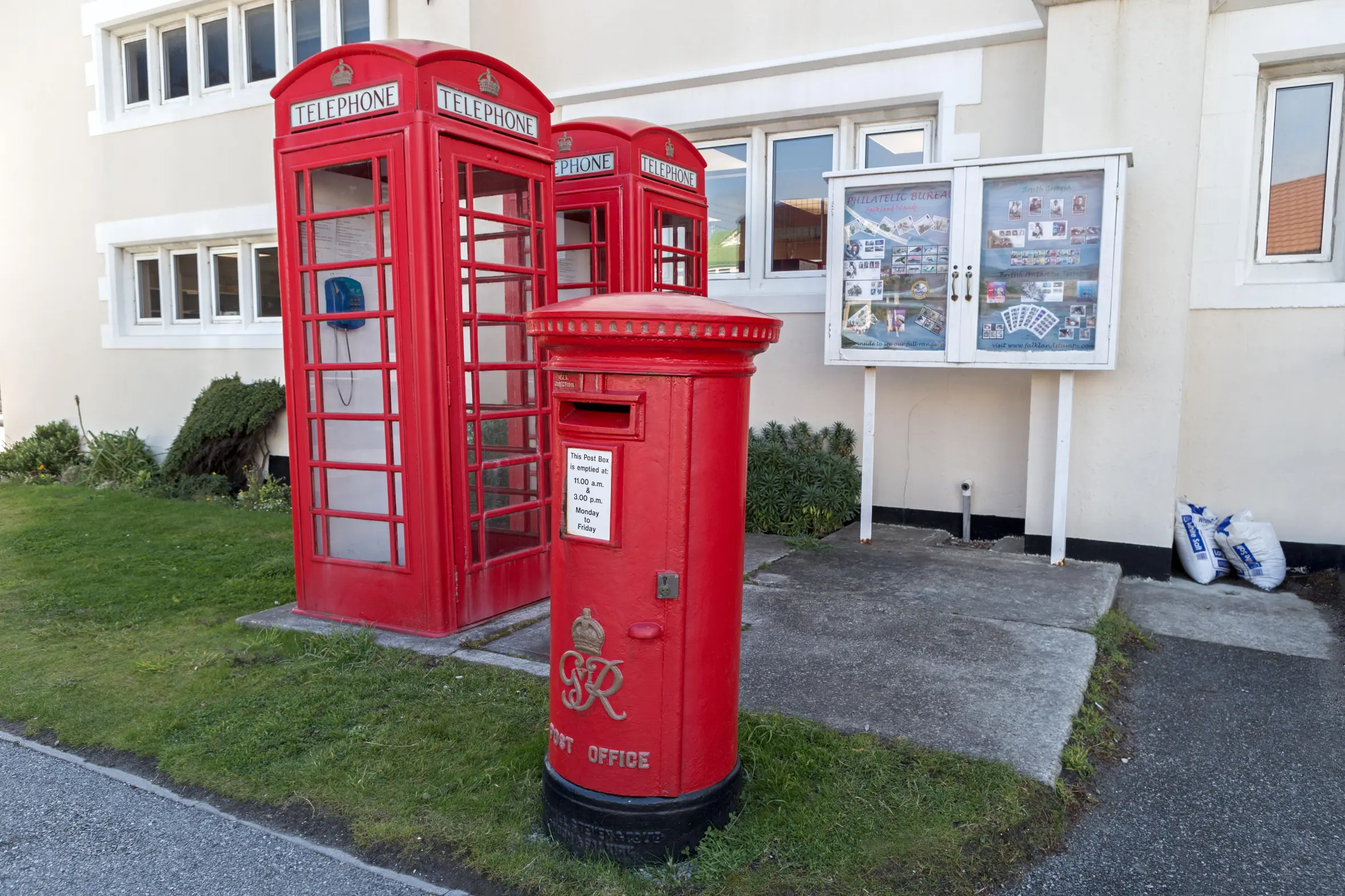 The post office on Ross Road in Stanley, the islands’ capitalMartin Lindsay/ALAMY
Some had feared that Milei would try to use his support of Trump’s Board of Peace to push the case for Argentinian sovereignty over the Falklands. However, while Milei was on record saying that Argentina would never relinquish its claim, he had also said he wanted the future of the islands to be decided by negotiation, taking into account the wishes of the population.
Milei said in December that he was planning this year to become the first Argentinian leader since the Falklands conflict to visit Britain. He also said he was in talks with the UK to lift a ban on weapons sales that applied to any containing British technology.