
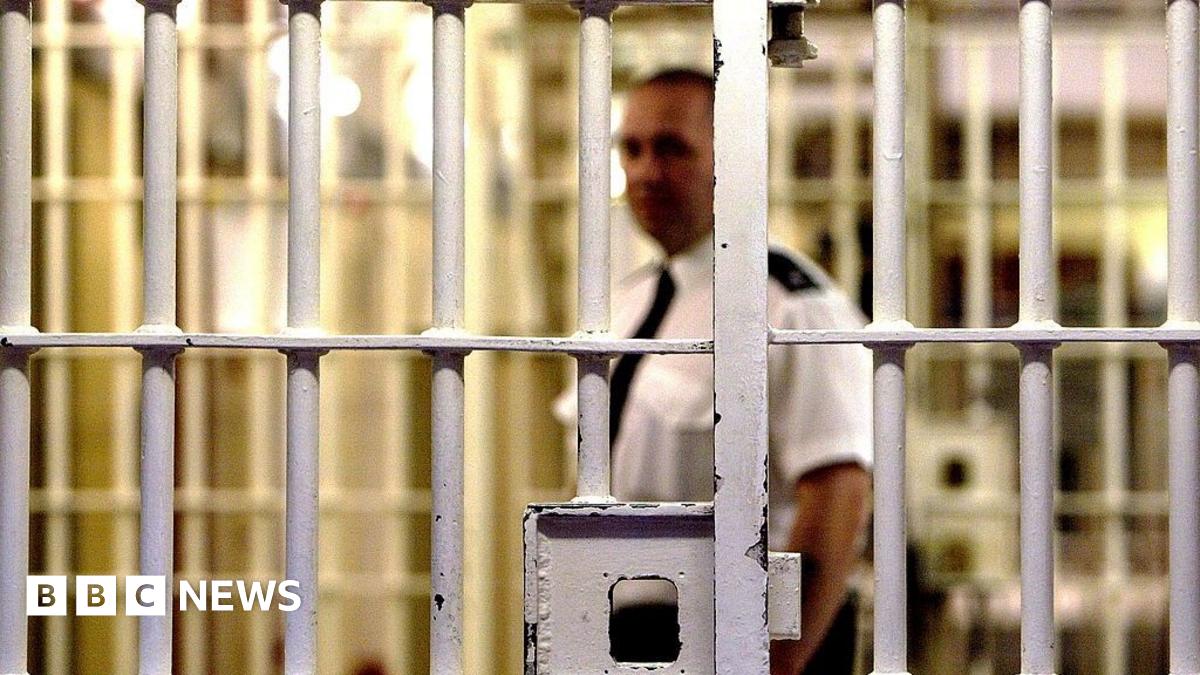
Prison officer numbers were down by almost 1,000 at the end of last year, compared with the year before. The government admits there are ongoing challenges, including recruitment and retention.
But ministers say they have boosted annual pay to £37,000, with resignations at their lowest in four years.
Another underlying issue is the lack of capacity in prisons. In the autumn of 2024, prisons in England were fewer than 100 spaces away from reaching full capacity.
A government report published last year identified a direct link between capacity and prison violence – it found that over a one-year period, crowded environments increased the likelihood of an offender being involved in a violent incident by 19%.
And when violent attacks do occur, the backlog of 80,000 cases waiting to be heard in crown courts in England and Wales means it can take many months for an inmate who has harmed another to be convicted.
Law enforcement agencies can seek to prioritise prison murders for pressing charges, though, particularly if a case has had a strong public reaction.
In response to this article, an MoJ spokesperson told the BBC: “To protect the public prisons must always be a place of control and punishment which is why this government took immediate action to reverse years of chaos and reduce the amount of violence behind bars.”
Ultimately, these attacks are not necessarily what those at the centre of convicts’ crimes – the victims – want.
Nour Norris lost her sister Khaola and her niece Raneem when Janbaz Tarin, Raneem’s ex-partner, fatally stabbed the two women in 2018.
She stresses that Tarin should see through his sentence – life with a minimum term of 32 years – for murder.
“Someone killed in prison is escaping their sentence. They should suffer with their own thoughts about what they did,” Norris says.
“The prison has a duty of care to make sure they serve that sentence and are punished properly according to the law – or it sends out a really bad message that the justice system is not in control.”