
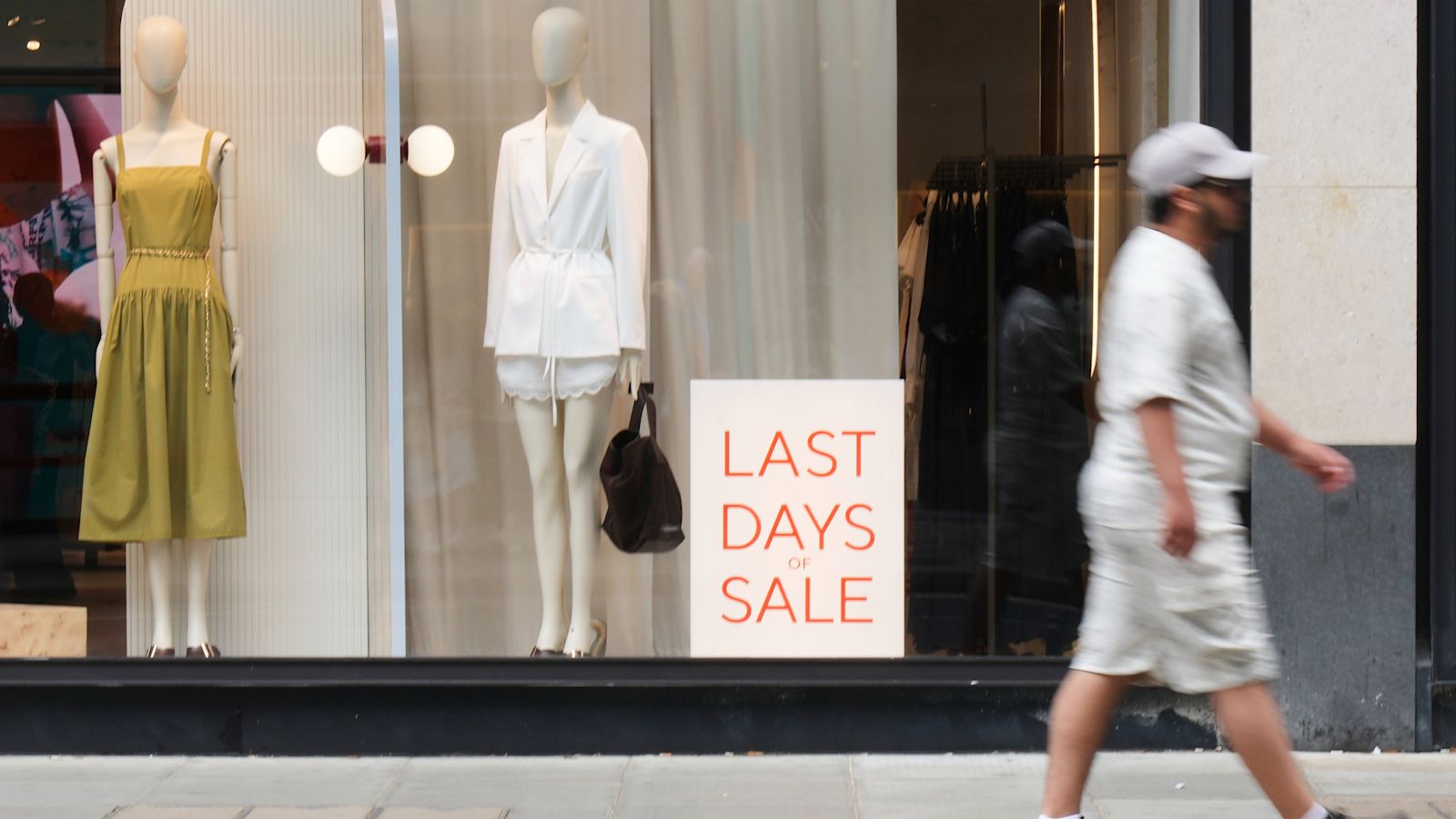
Consumer confidence has fallen for the third consecutive month as household get the “jitters” over rapid price rises, figures show.
GfK’s long-running consumer confidence index fell four points to minus 25 in April, following falls of two points and three points in March and February respectively.
The deepening concern was driven by perceptions of the UK economy, with a six-point slide in confidence for the next 12 months to minus 43, its lowest level since February 2023.
Confidence in personal finances over the coming year fell five points to minus four – one point lower than this time last year.
The major purchase index – an indicator of confidence in buying big ticket items – held steady, albeit at minus 18 but one point better than last April.
The only measure to improve was the savings index – often an indication that households are concerned about their finances and looking to build contingency funds – which is up five points to 32.
Neil Bellamy, consumer insights director at GfK, said: “Consumers really do have the jitters now.
“It is a year since we last saw a monthly drop of this size, and we have to go back to October 2023 to find the last time consumer confidence was lower.
“Everyone is grappling with rapid price rises, especially at the fuel pumps, which are taking a dent out of household budgets, and people know further price hikes are coming.
“Consumer confidence is deteriorating sharply, with fuel prices and threats of more energy price increases acting as constant reminders of inflation.
“While the Gulf crisis is intensifying pressures, much of the current strain reflects earlier domestic cost increases. How long can all this disruption and pain continue?”
Subscribe free to our weekly newsletter for exclusive and original coverage from ITV News. Direct to your inbox every Friday morning.
While GfK’s index measures consumer attitudes, expectations of the economic situation and willingness to make big purchases, separate figures suggests a higher than expected uptick in shorter-term purchases.
UK retail sales returned to growth last month as motorists stocked up on fuel after the Iran war drove up prices at the pumps, data from the Office for National Statistics (ONS) shows.
The statistics body said the total volume of retail sales, which measures the quantity bought, rose by 0.7% in March.
This compares with a 0.6% fall in February, which was revised slightly lower. The latest reading was also stronger than expected, with economists having predicted a 0.1% dip for the month.Statisticians said March’s increase was particularly driven by a spike in demand for fuel, which saw sales volumes jump by 6.1% for the month, the highest level since April 2021.They indicated that this was especially linked to a short period, of less than a week, of particularly elevated sales as unfolding geopolitical events in the Middle East caused a significant rise in prices at the pump.
Retail sales saw a boost due to drivers stocking up on petrol. Credit: PA
The amount of money spent on fuel was up 11.6% amid the jump in petrol and diesel prices, figures show. Elsewhere, clothing stores had a strong month, with sales volumes rising by 1.2% in March amid a boost from better weather conditions, while technology retailers saw sales grow amid new product launches.However, food sales were weaker, slipping by 0.8% for the month.The ONS said overall retail sales volumes are up 1.6% for the first three months of 2026, as the industry was also supported by positive growth in January.Elliott Jordan-Doak, senior UK economist at Pantheon Macroeconomics, said: “The first batch of hard data on consumers’ spending since the start of the Iran war was better than expected.“Granted, stocking up on motor fuels drove headline sales higher, but even excluding petrol retail sales volumes nudged up showing that households largely brushed off the initial shock of higher energy prices.”
Reporting History sees journalists join News At Ten anchor Tom Bradby to revisit their remarkable on-the-day reports of the defining events of the modern age. Listen to the episodes below…