
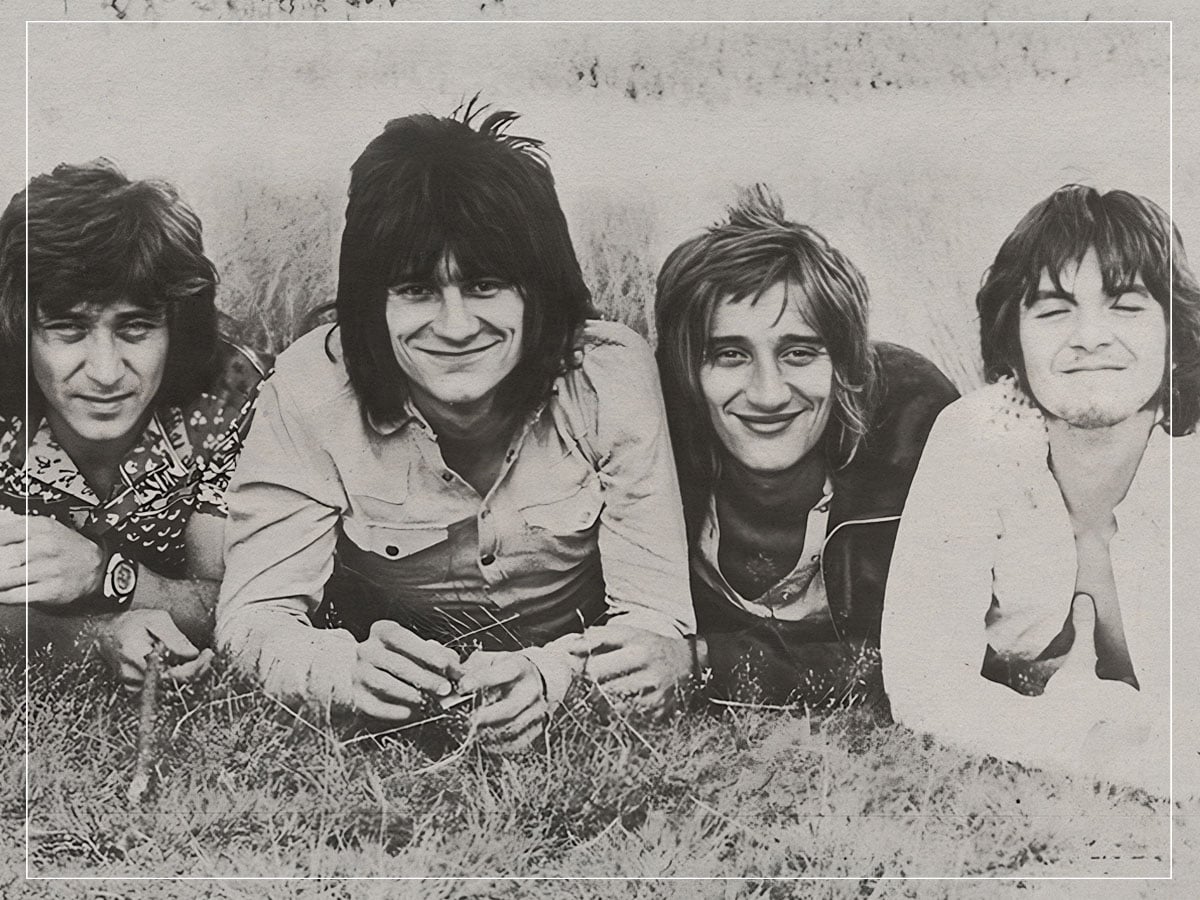
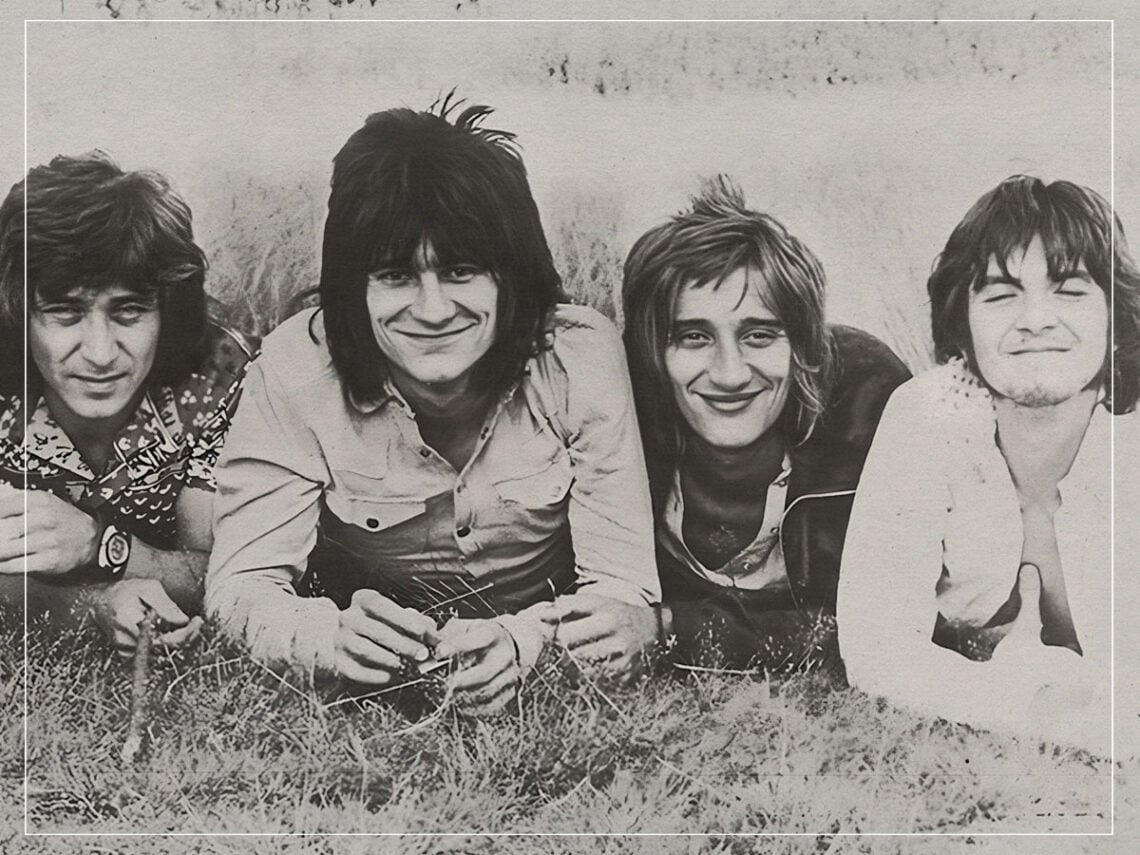
(Credits: Far Out / The Faces)
Sat 25 April 2026 10:00, UK
The 1970s were awash with great frontmen, pioneering an exciting and expansive time for rock and roll. But despite my best efforts, a scepticism born out of Rod Stewart’s questionable behaviour, I can’t help but look at the handsome rocker as one of the most captivating, and, dare I say it, interesting frontmen of the era.
Look, from the mid ‘70s onwards, Stewart became something of a difficult musician to defend, when the charm turned into sleaze, and the music deeply suffered for it. He almost became a parody of a rockstar, rather than a rockstar himself, so I tread carefully when I say that once upon a time, he might have just been the greatest frontman on offer.
At the dawn of the ‘70s, The Faces certainly thought so, because he had a voice that blended gravelly rock with soothing soul, all delivered with a wry smile that could have charmed the coldest of audiences and had them eating out of the palm of his hand. On paper, he had near enough everything, and with Ronnie Wood and Ronnie Lane behind him, a recipe swirled for The Faces to start climbing the ladder of rock royalty and seize the throne. But Stewart felt the rumblings of his stardom and always protected a solo career with lengthy contractual loopholes that essentially allowed him to cherry-pick songs for his own discography.
Stewart had a separate solo deal with Mercury Records, while The Faces were signed to Warner Bros, and so he leveraged that to ensure that the songs born from Every Picture Tells A Story would end up under his name. Sure, The Faces were garnering a reputation for loose recording sessions and debaucherous follow-up tours, but they were a collective nonetheless.
But Stewart had bigger ambitions, fuelled by a desire to move into a folkier rock sound that showcased him as a singer/songwriter, when really, the only people he knew were The Faces, and so the entire band camped in the studio, laid down the tracks for his seminal solo album and imploded their band in the process.
By the summer of 1971, the album reached the number one position in both the UK (for six weeks) and the US (four weeks), and when ‘Maggie May’ was released in October, it headed straight to the top spot and essentially finished the band.
“That was really heartbreaking for me,” Rod reckoned, “The boys all went, ‘Fuck it, don’t worry’, but I could tell Ronnie Lane and Ian McLagan were hurt, because they’d got away from a somewhat egotistical singer in Steve Marriott and they didn’t want that again.”
They stumbled through one more tour through November and December, battling against the Maggie-mania that swept America’s airwaves. Naturally, but not by design, the remaining members of The Faces were reduced to backing members, introduced on stage as the suffix of ‘Please welcome Rod Stewart and…’
Maybe The Faces weren’t the best fit for Stewart. After all, the band developed a raucous reputation as unreliable rockers with a decent album or two up their sleeve. And maybe Every Picture Tells A Story highlights Stewart’s growth outside of that. But his power soon weakened, and his shortcomings as a songwriter were exposed, leaving us all wondering what could have been, had the entire band soldiered on together and fulfilled their true potential.
