
The ADAPT study is now underway at Hampshire and Isle of Wight Healthcare NHS Foundation Trust to test whether a blood test can diagnose Alzheimer’s disease earlier and more accurately than current methods.
Led by University College London, the national trial could see blood tests introduced into the NHS.
Current diagnostic methods often depend on memory tests, brain scans, or lumbar punctures, which can be slow, invasive and expensive.
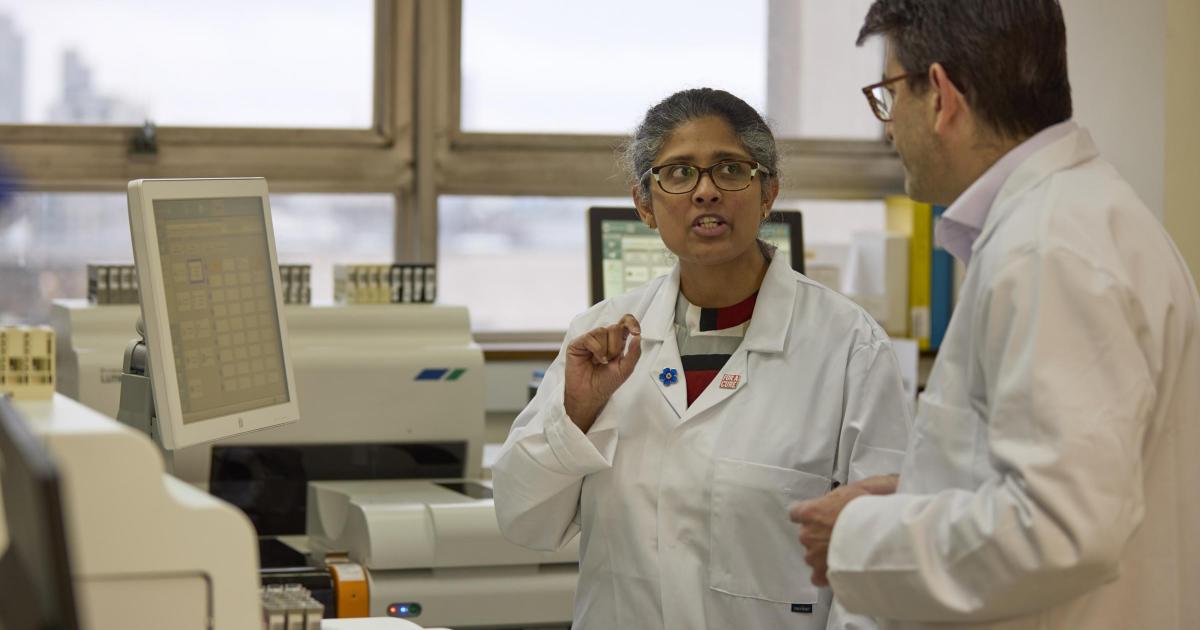
ADAPT trial (Image: Theo Cohen)
Dr Ashvini Keshavan, senior clinical research fellow and honorary consultant neurologist at the Dementia Research Centre, UCL Queen Square Institute of Neurology, and ADAPT trial co-lead, said: “We’re proud that Hampshire and Isle of Wight memory clinics will be part of this important national trial and thrilled to welcome participants as sites open across the country.
“This is a critical part of the Blood Biomarker Challenge, which we hope will take us a step forward in revolutionising the way we diagnose dementia.”
The blood test measures p-tau217, which indicates the presence of amyloid and tau proteins – hallmarks of Alzheimer’s disease – in the brain.
Research suggests the test may be as accurate as a PET scan or lumbar puncture, but significantly less invasive and more cost effective.
The ADAPT trial is part of the Blood Biomarker Challenge, a multi-million-pound programme led by the Alzheimer’s Society and Alzheimer’s Research UK, and supported by funds from the People’s Postcode Lottery, the National Institute for Health and Care Research, and Gates Ventures.
The aim is to introduce blood-based dementia diagnostics into the NHS by 2029.
More than 1,100 participants are expected to take part across 20 NHS centres in the UK.
Laura Chow, head of charities at People’s Postcode Lottery, said: “We are delighted to see the groundbreaking ADAPT blood test trial for Alzheimer’s disease now underway nationwide.
“This marks a pivotal moment in the quest to improve dementia care and highlights the immense value of funding raised by players of People’s Postcode Lottery.”
Participants will be recruited through NHS memory services and will include individuals from a range of geographic, ethnic and economic backgrounds to ensure the findings are representative of the broader population.
All participants will undergo standard diagnostic tests, with half receiving blood test results early in their assessment and the others receiving them later in the process.
The trial will also assess whether early access to blood test results affects healthcare outcomes, guides further investigations and enhances quality of life for those living with dementia.