
Implications
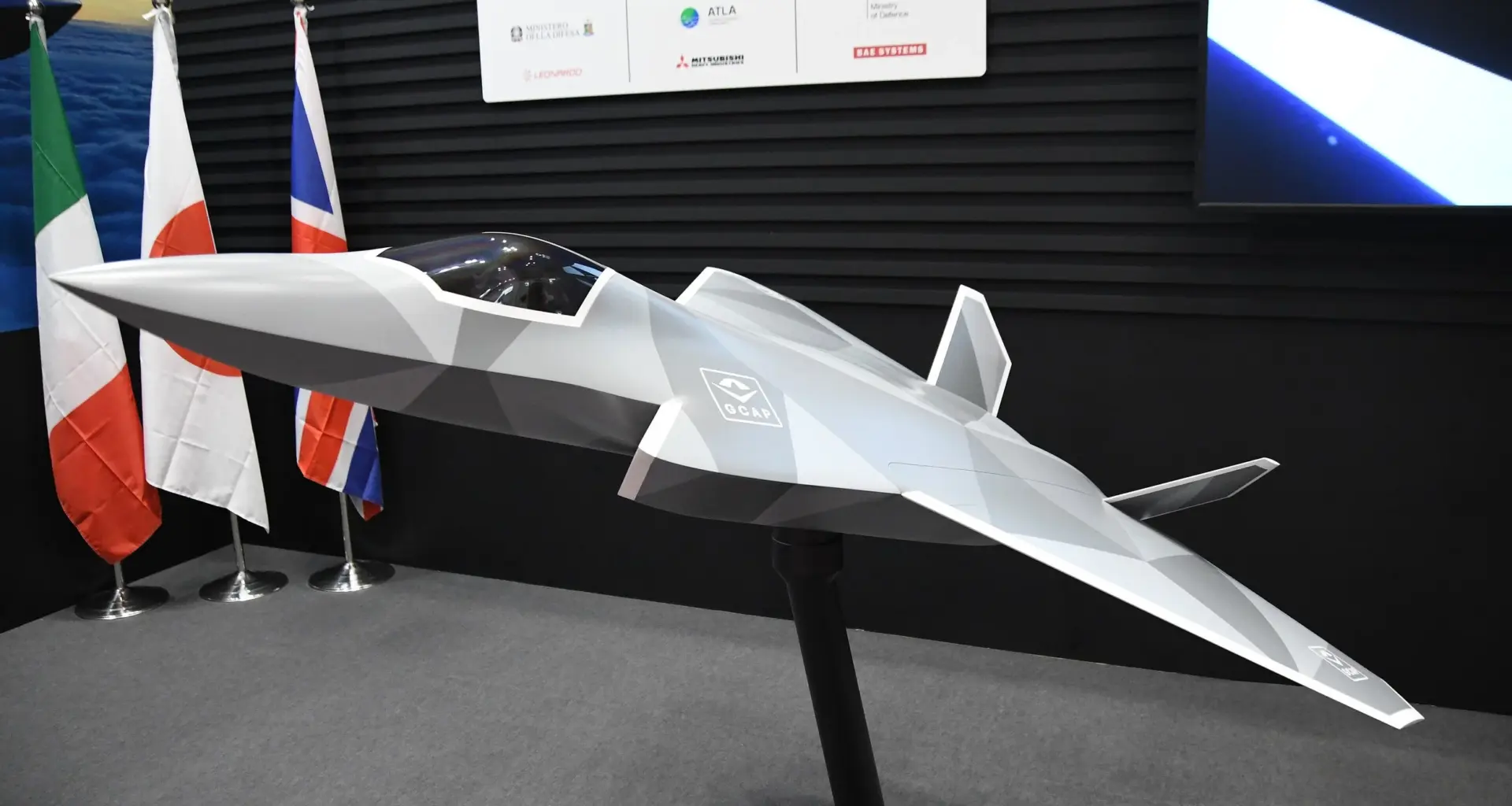
The initiative stands in competition with the project led by Germany, France, and Spain – the Future Combat Air System (FCAS) – set to deliver a rival jet by 2040. The project had recently faltered, however, as French Dassault had pushed for dominance and alienated the Spanish and German-associated Airbus.
The competing programmes reveal a fragmented European defence industry where national industrial interests consistently override collective action. Both the GCAP and FCAS were initiatives to decrease dependence on foreign defence imports in a deteriorating European security environment. This is underscored by continuing tensions with the US and within the NATO alliance, and increasing aggressions from Russia, which has put pressure on Europe to improve its defence capabilities quickly.
Economically, separate programmes focusing on similar issues will replicate capabilities, leading to lower production and higher costs, which mitigates European potential for defence autonomy even with bolstered defence budgets. Thus, higher but fragmented European defence budgets in general are unlikely to produce a more capable Europe without coordinated and centralised leadership.
Beyond economics, the parallel programmes send a damaging political signal. The Belgian defence minister has publicly called the two competing sixth-generation programmes a “really bad example” of European integration. This frustration is shared among smaller NATO members who will ultimately have to choose between the two systems. Amid US scepticism toward European burden-sharing and as Russia is closely watching for signs of western disunity, a partial failure or fragmentation risks signalling that a strong European defence industry cannot emerge as long as incentive structures remain on a national basis.
The complex coordination process and consensus rules that dominate the European Union further complicate defence coordination, especially as member states are hesitant to subordinate decision-making on the issue to the EU based on concerns around national sovereignty. The EU has moved towards coordinated procurement with its 2024 defence industrial strategy and established a basis for coordinated procurement with its Security Action for Europe (SAFE), but these efforts largely focus on Brussels with limited potential for cooperation with the UK.
Still, GCAP shows that a centralised and balanced multinational steering group is possible; besides Edgewing driving industrial cooperation, Berlin and London have committed to pursuing export campaigns together for jointly produced military equipment. The Joint Expeditionary Force, a military coalition of ten like-minded states to protect the European High North from external threats, demonstrates that European military coordination is possible where states perceive common interests. Yet consolidation is not straightforward. Large-scale multilateral defence programmes have a poor historical track record, with projects such as the NATO Alliance Ground Surveillance programme and the Medium Extended Air Defence System facing internal disputes and delays from competing national requirements.
At a larger scale, effective coordination could play to the strengths of each state and mitigate shortfalls for a Europe that is greater than the sum of its parts, for example, combining German spending power with Britain’s ideas for innovation, greatly increasing European defensive capabilities. But the broader European defence landscape remains fragmented. Although JEF shows cooperation is possible, it is almost entirely limited to states most directly exposed to Russian aggression, and there is little indication that countries with lower threat perceptions, such as Portugal, will show the same urgency. Without a dedicated and politically empowered steering mechanism, the gap between Europe’s collective defence ambitions and its ability to deliver on them is likely to persist.