
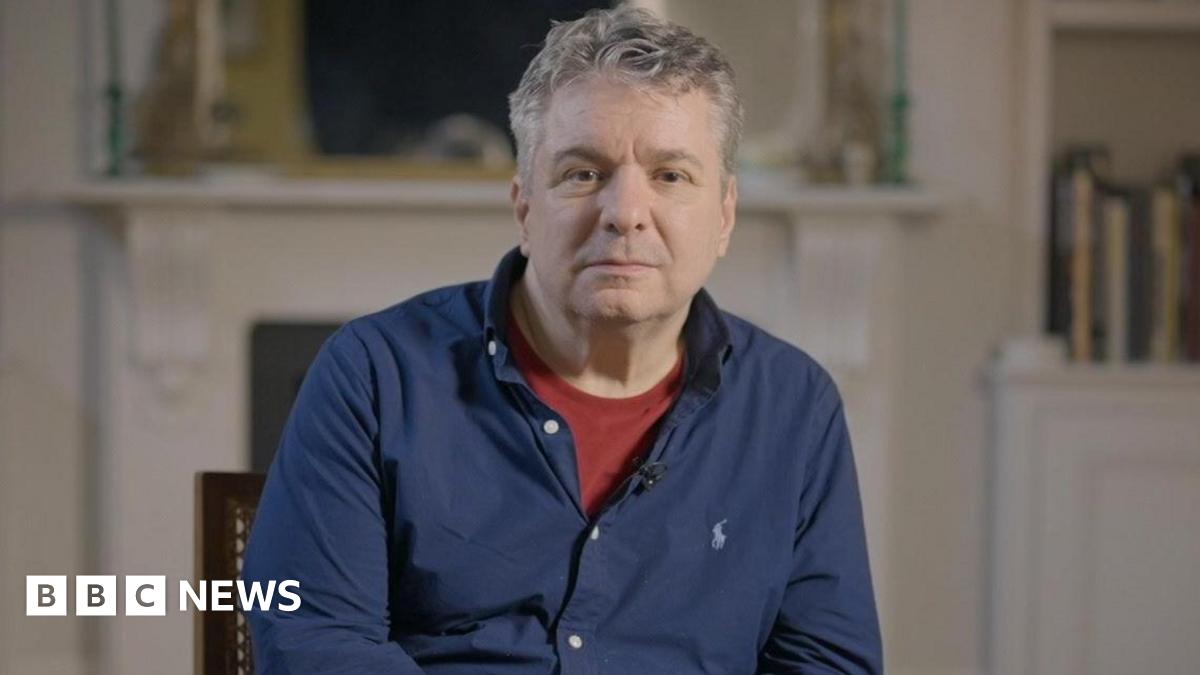
The last time we met, with producer Larissa Kennelly, was in a Danish hospital and Ittai was dying.
“I beat cancer twice but I’m not going to get a third time lucky.”
He told us he regretted that he hadn’t yet written a book about gems for a mass audience, to add to the academic works he has authored.
He wanted to share his stories of “remarkable gems and what they can tell the world about their history”. He was convinced it would be a bestseller.
He also regretted how few people share his love of these tiny objects. “With my death, there is one less gem expert,” he told us ruefully.
Classical gems were hugely popular in the 18th and 19th Centuries and then fell out of favour. The story of the British Museum thefts and Ittai’s role in it thrust these ancient artefacts back into the spotlight.
He said he hoped that one of the people hired by the British Museum to track down the stolen items might decide to make a career out of studying gems, or that the high profile story might “persuade students to say ‘I’m interested, I will take it up'”.
It would be a fitting legacy for a remarkable man who kept his dry sense of humour to the end.
His brother, Kim Oren Gradel, told me about a moment, just a few weeks ago, when the funeral arrangements were being discussed. The priest told Ittai that the church was fairly booked up so it needed some planning to ensure there was a space.
Ittai wryly replied “if I can make it easier by telling you the day that I plan to die, I will do my best to make that happen”.
Kim said “it was a relief to laugh”.
In one of our last conversations, his voice by then very weak, Ittai told me he was at peace with what was happening to him.
“I’m totally resigned to dying,” he said.
For the rest of us, a world without this unusual, determined and deeply knowledgeable man will take some getting used to.