
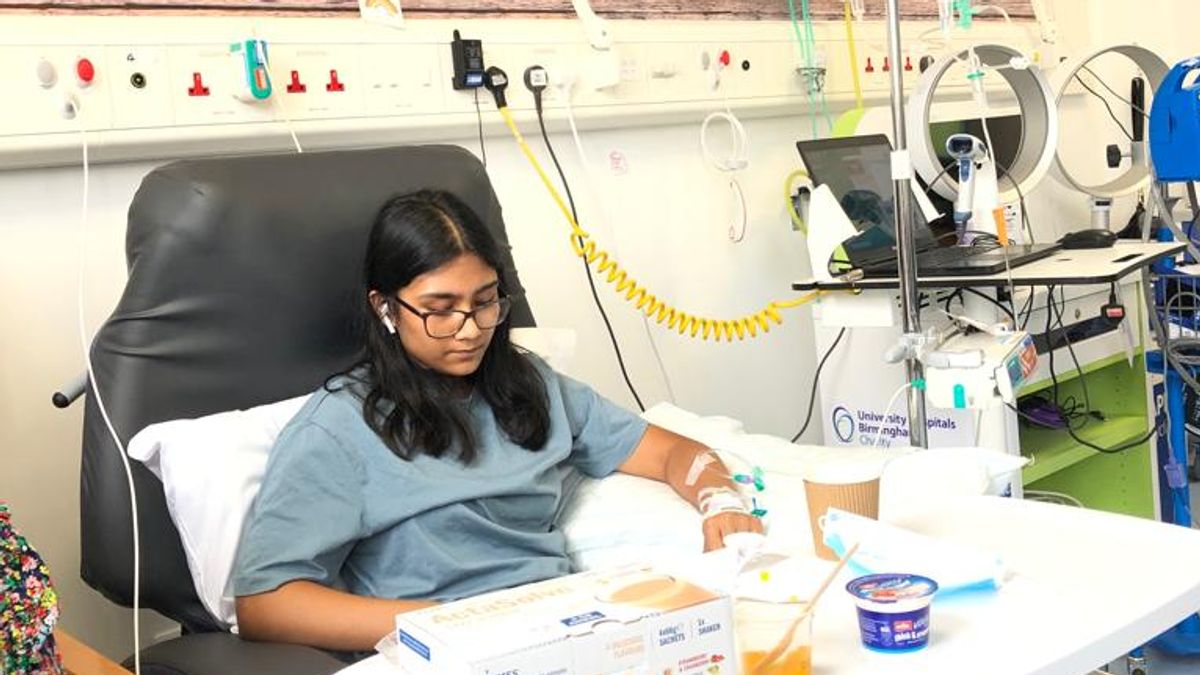
Tashifa Islam, now 20, has spoke out about communication issues during her treatment, including doctors talking to her parents rather than her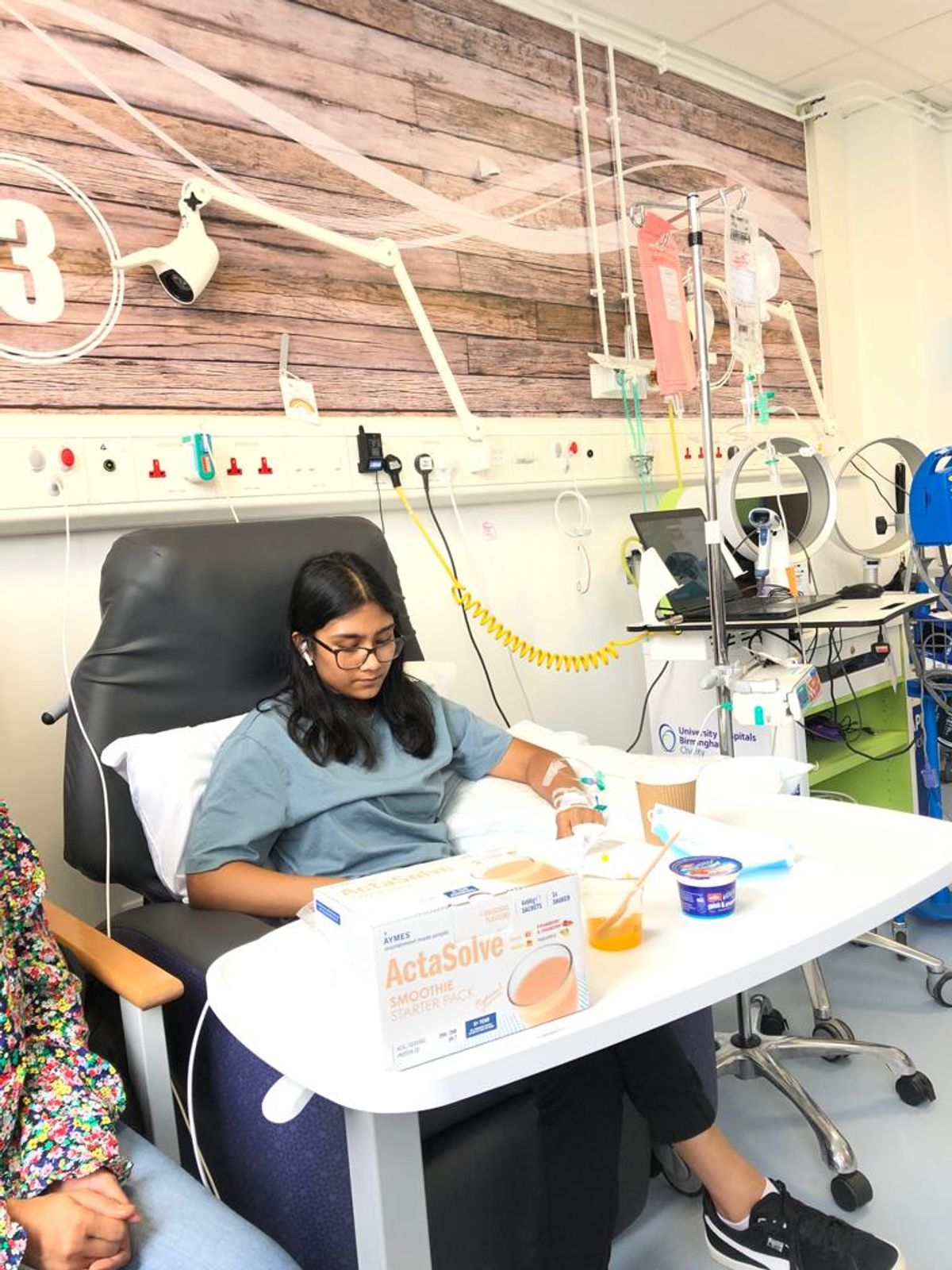
Tasha on her first day of chemotherapy at the Queen Elizabeth Hospital in Birmingham in April 2022
A Birmingham woman diagnosed with a rare cancer when she was 16 has spoken out about her treatment as a teen – including the doctor who gave her the diagnosis seeming ‘excited’ by its rarity.
Tashfia Islam, now 20, was given the devastating news she had stage 3 nasopharyngeal carcinoma – a cancer in her throat behind her nose – just after taking her GCSEs in the summer of 2021.
She had begun to experience flu-like symptoms but put it down to hay fever and when it continued throughout the winter, she then thought it was nothing more than a seasonal cold.
That was until she found a lump on the side of her neck.
Read more ‘Doctors repeatedly told me I was fine – the truth was very different’
“In February 2022 I went to the GP because of the lump,” Tash said, adding: “An Ear, Nose and Throat (ENT) referral was scheduled for three months later but my mum had a bad feeling, so we went to A&E that same night.”
After being prescribed antibiotics and told that the lump was likely a fluid sack, Tash was sent for an ultrasound and biopsy, where her troubles with communication started.
Tashifa, who also explained that doctors talked more to her parents than to her and she was blamed by some members of her community for her illness because cancer is rare at a young age, has chosen to speak out her experience to back the Teenage Cancer Trust’s new campaign Cancer Conversations.
The campaign aims to highlight some of the communication challenges faced by 13–24-year-olds with cancer, their friends, loved ones and the professionals caring for them.
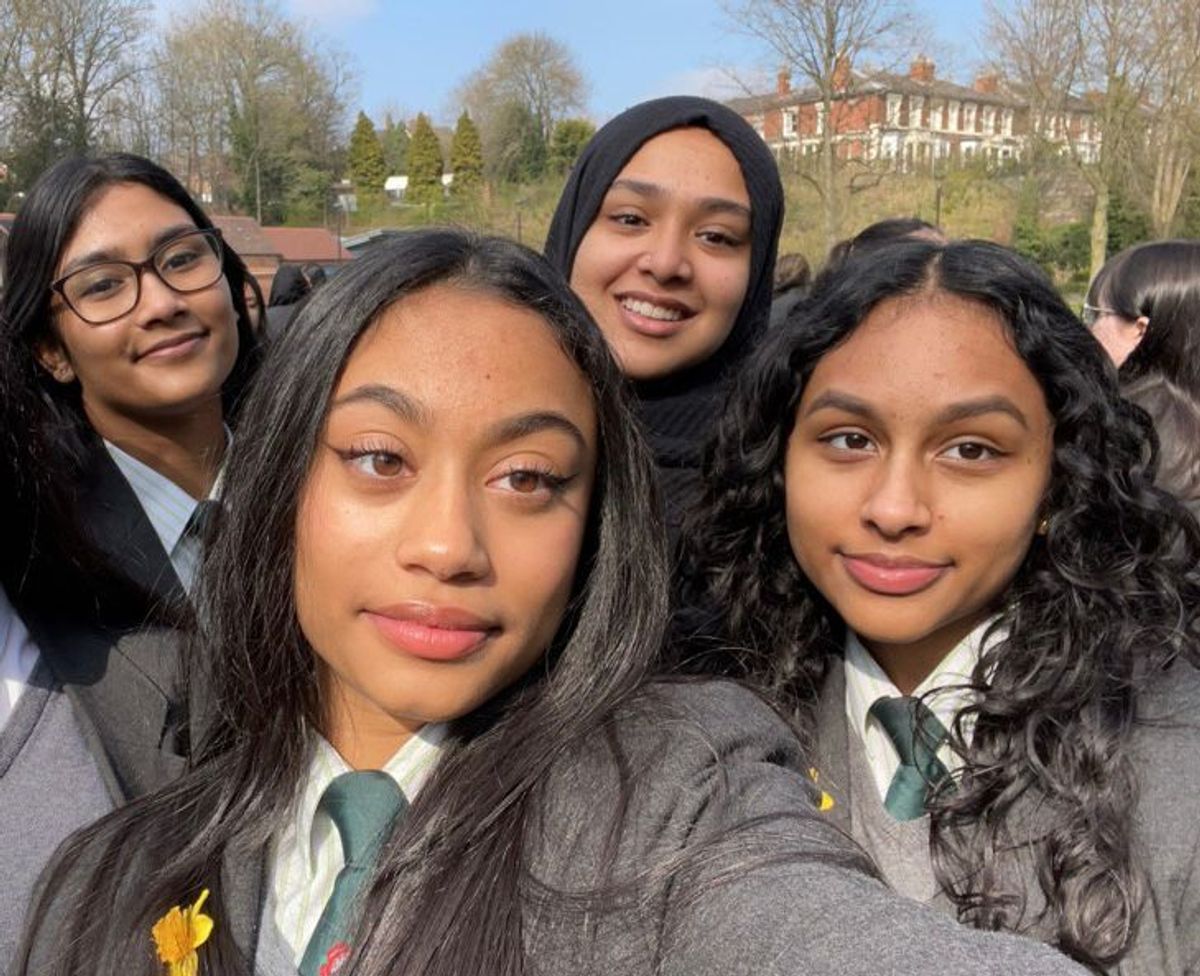
Tashifa (left) with schoolfriends before her diagnosis
Speaking about her experience at the ultrasound, Tashifa explained: “I could tell from the person doing the ultrasound’s face that it was bad. At the start of the appointment, he was easy-going and friendly, but he froze when he went over the lump. I felt like I had confirmation at that point that it would be something bad.
“A couple of days later I was told I had stage 3 nasopharyngeal cancer. The doctor didn’t have a ‘poker face’ when I was diagnosed. The cancer was rare so he seemed excited but there needs to be more sensitivity needed.
“His tone was light-hearted and I understand that he was probably trying to make a serious situation more bearable, but I think what is needed varies from person to person and I didn’t really appreciate it.”
Tashifa said that as a Medical Science student herself now, she “understands the enthusiasm” but at in that moment she wanted to be reassured.
Read more Healthy 27-year-old shocked after diagnosis very rare in his age group
“You just want to know that it is manageable and treatable,’ the now 20-year-old said. “Personally, when I heard things like ‘rare’ or ‘unique’ it made me think that they haven’t had much, or any, experience dealing with something like it, so it worried me more.”
From that point and onwards, Tashifa also found that her parents were often being addressed more than her in appointments.
She said: “I found that when doctors would speak, they would look more at my parents than me. And I’d just be sat there trying to catch their eye like ‘I’m the one that’s sick here, talk to me.’
“It felt a bit demeaning because perhaps they assumed that I wouldn’t understand because of my age, but they could just ask. I personally think that I was more than capable of understanding. Especially since I was taking biology.”
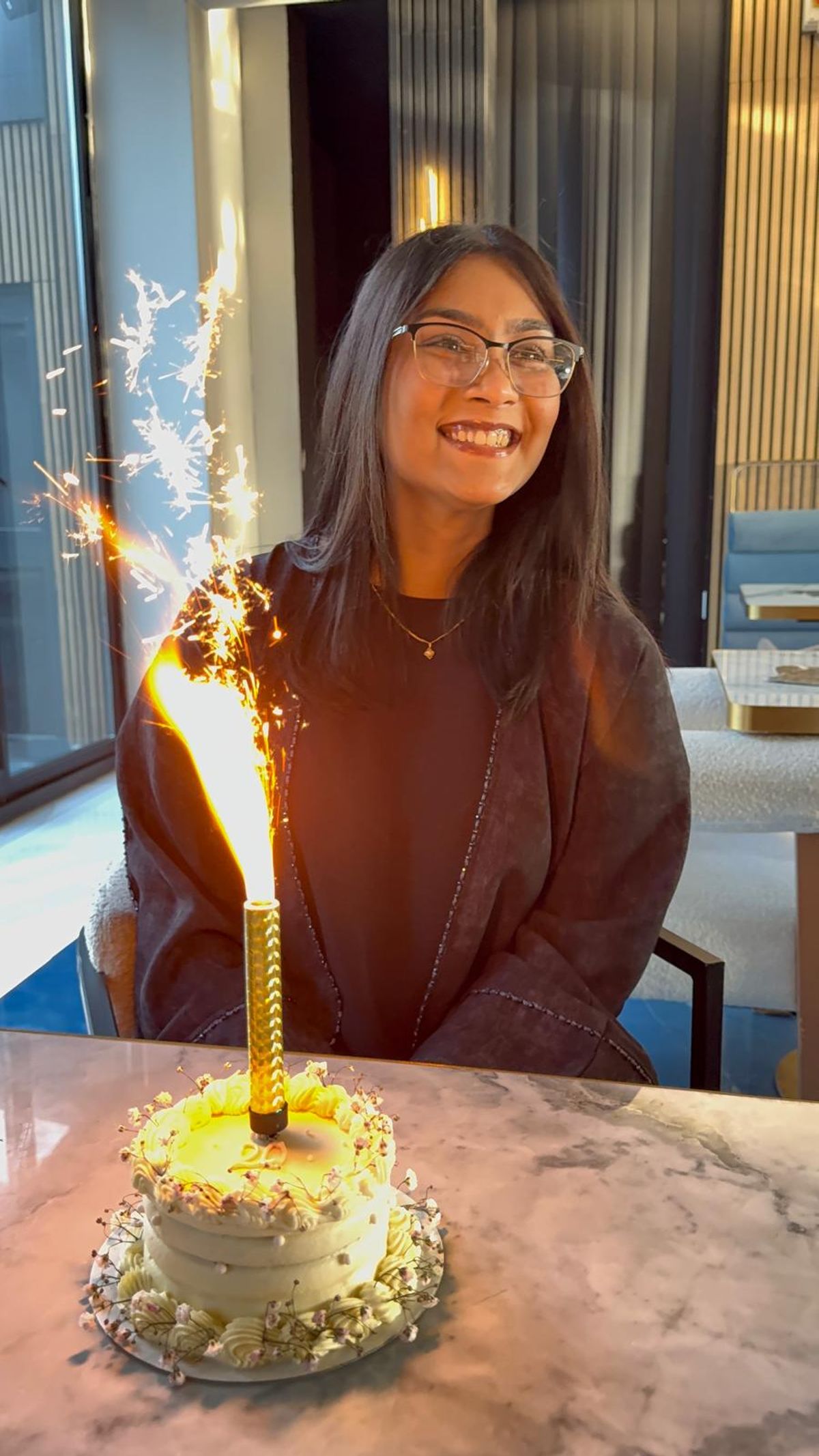
Tash on her 20th birthday
Reflecting on what happened, Tashifa said: “This wasn’t really the healthcare professionals’ fault, but my dad would go into appointments with a bunch of questions, so he’d take lead in the conversation. It often got to the point where I’d forget what I wanted to ask and get annoyed.
“My advice to doctors would be to ask if patients want to hear news by themself, or if they’re okay with being addressed as a family. Parents being spoken to more than the patient is a much more common issue than people realise.”
Tashifa also found that conversations outside of a hospital setting were just as difficult as a young person with cancer.
She explained: “A part of my cancer experience that made me feel different to those around me, or perhaps others didn’t understand, was the cultural and religious aspect. I’m Bangladeshi and Muslim.
“It’s overwhelming and a bit intimidating to be handle cancer and communication from a cultural standpoint. Chronic illnesses are sometimes a bit taboo.
“The entire time that I was ill everyone was telling me that it was for the best and I’d be a stronger soldier. It was a bit difficult to hear when you’re quite literally fighting for your life.
“Some people even blamed me for the fact that I got sick, like my lifestyle choices and what I’d done, because cancer is rare at a young age.
“I felt guilty for feeling bad about my religion. But at the same time, you do not want to be hearing those types of things at all.”
Thankfully, at such a traumatic time help and support was available for Tash from Teenage Cancer Trust.
Tashifa said: “Jade, a Teenage Cancer Trust Clinical Nurse Specialist, was always available and supported me, especially when I’d want to ask about things like my treatment without my parents there. I was able to talk to her one-on-one. She’s also continued to support me after treatment too.
“Without Teenage Cancer Trust my experience would have been so much worse, that’s for sure. I think all healthcare professionals should tailor their communication style based on the individual, like Jade did for me.”
Tashifa had chemotherapy and proton beam therapy and was told she was in remission in December 2022. She is now De Montfort University in Leicester studying Medical Science and understands more than most about the importance of clear, age-appropriate conversations.
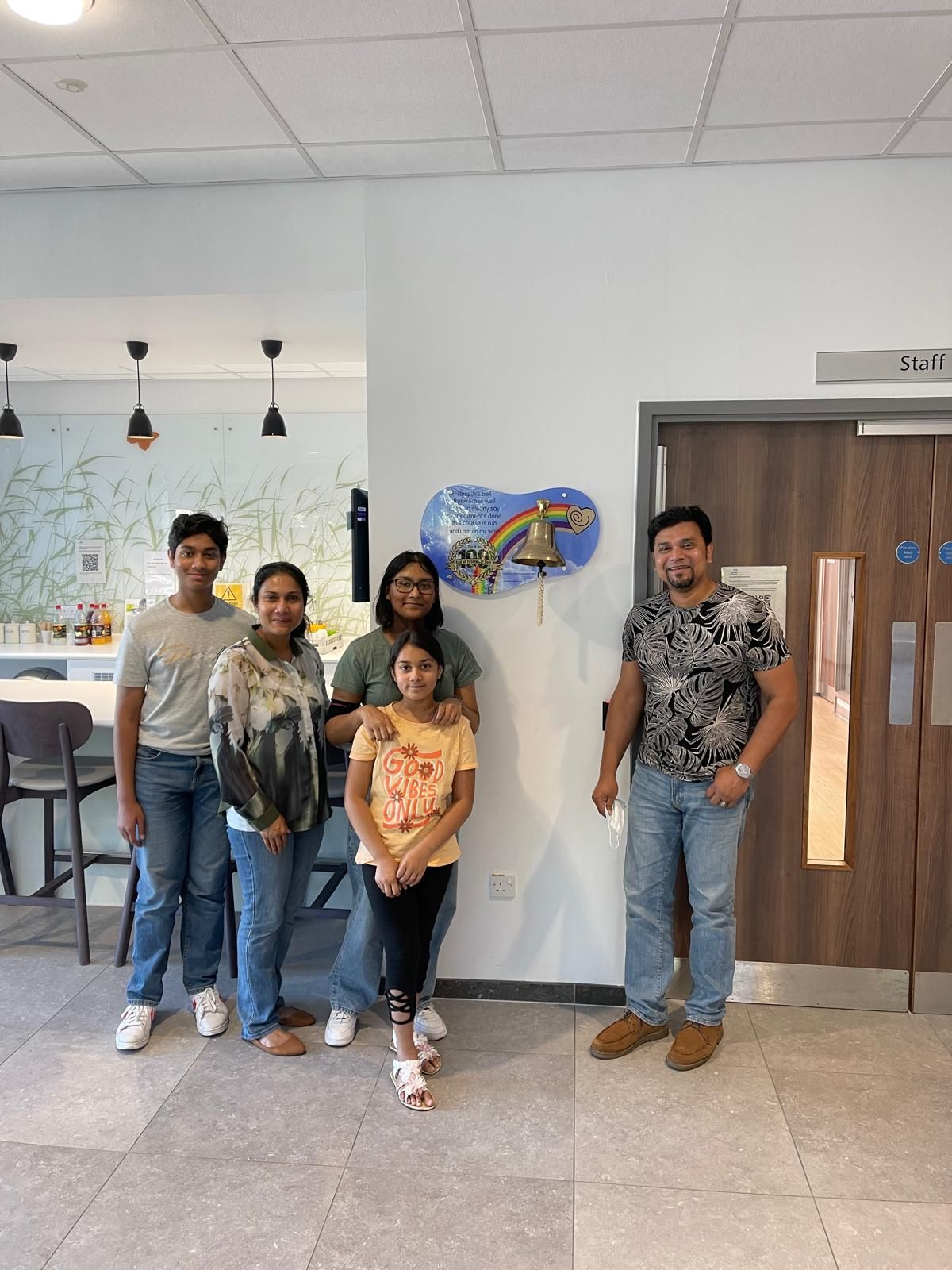
Tasha on the last day of her treatment
She added: “Healthcare professionals should tailor their communication style based on the individual,’ Tash said “Whether they want straightforward scientific information, or if they want it simple. Getting a consensus on how they want to be spoken to would make communication better.”
Reflecting on her experience, Tash said: “I would 100 per cent tell any other young person with cancer to speak up.
“I was so scared of saying the wrong thing or being seen in a bad light but at the end of the day, it’s your treatment, it’s your diagnosis, it’s about you getting better. So, no one is going to fault you for wanting certain things or wanting to do things a certain way.”
Dr Louise Soanes, Chief Nurse at Teenage Cancer Trust, said: “The way in which we talk about and explain cancer is so important, but it’s a difficult subject and can be incredibly challenging.
“However, one conversation can change everything for a young person. The right words at the right time can make all the difference – and we must all do our best to get it right.
“Our expert nurses and youth workers across the UK support young people with cancer through all kinds of conversations. And whether you’re a health professional, a friend, or loved one of a young person who struggles to find the right words, or you don’t know what to say, you can find help and guidance about cancer conversations on the Teenage Cancer Trust website.”