
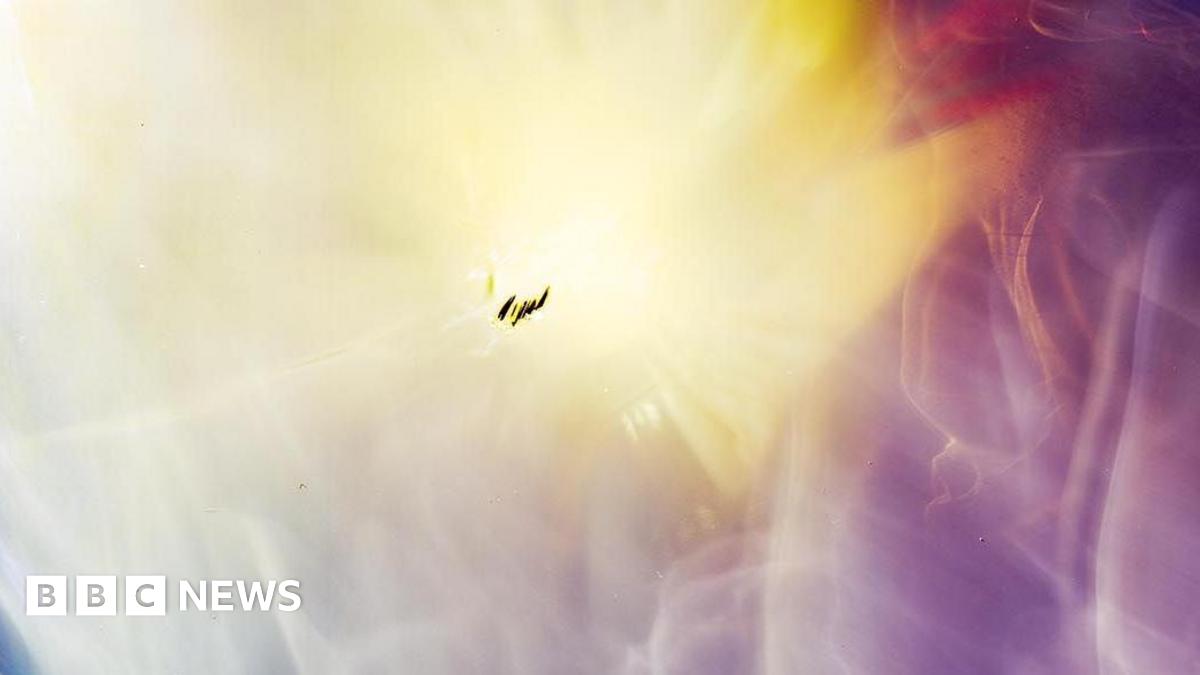
Liggett admits he had very low expectations of what the experiment could produce.
“Going back to the first launch, when it came down the film was then sent back and I opened the dark bag and developed it at Arts University Bournemouth”, he says.
“There was something on the negative, this kind of like pattern. I knew at that point that I’d achieved something literally unimaginable”.
After carrying out extensive research in to the balloon launches that he’s been involved in, Liggett says he’s confident there’s an understanding of how the images have been formed on his film.
“We’ve kind of deduced it to be UVC radiation, the radiation that exists above the ozone layer because obviously there’s no filter up there”, he says.
“Then cosmic radiation and muons from black holes, like billions of light-years away”.
“I actually think it’s a more accurate representation of space than a photograph is”, he says.
“It’s capturing the actual molecular formula of space”.