
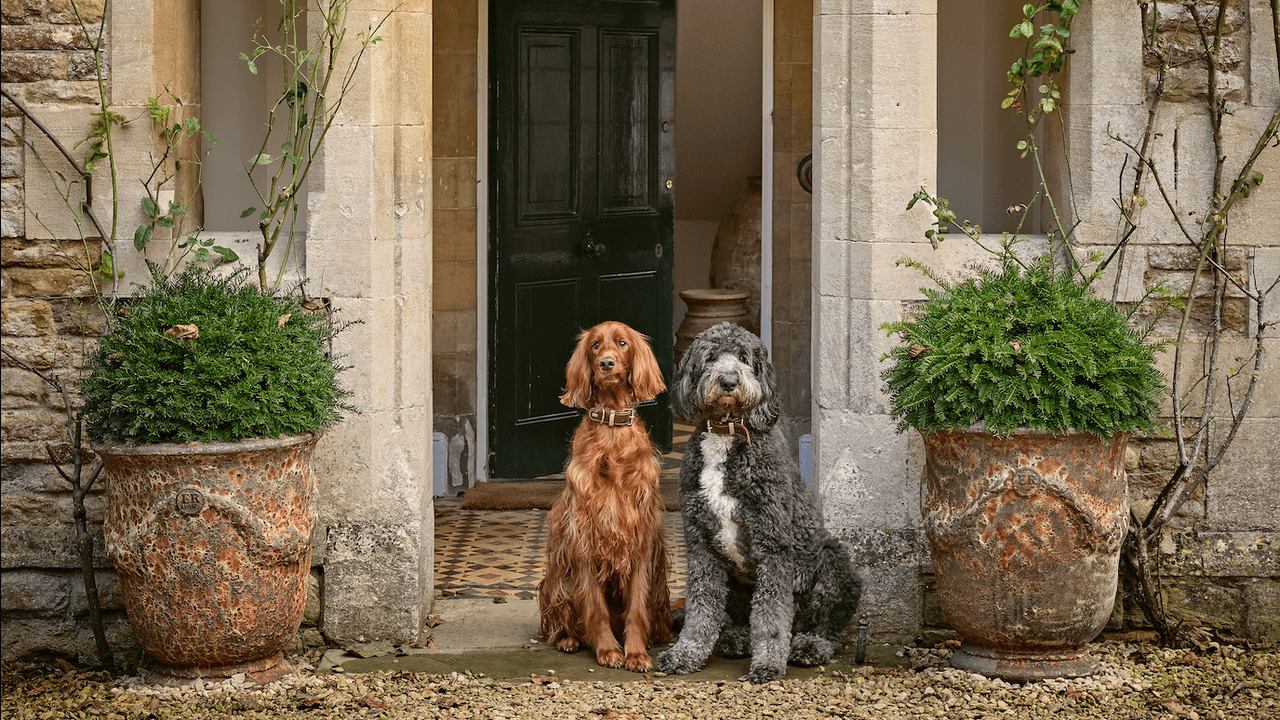
The house that ticked all the boxes is, in fact, a combination of two properties; one part dates back to the 17th century and the later addition, the old vicarage, was built in the 19th century. Over time, it had undergone alterations that reflected the different chapters of its life, and it was the romance of being able to add a new page to its story that attracted Brian. ‘At its core, you can see that the building has clear architectural integrity, but there was also an opportunity to reinterpret it for contemporary country living,’ he explains.

The original floor tiles in the hallway was carefully restored without taking away its age. The ceiling light is the ‘Dodo Egg’ pendant by Beata Heuman. From here, you get a glimpse of the breakfast nook in the kitchen.

In the kitchen breakfast nook, Brian created a sense of connection with the rural landscape that surrounds the old vicarage through a custom Liz Allison mural and custom-made cabinetry painted in a soft sage green.
While no structural interventions were required, the house clearly needed work: the interiors were tired, and felt disconnected, and some of the previous alterations hadn’t been sympathetic to the original architecture. ‘The main issue was creating cohesion, both in terms of flow and aesthetics, while respecting the heritage of the building,’ explains Brian, who saw the challenge as an opportunity to reimagine how the house could be lived in today. ‘We approached it by carefully layering in contemporary elements that complement rather than compete with the original fabric. I think my instincts have proved correct.’
‘Entertaining here is more relaxed than in the city. Long lunches with friends turn into evenings in the garden or impromptu stays. It’s those unplanned, unhurried times that the house was really designed for.’
Brian Woulfe

A Bert Frank pendant hangs above the round RH dining table. It is surrounded by a built-in banquette designed by Brian and vintage chairs sourced from Vinterior.