
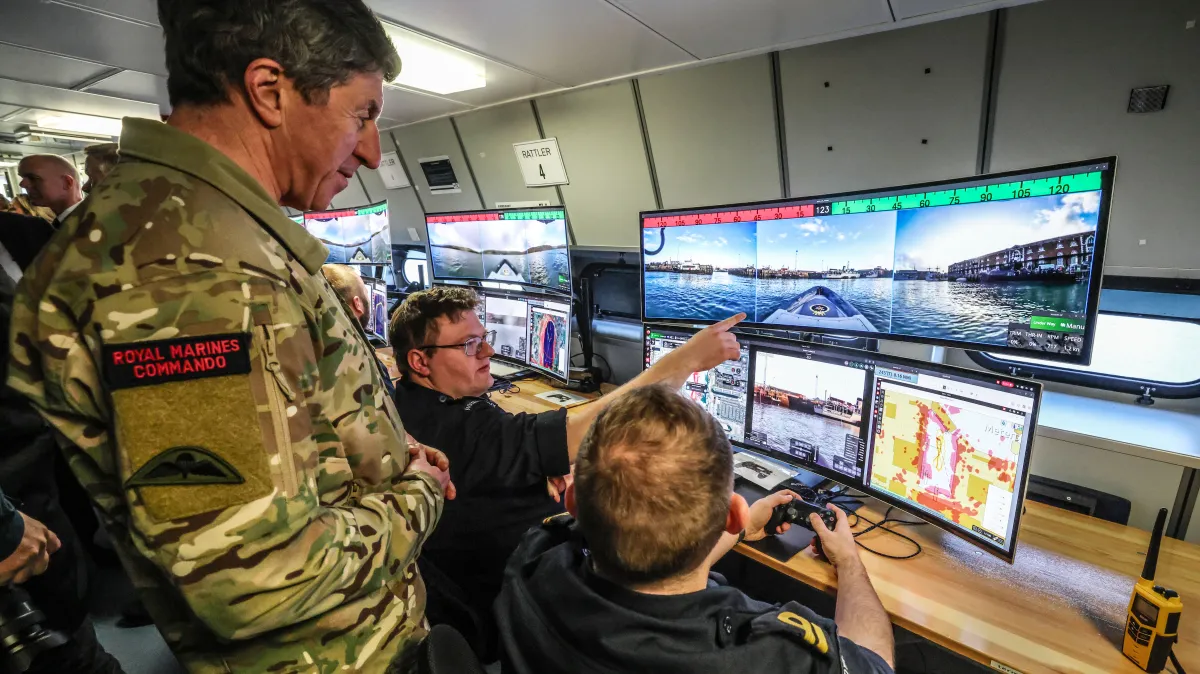
Britain and its allies will forge a new partnership of “northern navies” comprising ships and drones ready to take on Russia, the first sea lord has announced.
In a speech at the Royal United Services Institute, General Sir Gwyn Jenkins said the UK was “at an inflection point” and “there is no time to lose” as he set out plans to bolster defences in northwest Europe and the High North.
Jenkins, the first Royal Marine to be appointed head of the navy, said: “The need to rearm and improve this country’s readiness for war has become an absolute necessity. Just maintaining the ‘capable status quo’ is simply not good enough. We are at an inflection point.”
He said a multinational maritime force, with the UK at its helm, would have the ability to substitute, swap or mix equipment, parts, ammunition and personnel. It will operate common systems and platforms, shared digital networks, logistics and stockpiles. Allied fleets will be commanded from Northwood, London.
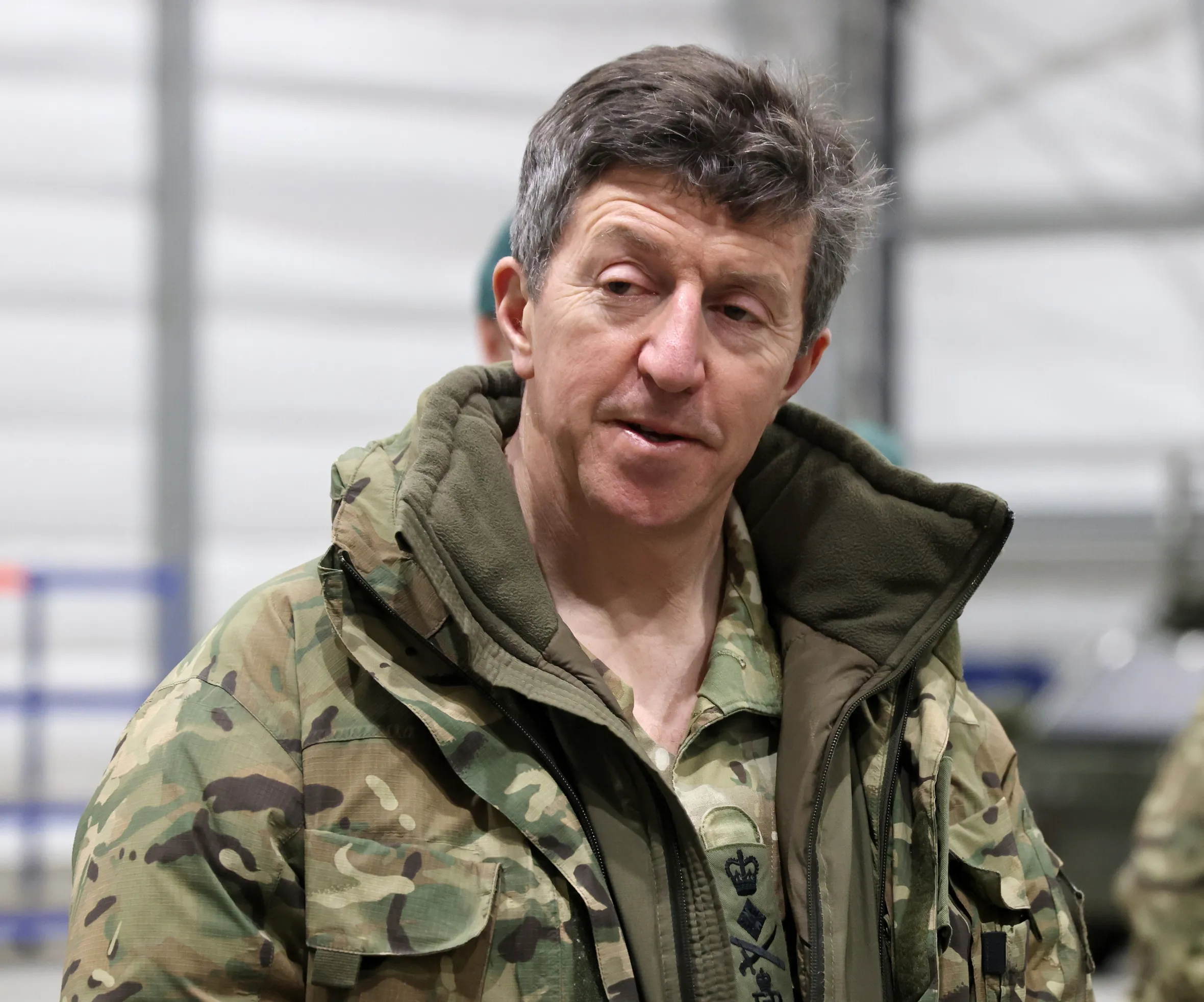 Jenkins said the navy would be war ready by 2029Royal Navy
“I aim to create a maritime force that trains, exercises and prepares together. A force designed to fight immediately if required, with real capabilities, real war plans and real integration,” Jenkins told the audience.
The naval grouping will be drawn from the Joint Expeditionary Force, which was established in 2014 and is composed of ten like-minded European nations including Norway and Denmark, plus possibly Canada. Jenkins said the partnership “must now deepen and evolve … if we are to generate the collective combat power necessary to provide conventional deterrence along our open sea border with Russia”. He hosted naval chiefs from across northern Europe to discuss the plans last week.
“We know we have no time to lose, which is why by the end of this year, I want us all to have signed a formal declaration, laying the foundations for what will be a vital and enduring partnership for many years to come,” he said in an ambitious speech that set out how the navy would be war ready by 2029.
Jenkins, nearly a year into the role, has navigated the navy at a difficult time, as the crisis in the Middle East has exposed the shortfall in ships and the lack of availability of its six Type 45 destroyers. President Trump has also dismissed its two aircraft carriers as “toys”.
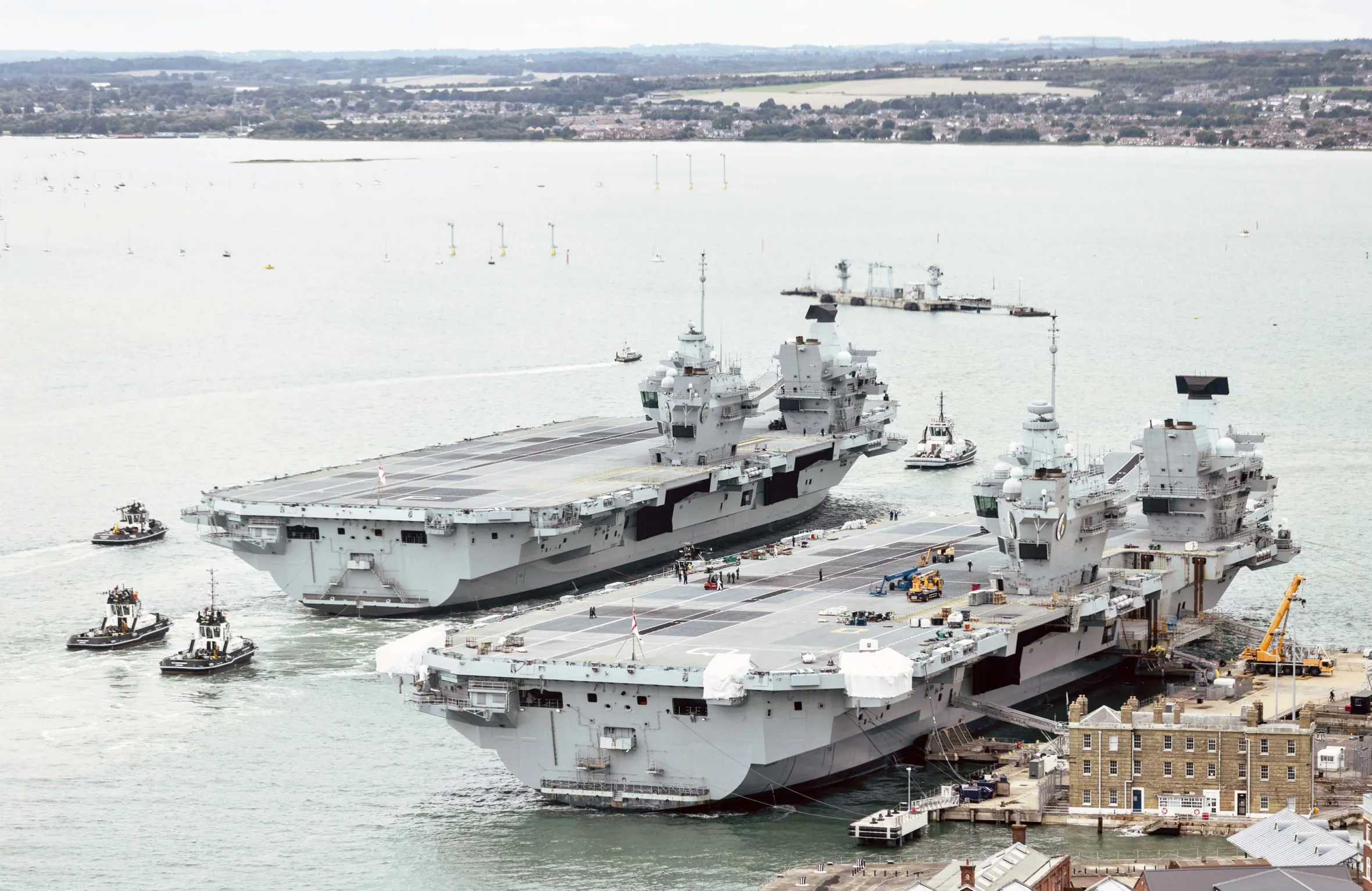 The Royal Navy aircraft carriers HMS Prince of Wales, left, and HMS Queen Elizabeth Times PHOTOGRAPHER RICHARD POHLE
Jenkins said the effective closure of the Strait of Hormuz by Iran had confirmed sea power was vital if the UK was to maintain the free flow of trade, uphold freedom of navigation, deter adversaries and “safeguard Britain’s economy against the kind of global shocks we have been experiencing”.
Jenkins also said it had demonstrated the vulnerability of traditional platforms and the need for a hybrid navy of crewed and uncrewed platforms and autonomous and jet-powered drones. Uncrewed vessels would reduce the risk to sailors, he said.
Jenkins said that in a time of war there would not be unlimited resources and he was “determined to reduce the cost per unit and cost of production to achieve the scale we need”.
“We must end the mentality that what we need is ever more expensive and larger platforms,” he said. His plan to transform the navy would ensure the UK can survive a sustained conflict with a peer adversary and also win, he vowed.
“Lead, Fight, Win is not just another slogan. It is our fundamental mission — and is why we are overhauling of the Royal Navy through this plan,” he said.
Technology is advancing at such a rate that advancement is measured in days not years, he said, adding that “agility, adaptability and innovation have become the decisive factors in conflict”.
Certain systems will need to be ready within three months, he said, while others will need to be evolving constantly.
War and peace newsletter
Tom Newton-Dunn’s concise guide to global conflict – with reasons for optimism.
Sign up with one click
In a speech at the Imperial War Museum on Wednesday, Dr Fiona Hill, the co-author of the strategic defence review and a former adviser to Donald Trump, warned that Britain did not have the “luxury of time”.
She said the UK must develop a national resilience strategy to better defend itself at a time when conflicts in Ukraine and the Middle East were merging into a single world war.
She said that in the Second World War, civil defence planning preceded the war, drawing on the still recent experiences of the First World War, and foreseeing the threats of advances in military aviation.
She said the British government understood that the next war would not just be fought by military forces on a distant battlefield.
However she said that since she left for the US in 1989, as the Cold War ended, the UK seemed to have “forgotten the civil defense lessons of its past, and not kept its societal response muscles in shape”.
“The UK seems less resilient than it should be given mounting geopolitical crises and new risks to the homeland,” she said.
This week the Ministry of Defence will conduct a major war game with leading defence companies to test supply chain resilience in the event of a large-scale conflict.
Five major defence companies will participate in the exercise which will shape future defence policy by ensuring the armed forces have the equipment and supplies they need.
Last month the navy held a wargame to test the potential of a hybrid navy and under the new model the amount of missiles sailors could fire increased by 300 per cent. This level is necessary to “win a contest in the North Atlantic”, he said.
Jenkins is particularly concerned about Russia’s reinvestment in its submarine programmes. Russian incursions into UK waters have risen by almost a third in the last two years and British submarines spent a substantial amount of time responding to Russian subsurface activity last year. The navy fears this activity will worsen in future.
As part of the navy’s Atlantic Bastion plan, there will be a “defensive net” — a layered sensor network across the North Atlantic — to safeguard against hostile subsurface activity. When threats are detected, data will be fed back to the navy, with existing and new offensive capabilities then deployed to take them out.
Jenkins wants to have the first uncrewed escort ships sailing alongside Royal Navy warships within the next two years, as well as to launch the first jet-powered drone from a carrier by 2029. Such drones can take off vertically like a rocket and take up a third of the room required by an F-35 jet, which means 80 of them could fit on each of the aircraft carriers.
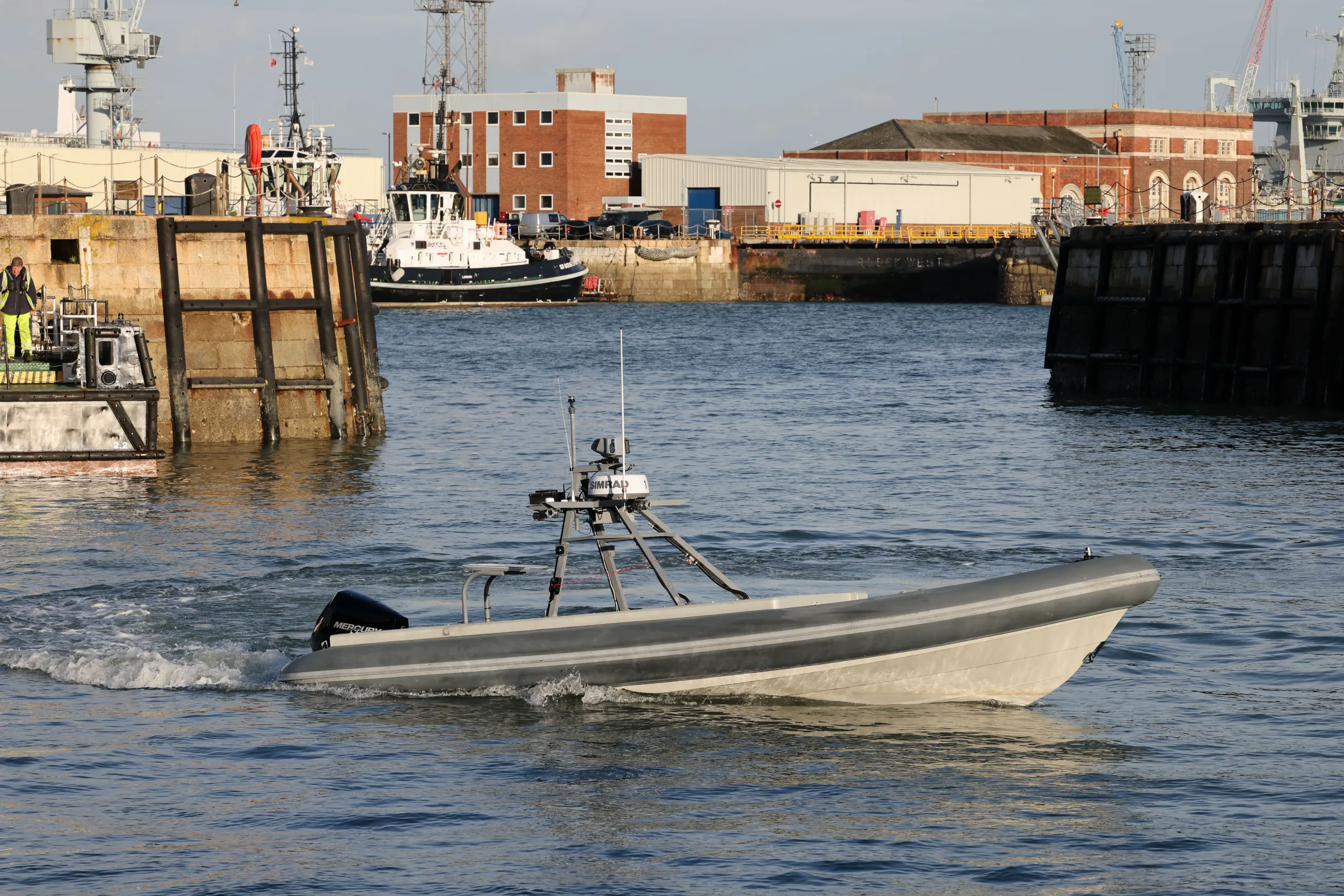 An uncrewed surface boat manoeuvres through the water at Portsmouth naval base during a demonstration of the Atlantic Bastion programmeTimes PHOTOGRAPHER RICHARD POHLE
The navy now has 20 uncrewed boats for 47 Commando for training and operations as part of Project Beehive. They were delivered in months. Jenkins said the “real test is still ahead of us”.