
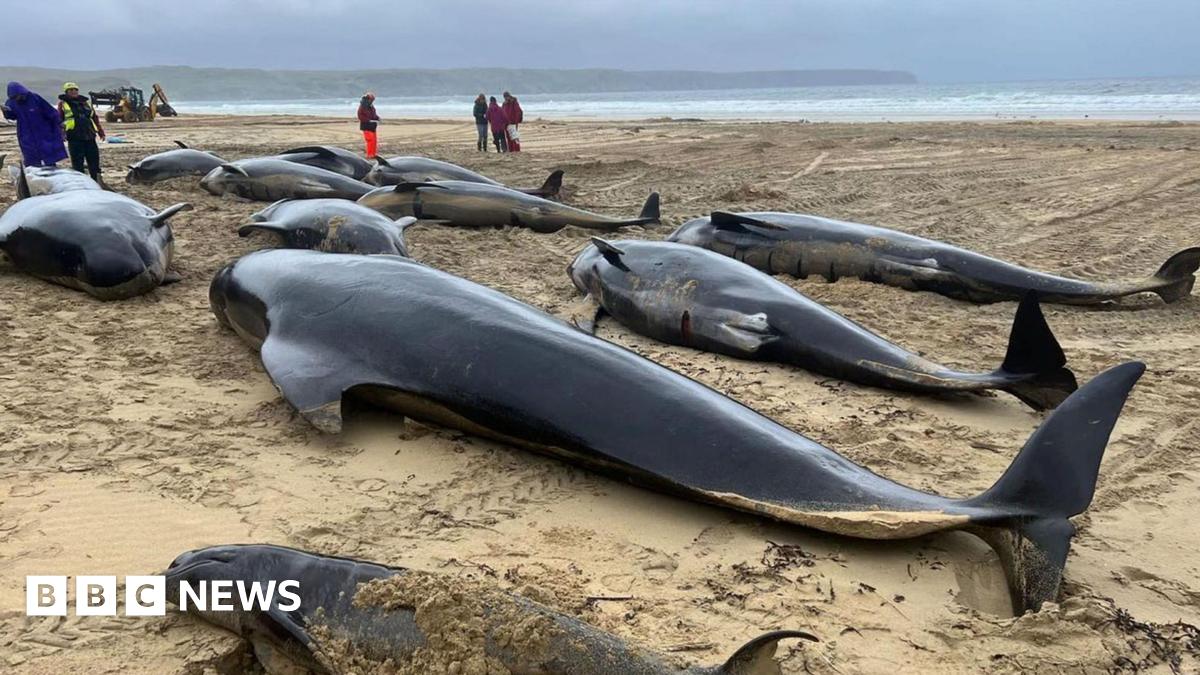
The researchers said long-finned pilot whales were a deep water species and “notoriously difficult” to study in the wild.
It was possible to take tissue samples from stranded animals, and stable isotope, external analysis was used to reconstruct their feeding history.
The data indicated that the pod had been feeding primarily along the edge of the continental shelf and a slope down into deeper offshore waters.
The area is believed to support substantial fish and squid populations during spring and early summer.
The scientists said the animals were in good nutritional condition at the time of death, but their stomachs were empty.
This raised questions about their foraging activity in the immediate period before stranding, the team said.
They added that the study was the first direct evidence long-finned pilot whales use shelf-slope habitats as important seasonal feeding grounds, and how that places them at risk of stranding in shallower waters.
The continental slope, external is a geological feature where the seabed slopes down from shallower seas nearer the coast to the deep ocean.
In some places the slope is a long, gentle gradient but in others it is steep.
Different water currents mix there and nutrients they churn up create a habitat that attracts plankton, fish and larger animals such as whales.