
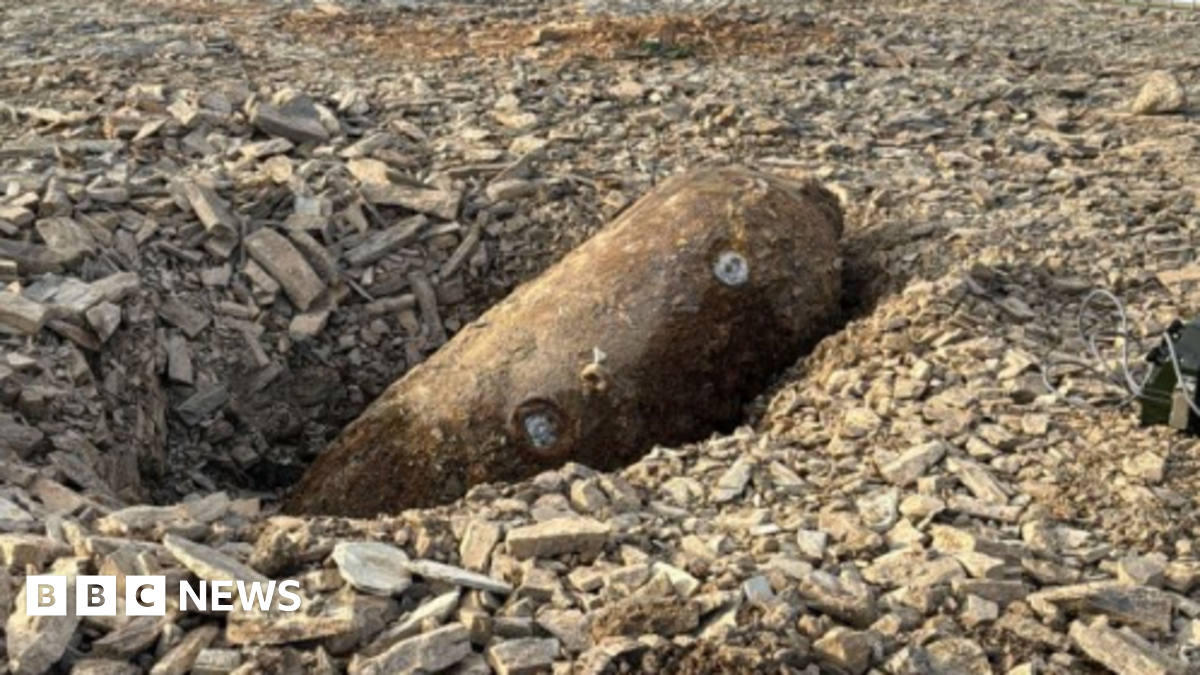
“A lot of people say ‘Well it’s been in the ground for 80 years, what’s the problem with it?'” he told reporters.
“The simple reason is, the fuses are the thing that makes it go bang.”
He said X-ray examinations had failed to give a clear picture of one of the fuses.
“Unfortunately we cannot get a definitive X-ray of the second fuse and therefore it’s not safe to move that item,” he said.
“So we’re going to blow it in situ.”
The colonel said large quantities of sand were being used to build a structure around the bomb to limit blast and fragmentation during the explosion, and teams were working through the night to prepare the site.
“We’re going to try our hardest to deflagrate that item and burn it inside of a structure that will limit the damage to the local surroundings,” he said.
“I’m pretty confident that the mitigation that we put up will limit most of the damage.”
He added: “We’re going to work tirelessly through the night to ensure that that mitigation protects the buildings that face the site and indeed cover the item to ensure the least amount of blast and fragmentation comes out from the area where we do our work.”